
Keywords are the backbone of any successful Google Ads campaign. They’re the words and phrases that help your ads reach the right audience at the right time. But when it comes to choosing a favorite keyword match type, there’s one that stands out above the rest for me: negative keywords.
You see, negative keywords are like the gatekeepers of your campaign. They prevent your ads from showing up for irrelevant searches, saving you money and ensuring that your ads are seen by the most relevant audience possible.

Get Found, Get Chosen, Get Your Time Back
A free one-day marketing seminar in Milton Keynes · 10 November 2026
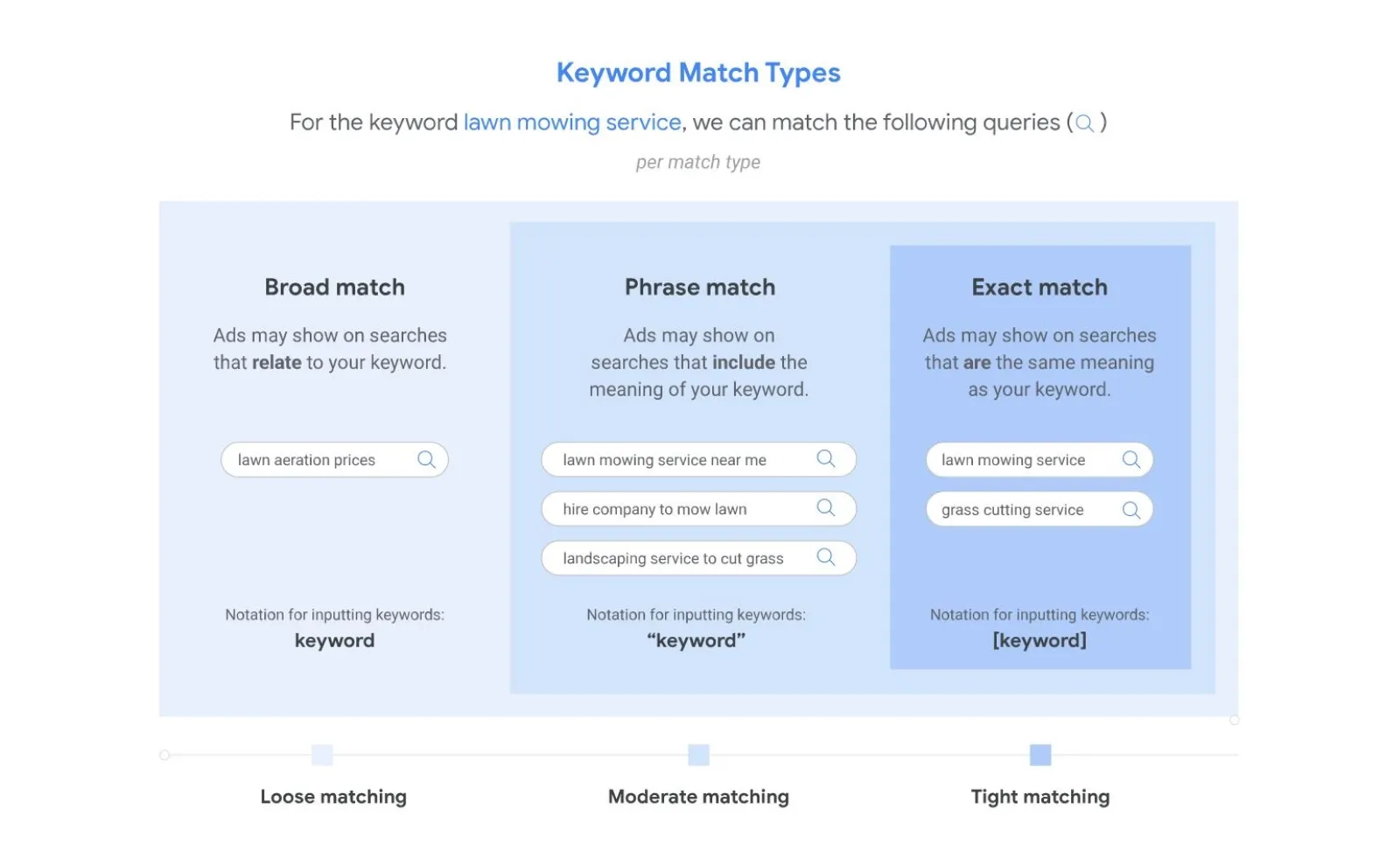
But let’s back up for a moment. What exactly are match types in Google Ads? Well, there are four main types: broad match, phrase match, exact match, and negative match. Each one serves a different purpose, but negative keywords are particularly powerful because they allow you to exclude certain terms from triggering your ads.
Get your free Marketing Action PlanNot sure where to start? Answer a few questions and get your plan in about a minute. No email needed.
 LIVE
Live every Tuesday at 2pm UK. Bring your marketing questions.
Get your Google, local SEO and AI questions answered live.
For example, let’s say you sell luxury watches. You might use broad match keywords like “watches for sale” to reach a wide audience. But without negative keywords, your ads could end up showing for searches like “cheap watches” or “free watches,” which aren’t likely to lead to sales.
That’s where negative keywords come in. By adding terms like “cheap” and “free” as negatives, you can ensure that your ads only show up for searches that are likely to result in conversions.
But here’s the thing: optimising your campaign with negative keywords isn’t a one-time job. It’s an ongoing process that requires regular monitoring and adjustment. That’s because the search terms people use are constantly evolving, and new negative keywords may need to be added to keep your campaign on track.
So how do you know which keywords to add as negatives? Simple. Just dive into your search term report regularly to see which terms are triggering your ads. If you spot any irrelevant terms, add them to your list of negatives to block them from showing your ads in the future.
In conclusion, while all keyword match types have their place in a well-rounded Google Ads campaign, negative keywords are my favorite for their ability to keep my ads focused and targeted. By regularly optimising my campaigns with negative keywords, I can ensure that my ads are seen by the right audience and drive the best possible results.

Written by Uzair Kharawala
Partner at SF Digital Studios, a Google Premier Partner agency. Uzair has been helping businesses grow with Google Ads since 2002 and teaches it every week on YouTube.
Get our best Google Ads tips by email
New articles and videos, straight to your inbox. Unsubscribe any time.