
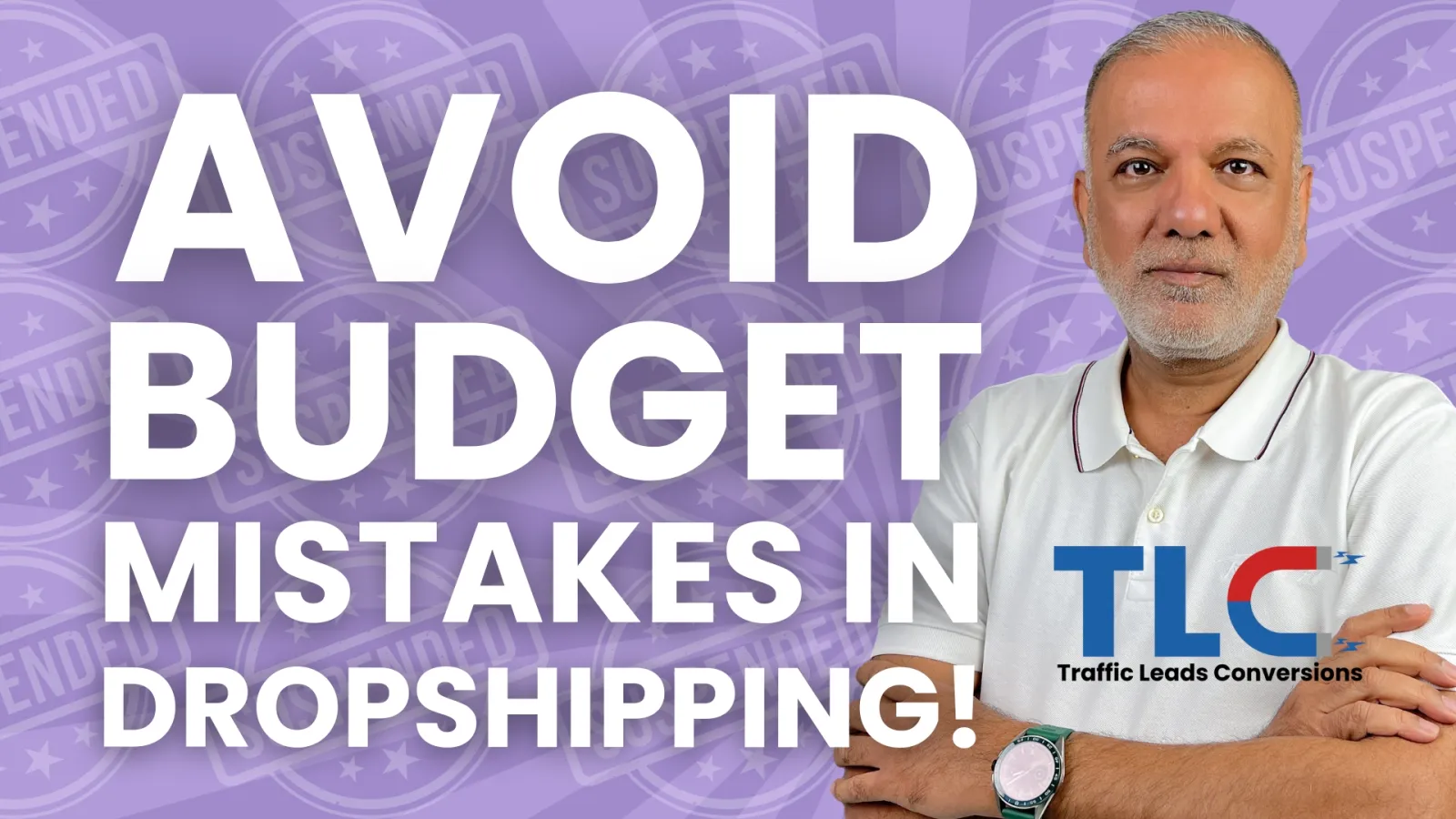
Setting the “perfect” budget for your dropshipping store sounds simple, but most beginners approach it the wrong way. They try to set a fixed number before they even know if their product or ads are profitable. In reality, your budget depends on your goals, your cash flow, and how much you’re willing to test before expecting results.
In this post, I’ll break it down in a very simple way so you understand exactly how to think about budgeting without overcomplicating it.
Get Found, Get Chosen, Get Your Time Back
A free one-day marketing seminar in Milton Keynes · 10 November 2026
1. Don’t Set a Budget Before You Know Your Numbers
Many new dropshippers look at their product price, say $95.99 and assume they can calculate an exact budget from that. But you can’t decide a final budget until you know your return on ad spend (ROAS).
Get your free Marketing Action PlanNot sure where to start? Answer a few questions and get your plan in about a minute. No email needed.
Get my plan →You need real data first. Ads must run long enough to exit the learning phase and start optimising. Until then, any number you choose is just a guess.
2. What You Actually Need: A Testing Budget
Instead of asking, “What should my total budget be?”, ask: “How much can I afford to lose while testing?”
That’s your testing budget.
During the testing phase, you must assume that you may make no profit at all. This mindset keeps you from panicking too early or expecting instant returns.
A few key points:
- Only use money you can afford to lose.
- Don’t use bill money, rent money, or grocery money.
- Testing is supposed to generate data, not guaranteed sales.
Some stores test with $500. Others test with $3,000 or even $10,000. It depends entirely on your financial comfort level.
3. What If You Don’t Have a Big Budget?
Then you need to “pay” with time instead of cash.
 LIVE
Live every Tuesday at 2pm UK. Bring your marketing questions.
Get your Google, local SEO and AI questions answered live.
There are only two resources in life:
- Money
- Time
If you don’t have the cash for ads, you’ll need to put in the time:
- Creating daily content
- Posting on social media
- Contacting potential customers
- Building organic traffic
The good news? You can reach the entire world from your home. There are no excuses anymore.
4. Spend in Small Segments, Not All at Once
Even if your testing budget is large, you shouldn’t blow it all in one shot.
A good approach is to spend in blocks like $500–$600 at a time, then check:
- Are you getting enough clicks?
- Are people adding to the cart?
- Are you collecting enough data to make decisions?
Never judge a campaign by just a few clicks. Let it gather real data before adjusting anything.
5. Once You Get a Sale, Start Optimising
The moment you get your first sale, the game changes.
Now you:
- Double down on what’s working
- Cut out expensive or non-performing ads
- Slowly increase your budget on the winning parts
This is where scaling starts.
Final Thoughts
There is no “perfect” magic number for everyone. But there is a perfect mindset:
- Test with money you’re prepared to lose.
- Let the data mature.
- Scale what works.
- Cut what doesn’t.
If you follow that process, your budget will naturally fall into place.

Written by Uzair Kharawala
Partner at SF Digital Studios, a Google Premier Partner agency. Uzair has been helping businesses grow with Google Ads since 2002 and teaches it every week on YouTube.
Get our best Google Ads tips by email
New articles and videos, straight to your inbox. Unsubscribe any time.