

Did you know that over 90% of online experiences begin with a search engine? But here’s the kicker: not all searches are created equal. Trying to rank for keywords without understanding the user’s underlying motivation is like trying to sell ice to an Eskimo—a wasted effort and a budget drain.
Imagine knowing exactly what your potential customers are thinking the moment they type something into Google. This superpower for small businesses allows you to anticipate needs, answer questions, and guide them toward your products or services.
For small business owners, every click, visit, and interaction truly matters. In a competitive digital landscape, merely showing up isn’t enough; you need the right message, at the right time, for the right person. This guide demystifies the four fundamental keyword intent types, providing practical strategies to attract, engage, and convert ideal customers, even if new to SEO.
Navigating the Digital Landscape: Understanding Informational Keyword Intent for Growth
Informational keyword intent is common when users seek to learn, find answers, or understand a topic. They are in the “discovery” phase, often at the very beginning of their customer journey. Think of searches like “how to make sourdough bread” or “what is organic SEO.”
Consider Sarah, a new homeowner, searching “how to grow tomatoes in pots.” She needs process understanding, not to buy yet. A local garden store with a blog post “Beginner’s Guide to Growing Tomatoes in Containers” would position them as a helpful resource.
Actionable Tip: Creating Valuable Content for “Know” Queries
To capture informational intent, create high-quality, comprehensive content that directly answers common questions (blog posts, how-to guides). Use long-tail keywords with “how,” “what,” “why.” Structure content with clear headings and easy language. Educate and build trust, positioning your brand as an authority. Upfront value nurtures customers.
Case Study Insight: A Local Bakery’s Blog Success
“The Sweet Spot Bakery” blog featured recipes and articles like “The History of Croissants.” This attracted local food enthusiasts and amateur bakers. Impressed by their expertise, many became loyal customers for cakes and daily treats. Informational content nurtured a community and built brand loyalty, proving valuable knowledge is powerful.
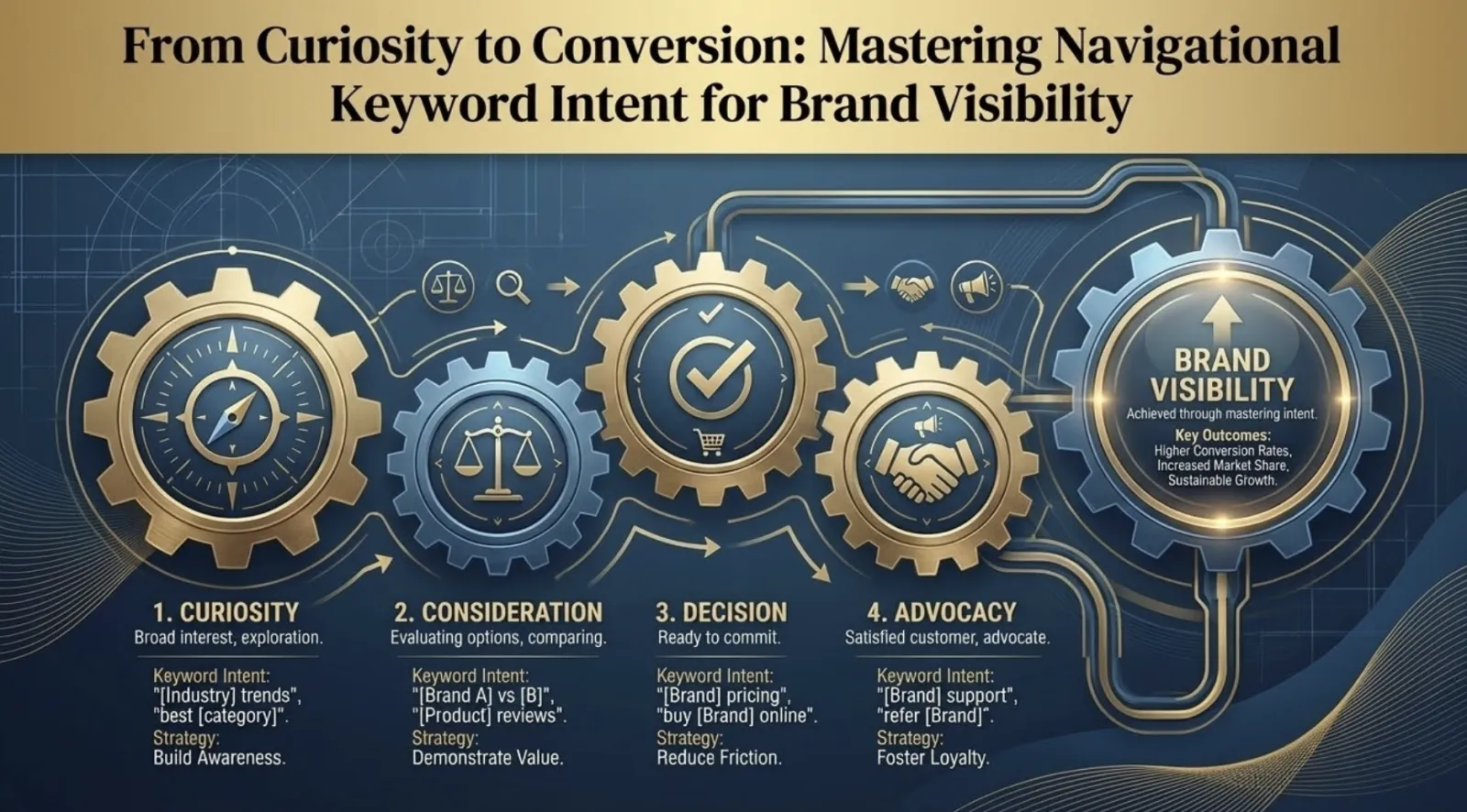
From Curiosity to Conversion: Mastering Navigational Keyword Intent for Brand Visibility
Navigational keyword intent occurs when a user knows exactly where they want to go online, using a search engine as a shortcut. Examples include “Amazon login,” “Facebook,” or “your business name contact us.” The user has a destination in mind.
Imagine Mark, a loyal customer of “Green Valley Organics,” searching “Green Valley Organics.” He trusts them and wants quick access to their online store. If your business ranks prominently for its own name, you guide existing customers directly to your digital doorstep.
Actionable Tip: Optimizing for Brand Recognition and Direct Access
Optimizing for navigational intent is crucial. Ensure your website ranks #1 for your exact brand name and variations. Maintain a strong online presence and consistent branding. Optimize your Google My Business profile for location, phone, and website. Local SEO connects physical and digital presence.
Comparison: Navigational vs. Informational Intent
Informational intent educates broad audiences; navigational caters to users already familiar with your brand. New businesses use informational content for awareness, then navigational optimization ensures they can be easily found again. Both are vital for holistic SEO; failing to rank for your own brand is detrimental.
Ready to Buy: Leveraging Transactional Keyword Intent for Immediate Sales
Transactional keyword intent is highly coveted, as users are ready to make a purchase or complete a conversion. They seek products, services, or items to acquire now. Keywords often include “buy,” “price,” “discount,” “order,” or specific product names.
Consider David, whose coffee machine broke, so he searches “buy espresso machine online” or “best price Breville Barista Express.” He’s past research, actively seeking a vendor. An optimized product page, clear call to action, and competitive pricing are critical for his sale.
Actionable Tip: Designing High-Converting Landing Pages and Product Descriptions
To capitalize on transactional intent, focus on highly optimized product and landing pages. These must be clear, concise, and persuasive. Include compelling descriptions, high-quality images, customer reviews, clear pricing, and prominent “Add to Cart” buttons. Optimize for speed, mobile, and seamless checkout. Use conversion-focused keywords; consider incentives like free shipping or discounts to encourage action.
Expert Insight: The Power of Scarcity and Urgency
Psychology impacts transactional intent. Scarcity (“Only 3 left!”) or urgency (“Sale ends tonight!”) on product pages can boost conversions when combined with clear, benefit-driven copy and an easy purchase path. Use these tactics ethically to build trust.
Comparing Choices: Harnessing Commercial Investigation Keyword Intent for Educated Purchases
Commercial investigation bridges informational and transactional intent. Users research products with a strong purchase likelihood, evaluating options. They seek reviews, comparisons, “best-of” lists, and detailed specs to make informed decisions. Keywords include “best,” “review,” “comparison,” or “alternatives.”
Meet Jessica, who needs a new laptop for her design business. She searches for “best laptops for graphic design 2024” or “MacBook Pro vs. Dell XPS.” She’s doing her homework, comparing pros and cons before committing to a model or brand.
Actionable Tip: Crafting Comprehensive Product Reviews and Comparison Guides
To attract users with commercial investigation intent, create detailed, unbiased-sounding content. This includes product reviews, side-by-side comparisons, “best of” lists, and buyer’s guides. Provide honest assessments, highlighting features, benefits, and drawbacks. Use data, expert opinions, and real-world testing. Position your brand as a trusted advisor.
Framework: The “Compare, Review, Decide” Strategy
When creating content for commercial investigation intent, adopt a structured approach:
Compare: Directly compare two or more similar products or services, highlighting their differences in features, pricing, and target audience.
Review: Provide in-depth reviews of individual products, covering specifications, user experience, pros, and cons.Decide: Offer clear recommendations based on different user needs or budgets. This helps users narrow options, building trust and positioning you as an invaluable resource.
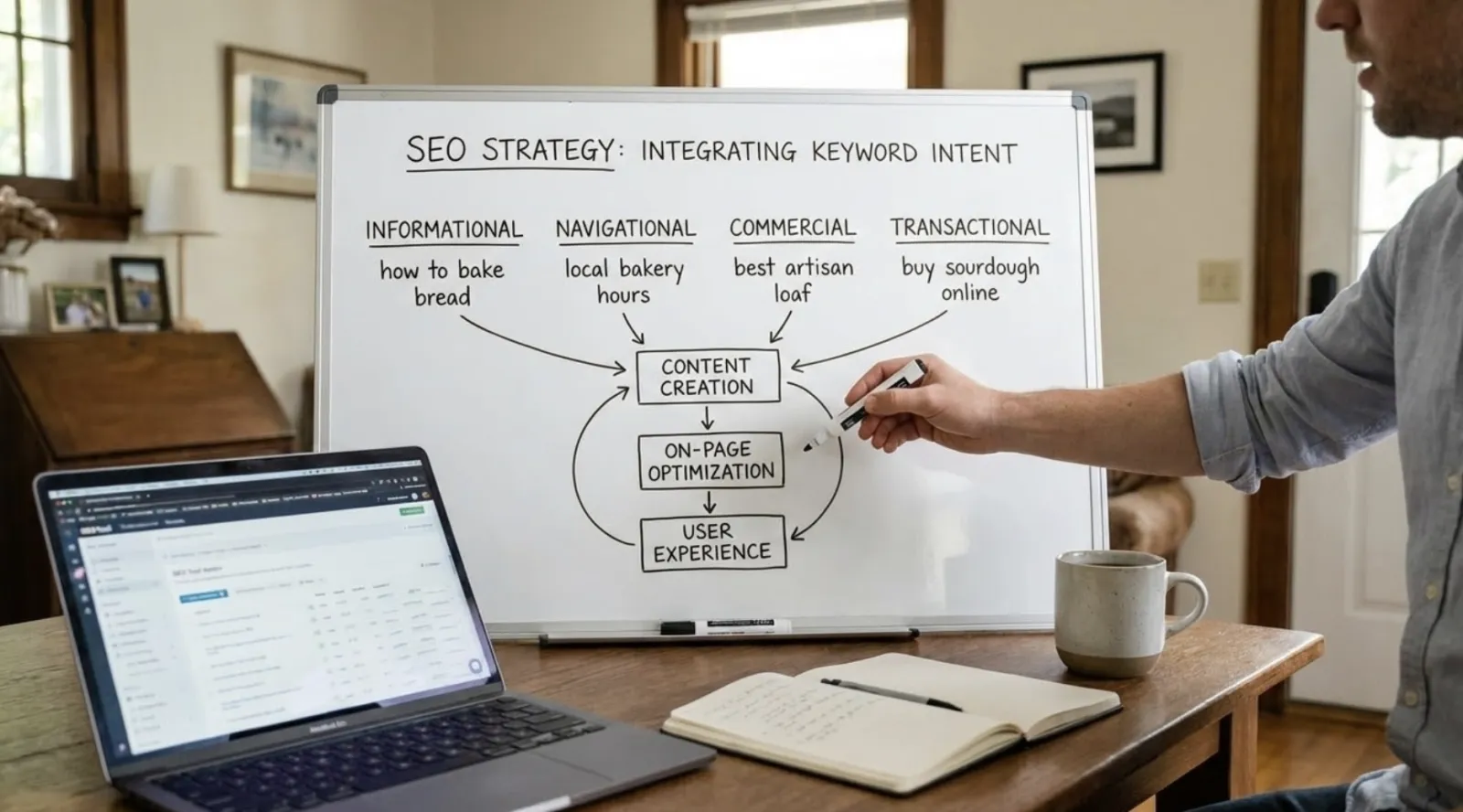
Integrating Keyword Intent into Your Small Business SEO Strategy
Understanding these four keyword intent types is the first step; integrating them into a cohesive SEO strategy creates magic. Small businesses need a diverse content portfolio, addressing users at every buying stage. Nurture your audience from discovery to purchase.
Building a Diverse Content Portfolio
Your content strategy needs a balanced mix. Create engaging blog posts and guides for informational intent, optimize your brand for navigational searches, develop compelling product pages for transactional intent, and craft detailed reviews for commercial investigation. Ensuring visibility across the funnel.
Aligning Content with the Customer Journey
Think of your customer’s journey as a path. Informational content builds the initial path, attracting those just starting their journey. Navigational content clearly marks the way to your door for those who know you. Commercial investigation content provides helpful maps for weighing options. Transactional content is the final destination. Aligning content with each stage creates a seamless, supportive experience leading users to your business.
Monitoring and Adapting Your Approach
SEO isn’t “set it and forget it.” Regularly monitor keyword rankings, website traffic, and conversion rates using analytics. Understand which content performs best for each intent type. Adapt content and optimization based on data. A flexible, data-driven strategy keeps your business ahead.

Frequently Asked Questions About Keyword Intent
Here are common questions small business owners often ask about keyword intent:
1: How do I identify the intent behind a keyword?
To identify keyword intent, put yourself in the searcher’s shoes. Look for clues: “how to” (informational), brand names (navigational), “buy”/”price” (transactional), “best”/”review” (commercial investigation). Observe top search results; Google prioritizes content matching dominant intent.
2: Can a single keyword have multiple intents?
Yes. “iPhone” could be transactional, informational, or navigational. Create content addressing prominent intents, or focus on your most relevant. Context from other query words often clarifies intent.
3: Which keyword intent type is best for a new business?
Initially, a mix of informational and commercial investigation. Informational content builds awareness and expertise. Commercial investigation intercepts users actively researching. Transactional is competitive; nurturing leads with earlier-stage content yields better long-term results.
4: How often should I review my keyword intent strategy?
At least quarterly, or with significant industry/product changes. Search trends shift. Regular audits identify new opportunities, refine content, and ensure strategy aligns with user behavior and business objectives. Consistent monitoring is key.
5: What tools can help me with keyword intent research?
Google Keyword Planner, SEMrush, Ahrefs, and Moz Keyword Explorer offer detailed analysis. Typing keywords into Google and observing “People also ask” and related searches provides valuable insights.
Final Thoughts: Your Pathway to Smarter SEO and Business Growth
Understanding the four keyword research intent types—informational, navigational, transactional, and commercial investigation—is a fundamental shift for small businesses. Aligning your content with audience needs moves you beyond just traffic to engaging and converting genuine leads. This empowers effective SEO strategies, resonant content, and sustainable growth. Stop guessing what customers want; understand their intent and provide exactly what they seek at every journey stage. Your journey to smarter, more impactful SEO begins now!

Written by Uzair Kharawala
Founder of SF Digital Studios, a Google Premier Partner agency. Uzair has been helping businesses grow with Google Ads since 2002 and teaches it every week on YouTube.
Get our best Google Ads tips by email
New articles and videos, straight to your inbox. Unsubscribe any time.