
If you’re running Google Ads on a small budget, you’ve probably come across the term “broad match.” Google often recommends it. It sounds great on paper. Your ads show up for more searches, right? More reach means more results?
Well, not exactly.

Get Found, Get Chosen, Get Your Time Back
A free one-day marketing seminar in Milton Keynes · 13 January 2027
Let’s break this down in a real, honest way without too much fluff or jargon.
Get your free Marketing Action PlanNot sure where to start? Answer a few questions and get your plan in about a minute. No email needed.
Get my plan →What is Broad Match Anyway?
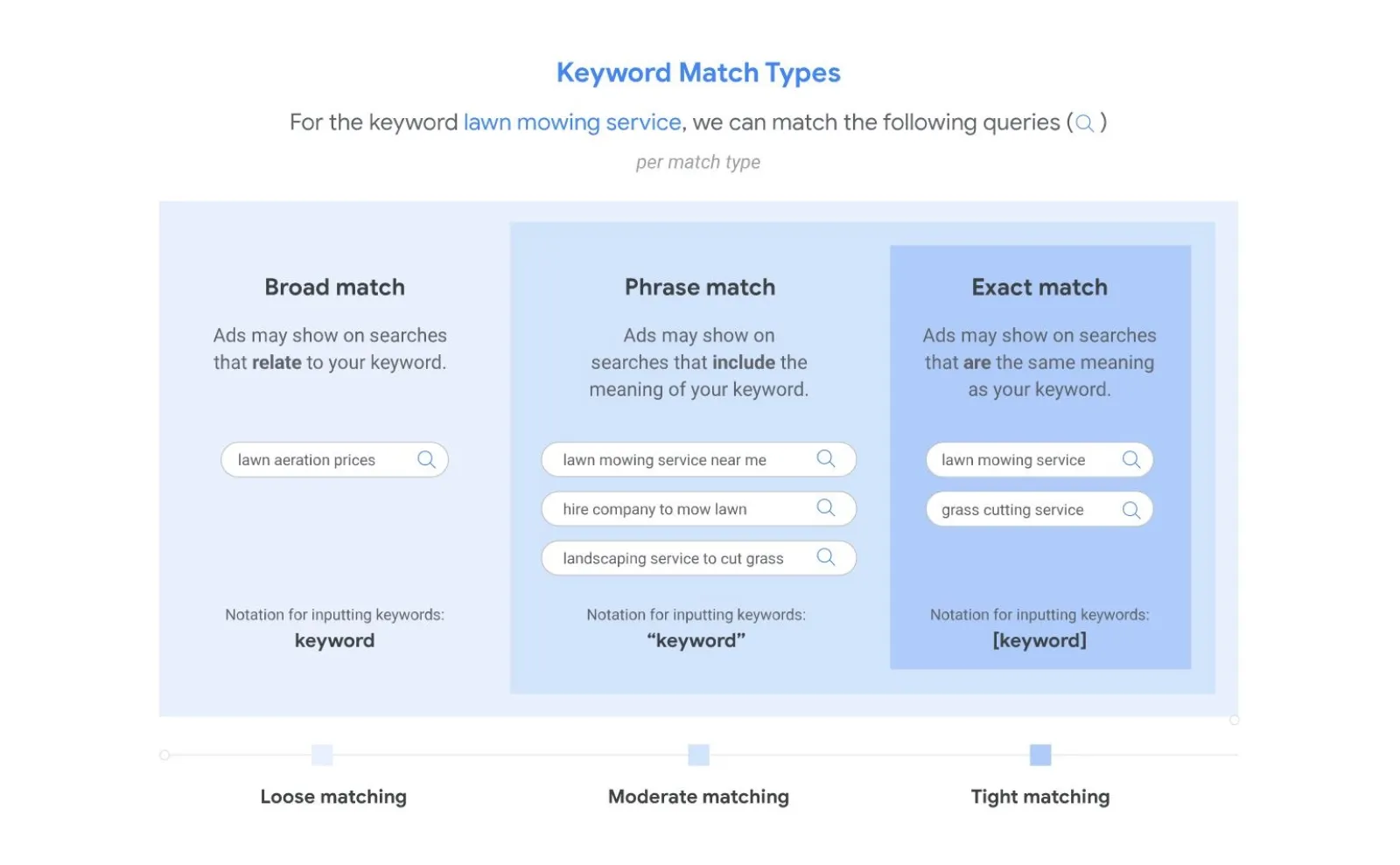
Broad match is a keyword match type in Google Ads. If you use broad match, Google shows your ad for searches that are loosely related to your keyword.
For example, if your keyword is “running shoes”, your ad might show for searches like:
- best gym sneakers
- marathon footwear
- Nike shops near me
- even have things like “comfortable sandals” (yes, seriously)
This wide net can sometimes bring in good traffic. But for small advertisers, it can also drain your budget fast.
The Honest Truth: Is It Good for Small Budgets?
Not usually.
 LIVE
Live every Tuesday at 2pm UK. Bring your marketing questions.
Get your Google, local SEO and AI questions answered live.
Here’s why:
- It’s Too Loose: Broad match doesn’t always understand intent well. Just because someone searched something “related” to your keyword doesn’t mean they’re ready to buy or even interested.
- You Pay for Irrelevant Clicks: Each click costs you money. With a tight budget, every dollar counts. If your ad shows up for a weak search and someone clicks, that’s budget wasted.
- 3. Low Control: You lose control over where your ads show. You don’t always know what exact phrases triggered your ad unless you dig through the search term reports, and even those are limited now.
When Can Broad Match Work?
There are a few cases where broad match might work, but it still needs extra care.
- You have conversion tracking set up correctly.
- You’ve turned on Smart Bidding (like Target CPA or ROAS).
- You give Google enough data to optimise towards actual sales or leads.
Even then, it’s a risk for small accounts with less data and a limited budget.
Better Options for Small Budgets
Start with exact match and phrase match keywords. These give you more control. You know what you’re paying for. It’s not as exciting or “automated,” but it’s safer and often more profitable when you’re just starting.
Also:
- Use negative keywords to block bad traffic.
- Keep your keywords tight and specific.
- Track results weekly. Don’t “set and forget.”
Final Answer? Play it Safe First
If you’re new and on a tight budget, avoid broad match until you really understand your account and audience. It can work, but it’s better to test it after you’ve got more data and confidence.
Save your money and focus on what works. Then experiment slowly.
Summary
Broad match sounds helpful, but it often burns small budgets fast. Start with more controlled match types, build data, then decide if broad match is worth a try. Always test with caution.

Written by Uzair Kharawala
Partner at SF Digital Studios, a Google Premier Partner agency. Uzair has been helping businesses grow with Google Ads since 2002 and teaches it every week on YouTube.
Get our best Google Ads tips by email
New articles and videos, straight to your inbox. Unsubscribe any time.