
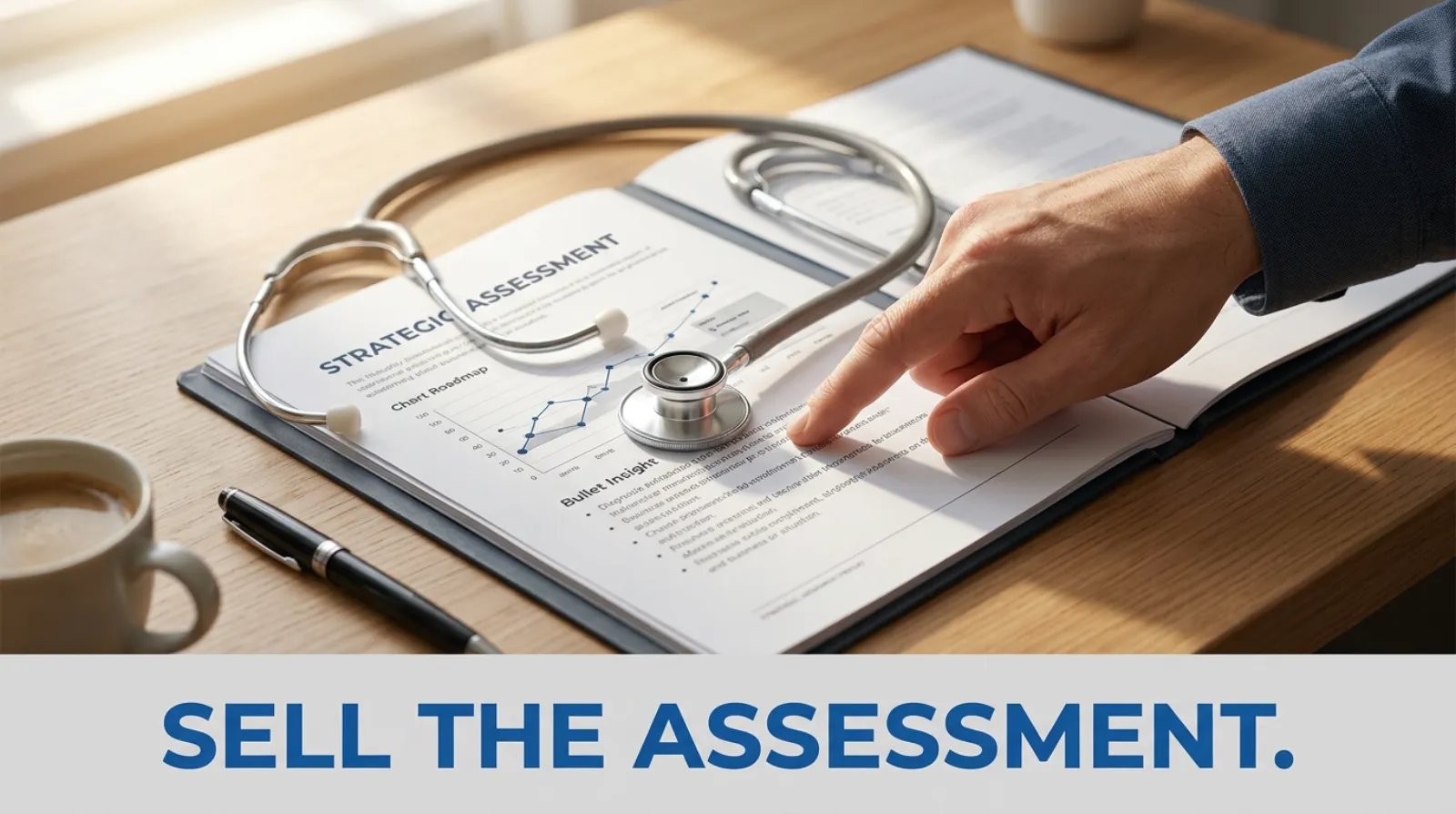
Are you tired of potential clients ghosting you after a lengthy proposal? Do you constantly justify your prices, only to meet with scepticism? Many clients do not fully understand their own problems, let alone the solutions you offer. Imagine if you could diagnose their exact pain points and present a tailor-made roadmap. This proves your value before they even commit, securing better client clarity.
Why Does Directly Selling Your Services Fail?
Many service providers, from consultants to marketers, fall into a common trap. They lead with their offerings, like “I build websites” or “I manage social media.” This well-intentioned approach often creates a barrier between you and your potential client. It positions you as a vendor, not a trusted advisor.
Are Clients Really Looking for Your Services?
Most clients seek solutions, not just services. They want more leads, not just a website. They desire increased brand awareness and sales, not merely social media management. When you immediately pitch your ‘how,’ you assume they understand their ‘why’ and believe your method is best. This is rarely the case, especially for small business owners.
Get your free Marketing Action PlanNot sure where to start? Answer a few questions and get your plan in about a minute. No email needed.
Get my plan →The Pitfall of Pitching Solutions Too Early
Jumping straight to a proposal without understanding a client’s unique situation feels transactional. It forces them to compare your price to competitors, ignoring your unique value. This approach leads to long sales cycles, low closing rates, and constant price battles. You become just another option, rather than the indispensable expert in strategic selling.
Unlock Value: The Power of Selling a Paid Assessment
Shift your strategy. Instead of selling a solution to an unknown problem, sell the assessment. An assessment is a structured, paid process. It thoroughly diagnoses a client’s current situation, identifies specific challenges, and uncovers opportunities. This strategic pivot transforms your sales process for service business growth.
Building Trust and Positioning Expertise Instantly
Offering an assessment immediately establishes your authority. You sell clarity and a deeper understanding of their business, not just a service. This process demonstrates your expertise before any long-term commitment. Clients perceive you as a diagnostician, a trusted advisor. This initial investment builds immense trust, focusing solely on their needs.
Achieve Higher Close Rates and Premium Pricing
Clients who pay for an assessment are already invested. They show commitment to solving their problem. After the assessment, they hold a comprehensive understanding of their challenges and a clear roadmap. This makes the subsequent sale of your services a natural progression, not a hard sell. You implement solutions you collaboratively identified. This leads to higher close rates and allows for premium pricing.
Solving Real Problems, Not Just Selling Tasks
An assessment ensures you sell the right services. You address the client’s actual pain points with precision, avoiding guesses or generic solutions. This reduces scope creep and improves client satisfaction. It aligns your work directly with their business goals, making your services indispensable. This targeted approach means less wasted effort and more impactful results.
What Makes a Paid Assessment Different from a Free Consultation?
Many service providers offer free consultations as an initial touchpoint. However, a true assessment is fundamentally different, offering significantly more value. Understanding this distinction is crucial for successful implementation of your sales strategy.
Defining a Value-Driven Assessment
A value-driven assessment is a structured engagement with a clear scope, timeline, and deliverable. It deeply analyses a specific area of the client’s business. You identify issues, analyse data, and provide expert recommendations. Think of it as a paid mini-project where the output is a strategy, report, or comprehensive plan.
Key Distinctions: Paid, Structured, and Deliverable-Focused
The primary difference is that an assessment is paid. This elevates its perceived value and ensures client commitment, unlike free consultations which attract ‘tire-kickers.’ Secondly, an assessment is highly structured, involving defined steps like data collection and analysis. Lastly, it is deliverable-focused. Clients receive a tangible output, such as a detailed report or strategic roadmap. This deliverable holds significant standalone value, offering immense client clarity.
Crafting Your Signature Assessment: A Blueprint for Success
Developing your own signature assessment need not be complicated. It involves packaging your initial discovery process and expertise into a valuable, standalone offering. This blueprint guides you to create an assessment that attracts ideal clients and sets the stage for high-value service engagements.
Identify Your Niche and Core Problem Solvers
Understand your audience and the specific, painful problem you solve. Avoid creating a generic assessment. Focus on a clear niche and a common, significant challenge. For example, consider a “Local SEO Visibility Assessment for Small Retailers” instead of a “general marketing assessment.” Specificity makes your assessment more relevant and valuable to your ideal client.
Design a Comprehensive Assessment Process
Outline the steps for gathering information and conducting your analysis. This process should be thorough yet not overwhelming.
- Initial Intake Form: A questionnaire to gather basic information and current pain points.
- Data Collection: Access to analytics, existing documents, or relevant software.
- Discovery Call/Interview: A structured conversation to delve deeper into challenges and goals.
- Analysis Phase: Your time spent reviewing data, identifying patterns, and formulating insights.
- Strategy Formulation: Developing actionable recommendations based on your analysis.
Defining these steps creates transparency and builds client confidence.
Develop Tangible Deliverables for Your Clients
The client’s deliverable at the end of the assessment is critical, as it embodies the value they pay for. Examples include:
- A comprehensive Audit Report highlighting strengths, weaknesses, and opportunities.
- A Strategic Roadmap outlining prioritised steps and projected outcomes.
- A Performance Analysis with specific data points and benchmarks.
- A Recommendation Deck detailing proposed solutions.
Ensure your deliverable is professional, easy to understand, and clearly outlines the current state, desired future state, and the recommended bridge.
Strategically Pricing Your Valuable Assessment
Your assessment should be a paid engagement. Avoid underpricing. The price must reflect the value of the insights and your invested time. Consider value-based pricing: what is the potential return for the client if they implement your recommendations?
- Tiered Pricing: Offer different levels of assessment (e.g., Basic Audit, Advanced Strategy Session).
- Fixed Fee: A clear, upfront price covering the entire assessment process.
Your assessment price should be low enough for a serious prospect to say “yes” easily. Yet, it must be high enough to filter out non-serious enquiries and cover your valuable time. This initial investment qualifies clients and ensures their commitment to finding solutions.
Branding Your Assessment for Maximum Impact
Give your assessment a memorable and descriptive name. This aids marketing and makes it feel like a unique product, not just a service component.
- “The [Niche] Growth Accelerator Assessment”
- “The [Problem] Solution Blueprint”
- “The [Industry] Digital Health Check”
A strong name combined with clear messaging about the problem it solves makes your assessment much more appealing. This branding establishes it as an identifiable, standalone offering.
Integrating Assessments Seamlessly into Your Sales Pipeline
Once you craft your signature assessment, integrate it effectively into your sales process. This reshapes how you interact with potential clients from the very first touchpoint. This is key for service business growth.
Shift Your Language: From Services to Solutions
Immediately change your language. Stop leading with “We offer X service.” Frame conversations around solving problems and achieving outcomes through your assessment.
- Before: “We build custom websites.”
- After: “Struggling to convert website visitors into leads? Our Digital Performance Assessment identifies why and outlines a clear path to boosting online results.”
This shift positions you as a problem-solver and strategic partner. It moves the conversation from features to benefits, resonating strongly with small business owners.
Marketing Strategies to Attract Assessment Clients
Feature your assessment prominently in your marketing. Treat it like a product with its own dedicated landing page.
- Website: Detail your assessment’s benefits, process, and deliverables.
- Content Marketing: Create blog posts and social media content highlighting problems your assessment solves. Use calls to action to learn more about your assessment.
- Email Marketing: Promote your assessment to your existing list, showcasing its value.
Focus marketing on the assessment’s outcome, such as clarity and strategic planning. This value focus attracts the right leads.
Mastering the Assessment Sales Conversation
When a client expresses interest, your goal is to sell the assessment, not your main services.
- Qualify: Briefly ensure they fit your ideal client profile and have a genuine problem.
- Educate: Explain the assessment, its process, deliverables, and how it provides clarity.
- Highlight Value: Emphasise the tangible insights and specific problems it will solve.
- Present Pricing: Clearly state the fixed fee.
- Address Objections: Explain why it is a necessary investment before full services.
Frame the assessment as the logical first step to building the right solution.
Transitioning from Assessment Findings to Service Implementation
The assessment’s conclusion is pivotal. Present your findings and recommendations in a detailed report or presentation.
- Review Findings: Explain the current state, identified problems, and missed opportunities.
- Present Recommendations: Outline specific actions needed to address problems and achieve goals. These should naturally lead to your core services.
- Propose Services: Detail how your services implement these recommendations. Your proposal will feel like a natural continuation, not a separate sales pitch.
- Outline Next Steps: Provide a clear path for them to move forward with your services.
This smooth transition leverages deep understanding, making the sale of ongoing services easier and more aligned with client needs.
Real-World Impact: Case Studies of Assessment Success
Shifting to selling assessments delivers tangible results across various industries. These examples show how a structured discovery process transforms client relationships and business outcomes. This proves assessment selling for consulting success.
From Struggle to Clarity: A Marketing Agency’s Transformation
A small marketing agency struggled with client churn and scope creep. They onboarded clients directly into full-service social media packages. Weeks later, they found clients had broken websites or non-existent sales funnels. Their services, though good, missed foundational issues. They introduced a “Digital Ecosystem Audit” for a fixed fee. This audit revealed one e-commerce client’s problem was a slow-loading website, not social media reach. The agency presented findings and recommended a website optimisation project first. Impressed by the insight, the client invested in the website fix, then a targeted social media strategy. The assessment led to a larger project and a trusted, long-term partnership.
Boosting ROI with a Data Security Audit Assessment
A cybersecurity consultant often found himself reacting to breaches. He realised his value lay in proactive prevention, but clients hesitated to invest in abstract “security services.” He launched a “Cybersecurity Vulnerability Assessment” for a premium fixed price. This involved in-depth network scans and policy reviews. A manufacturing firm, after a minor phishing incident, opted for the assessment. Findings revealed critical software vulnerabilities, weak training, and insufficient backups. The report outlined risks and mitigation steps. The consultant presented a precise plan of action, tied to the assessment. The firm, aware of its exposure, invested in upgrades and ongoing monitoring, preventing a catastrophic future breach. The assessment transformed a reactive call into a proactive, high-value engagement.
Navigating Common Obstacles: Avoiding Assessment Pitfalls
While selling assessments offers immense advantages, common missteps can diminish their effectiveness. Being aware of these pitfalls ensures your assessment strategy remains robust and profitable for business consulting.
The Trap of Giving Away Too Much Value
Do not treat your paid assessment like a glorified free consultation. Providing extensive, actionable advice during discovery without charging undermines the assessment’s value. The assessment itself is the product for sale. Ensure deep dives and comprehensive answers are reserved for the paid process. Protect your intellectual property and highlight the distinct value of the paid diagnostic.
Undervaluing Your Expertise: Pricing Your Time Correctly
It is tempting to underprice your assessment. However, an underpriced assessment implies your insights are not valuable. This attracts price-sensitive clients, making subsequent service sales harder. Your assessment price must reflect your expertise, time, and intellectual capital. It should qualify serious prospects and position you as a premium expert. Charge what your diagnostic insights are truly worth.
Keeping It Focused: Avoiding Overly Complex Assessments
Though thoroughness is key, an assessment can become unwieldy if too broad. An overly complex or lengthy assessment intimidates clients and dilutes impact. Keep it tightly focused on a specific problem area. Deliver clear, actionable insights within a reasonable timeframe. If a client has multiple problems, offer several focused assessments, not one sprawling one. Simplicity and clarity in scope enhance appeal and manageability.
Frequently Asked Questions About Selling Assessments
Shifting to an assessment-first sales model brings up common questions. Here are answers to frequently asked queries, providing clarity and confidence for adopting this powerful sales strategy.
What types of businesses can benefit from selling assessments?
Almost any service-based business benefits from selling assessments. This includes marketing agencies, IT consultants, business coaches, and web developers. If your service involves diagnosing problems, analysing situations, or providing strategic plans before implementation, an assessment model will likely work. It is especially effective for clients who may not fully understand their own needs.
How do I determine the right price for my assessment?
Pricing your assessment involves considering the value of insights, time invested, and your target client’s budget. What clarity and a strategic roadmap are worth to your ideal client is a good starting point. This might be hundreds or thousands of pounds. It should be substantial enough to filter non-serious enquiries but accessible enough for a committed prospect. Many professionals price their assessment at 10-20% of their typical project minimum.
Is selling an assessment just a clever way to upsell clients?
While an assessment often leads to further service engagements, its primary purpose is not merely an upsell. A truly valuable assessment provides standalone value, offering clarity and an actionable plan, regardless of whether clients proceed. It is about being a trusted advisor. If your assessment is genuinely valuable, transparent, and solves a problem on its own, it is an ethical offering that benefits the client directly.
What if a client does not proceed with my services after the assessment?
This is a possibility, but not a failure. If a client declines further services, they still received valuable insights and a roadmap for their investment. You also gained experience and were compensated for your time. Crucially, you avoided investing unpaid time in a client who was not a good fit or ready to commit. Think of it as a low-risk, high-reward qualification process. The assessment itself becomes a profitable product.
How long should an effective assessment typically take?
The duration varies greatly depending on scope and complexity. For many small business services, an assessment might take a few hours to a few days of dedicated time. Client-facing portions, like interviews, might span a week or two, with the final deliverable presented shortly after. Define a clear timeline upfront for client expectations. Avoid overly lengthy assessments, which can lose momentum and dilute value perception.
Final Thoughts: Transform Your Sales, Transform Your Business
The traditional model of directly selling services is becoming less effective in today’s competitive market. Clients seek clarity, trust, and proven expertise before committing to significant investments. By leading with a value-driven assessment, you fundamentally change your sales process. You become a trusted advisor, diagnosing problems and prescribing precise solutions. This transformation positions you as an indispensable expert, driving service business growth.
Embrace the assessment advantage today. Build stronger client relationships, close more deals at higher prices, and deliver impactful results. This strategy elevates your professional standing, ensures better client fit, and creates a clear pathway for your services. Redefine your sales process, attract ideal clients, and unlock new growth and profitability for your business.

Written by Uzair Kharawala
Partner at SF Digital Studios, a Google Premier Partner agency. Uzair has been helping businesses grow with Google Ads since 2002 and teaches it every week on YouTube.
Get our best Google Ads tips by email
New articles and videos, straight to your inbox. Unsubscribe any time.