

When running Google Ads, you’ll often see the option to run ads on both the Search Network and the Display Network. While it might seem like a good idea to combine them into one campaign, it’s usually recommended to keep them separate. But why is that? Let’s break it down simply.
1. Different Audience Behaviors
The biggest reason for separating these campaigns is that the audience on each network behaves differently. People on the Search Network are actively looking for something—whether it’s a product, service, or information. They’re in “search mode” and often have high purchase intent. On the other hand, the Display Network shows ads to people who are browsing content and are not necessarily looking to make an immediate purchase. They may not even be thinking about buying yet, but your ad could spark their interest.

Get Found, Get Chosen, Get Your Time Back
A free one-day marketing seminar in Milton Keynes · 10 November 2026
So, the two groups need different approaches in terms of messaging and targeting.
Get your free Marketing Action PlanNot sure where to start? Answer a few questions and get your plan in about a minute. No email needed.
Get my plan →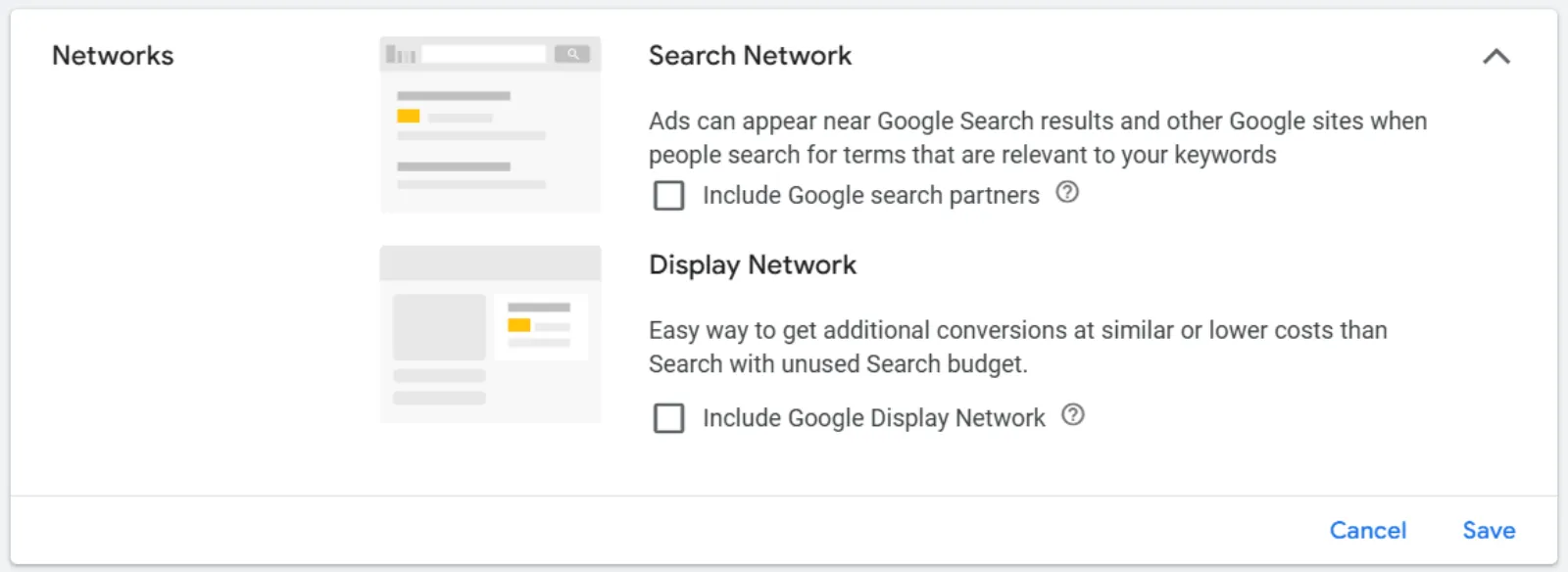
2. Customising Ad Creatives and Targeting
When you keep these networks separate, you have more control over each campaign’s settings. For example, on the Search Network, you can focus on text-based ads that are tailored to specific keywords. But for the Display Network, image or video ads work better since you’re catching users’ attention while they’re browsing websites, watching videos, or using apps.
 LIVE
Live every Tuesday at 2pm UK. Bring your marketing questions.
Get your Google, local SEO and AI questions answered live.
You can also set more precise targeting for each campaign. On the Search Network, you target based on keywords, while on the Display Network, you can target based on interests, demographics, topics, or even remarketing lists. This level of customisation is hard to achieve when everything is combined into one campaign.
3. Budget Allocation and Performance Tracking
Search and Display campaigns typically have different performance metrics. Search campaigns usually see a higher conversion rate because users are actively searching for something specific. Display campaigns may have lower conversions but can be great for brand awareness and reaching a wider audience.
By separating the two, you can allocate your budget more effectively depending on the performance of each. For example, if your Display Network campaign isn’t converting as well as your Search campaign, you can adjust the budget without affecting the other network.
4. Campaign Optimisation
With separate campaigns, you can optimise each one based on its unique needs. If you notice that a particular ad on the Search Network is performing well, you can scale it up. If an ad on the Display Network is underperforming, you can tweak it without interfering with the search-related ads.
Conclusion
In short, keeping your Display Network campaigns separate from your Search Network campaigns gives you more control and flexibility. You can optimise for different goals, manage budgets more effectively, and craft targeted messages that match the audience’s intent. It’s a simple way to improve your Google Ads strategy and get the best results from both networks.

Written by Uzair Kharawala
Partner at SF Digital Studios, a Google Premier Partner agency. Uzair has been helping businesses grow with Google Ads since 2002 and teaches it every week on YouTube.
Get our best Google Ads tips by email
New articles and videos, straight to your inbox. Unsubscribe any time.