

Many digital marketers think that using fancy words or complicated phrases will better impress their audience. But the truth is: that simplicity wins.
Many content is available online, and people scroll through it quickly. They don’t have time to figure out complex language themselves. If your message isn’t clear, they’ll leave it.
Simple and clear writing grabs attention. It shows that you respect the reader’s time and know their needs. When your words are easy to read and understand, they connect better. People feel like you’re speaking directly to them.
So, how to use the right vocabulary? What exactly are fancy words? Why is simplicity powerful? Read on to learn!
What Exactly Are Fancy Words?
Fancy words are long or complicated words that people use to sound impressive or intellectual. They can be technical jargon, industry-specific terms, or flowery language.
They are not used in everyday conversation as frequently as basic words.
The following are examples of such fancy words:
- Exquisite
- Nostalgic
- Capricious
- Ephemeral
- Proliferate
Why Fancy Words Don’t Work in Digital Marketing?
Short Attention Spans
Online users have short attention spans. They seek the necessary information fast.
Readers lose interest and go on if your material is full of complex or fancy vocabulary. Therefore, fancy words don’t fit in digital marketing since they can complicate your message.
Easy language attracts readers and draws their attention.
Clarity Over Cleverness
In digital marketing, clarity is more important than cleverness. The why?
Many individuals skim content online rather than reading every word. Readers may overlook your major arguments if they are buried in fancy wording.
Simple and easy content helps individuals to grasp and act.
Audience Diversity
Your audience is diverse. Their backgrounds vary and their degrees of knowledge vary as well. Technical words and complicated terminology are not known to everyone.
Simple terms help your material to be clear and transparent. This helps more individuals connect to your message.
SEO Implications
Content that matches what users search ranks by search engines.
Usually, people search for simple words—not complex ones. Your material may not rank well in search results if it uses too much fancy terminology.
Use simple terms to increase your chances of your audience finding you.
How to Stay Simple and Effective?
Who are you Targeting?
The way you communicate changes based on who you’re talking to.
Therefore, you should know who your audience is—their age groups, backgrounds, professions, etc. Each group has its own way of understanding and engaging with content.
Have answers to the following questions:
- Who is your target audience?
- What do they care about?
- What problems are they trying to solve?
Once you know all this, match your tone and language to what they prefer.
For example, your wording should be formal for professionals and casual for teenagers. Make your readers feel like the material was written especially for them.
Use Short Sentences
It is easier to read and understand short sentences than longer ones.
They break down difficult concepts into smaller, manageable bits. This helps readers process the material fast and keeps them interested.
Short sentences are used in marketing because
- They reduce mental effort.
- They make your points stand out.
- They work well for skimming, which most online readers do.
Here is an example of this:
| Complex Sentence | Simple/Shorter Sentence |
| Digital marketing is an area that requires businesses to adopt numerous strategies to engage with their audience effectively. | Digital marketing requires strategies to connect with your audience. |
A simple and shorter sentence makes your message clearer and gets the point across faster.
No Fancy Words/Jargon
Along with short sentences, use simple words to explain your point.
Simple words are easier to understand and connect better with readers. Fancy words/jargon make people confused, especially if they are uncommon terms.
| Complex Word | Simple Alternative |
| Utilise | Use |
| Commence | Start |
| Endeavour | Try |
| Terminate | End |
| Facilitate | Help |
| Indicate | Show |
| Demonstrate | Explain |
| Implement | Carry out |
| Obtain | Get |
| Require | Need |
| Subsequently | Later |
| Prior to | Before |
| Sufficient | Enough |
| Inquire | Ask |
| Proficient | Skilled |
Always aim for clarity. If you have to use a technical phrase, clarify it in plain language. This improves the friendliness and reading ease of your material.
Simple language keeps readers interested and helps your message to reach a wider audience.
The objective is not to impress with fancy phrases; rather, it is to communicate precisely.
Use Tools for Clarity
Once you prepare the copy of marketing content, check it for clarity.
Even if you use short sentences and simple vocabulary to write as per your audience, there are still some chances of having difficult-to-read parts in the marketing content.
The solution? Use tools to check clarity.
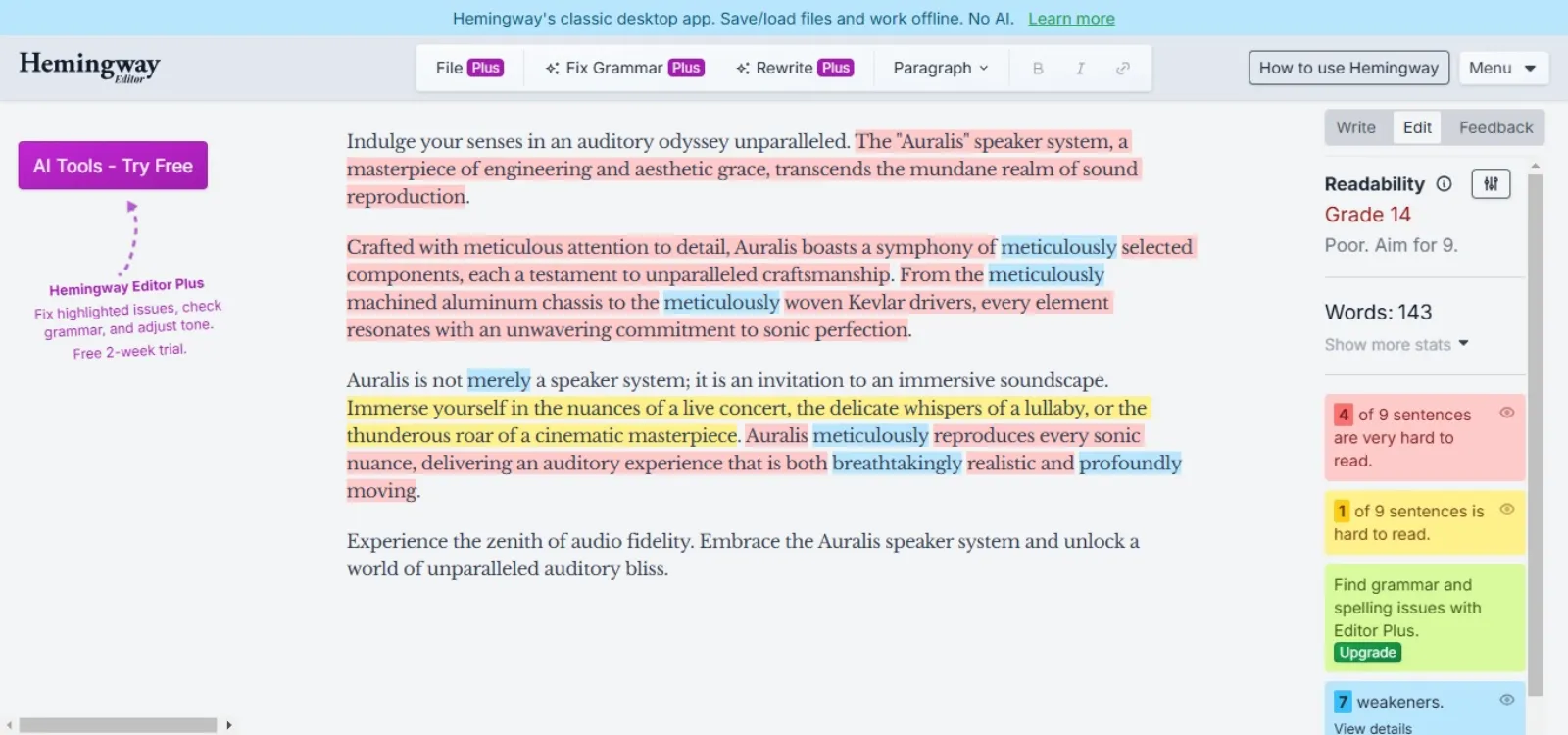
For this, open the Hemingway Editor in a web browser and paste your marketing content into it. The tool highlights complicated parts in text with fancy, complicated words.
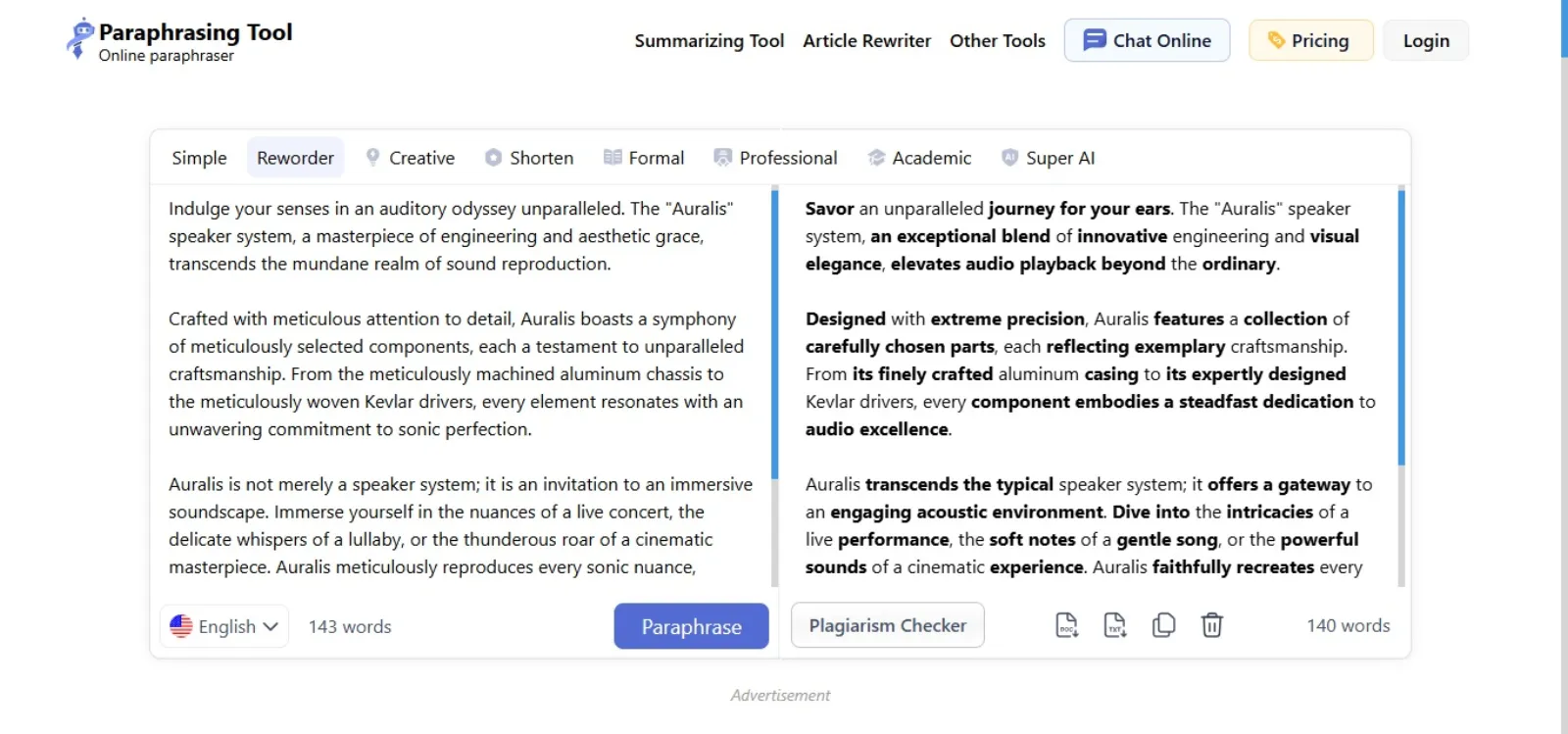
Next, copy and paste the highlighted parts into paraphrasing.io. Click the “Paraphrase” button to simplify the fancy marketing text into a simpler version.
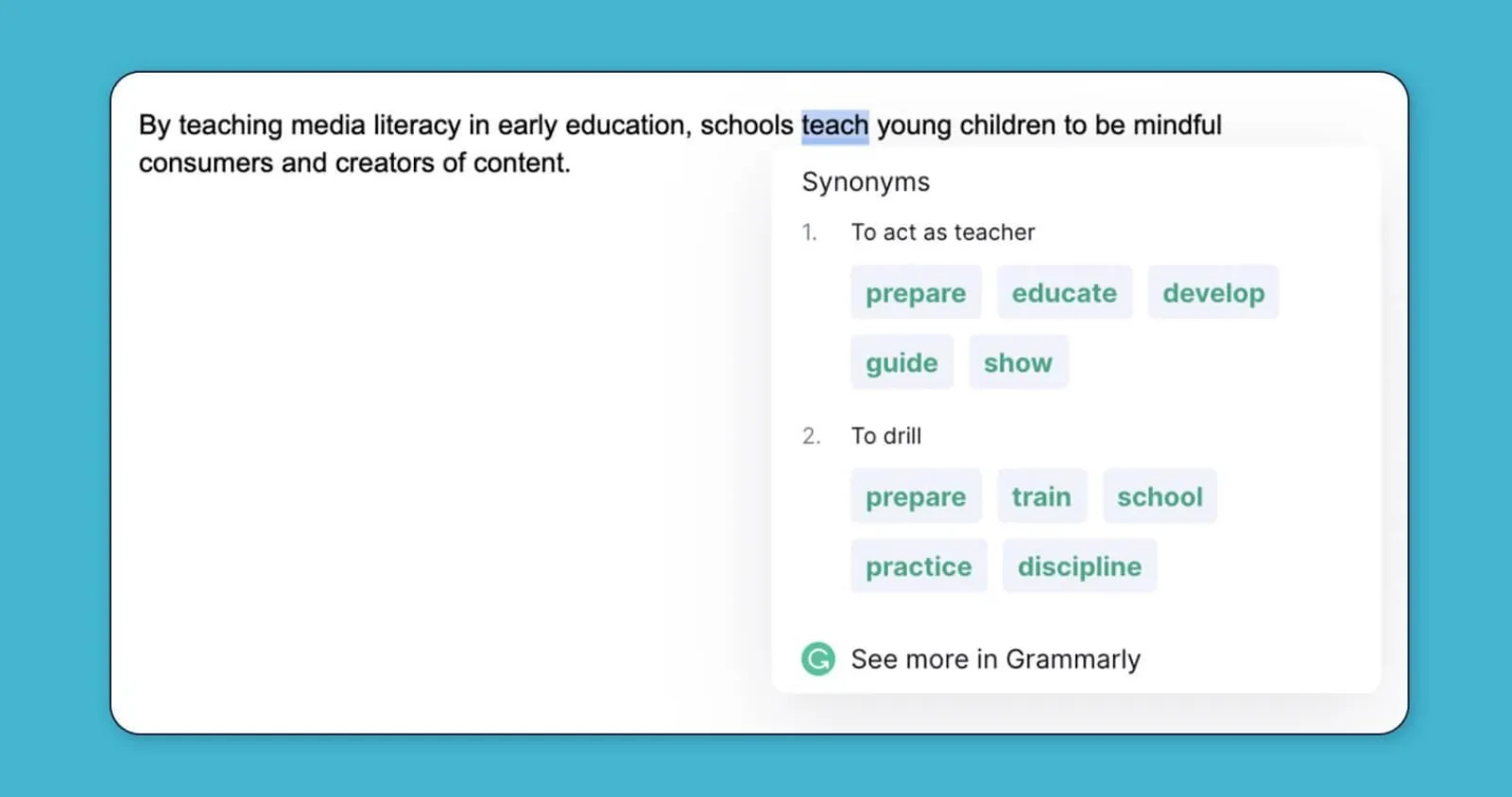
In the end, you can even use grammarcheck.ai to check for errors or inconsistencies in writing. You can even use it to find simple alternatives to fancy words in no time.
These writing tools can help you simplify your content and make it easier to read. They highlight complex sentences, difficult words, and other areas where clarity can improve.
Use these tools regularly to improve your marketing content.
Final Words – The Power of Simplicity
While fancy words might have their place in poetry or literature, digital marketing thrives on simplicity and clarity. Fancy words have no place in marketing content!
Simple vocabulary ensures a wider audience easily understands your message. It shows transparency. It also avoids the perception of trying to “sell” something.
Therefore, use simple words as per your targeted audience and ensure they resonate with them. Also, use shorter sentences to improve simplicity further.
Even if you have to use fancy words, don’t overuse them.
Stay simple. Stay effective. Let your message resonate.

Written by Uzair Kharawala
Founder of SF Digital Studios, a Google Premier Partner agency. Uzair has been helping businesses grow with Google Ads since 2002 and teaches it every week on YouTube.
Get our best Google Ads tips by email
New articles and videos, straight to your inbox. Unsubscribe any time.