
We’ve all seen them—those ads with titles that make you go, “Huh?” The ones that use a little intrigue to get a click. Maybe it’s a headline that promises a “weird old trick” to lose weight or a shocking statistic that’s a little too shocking to be true. In the world of online advertising, this is often called “clickbait,” and for good reason. It’s a strategy designed to bait you into clicking, often by promising something that isn’t fully delivered. As a marketer, you understand the power of a compelling headline. You know that a little curiosity can be a powerful tool. But you also know that Google is watching. And lately, it seems like their rules are getting stricter. Your ad gets disapproved. The reason? “Misleading content.” Or maybe, “Sensationalism.” You’re left scratching your head, wondering, “How can I get my ads to stand out without getting flagged?”
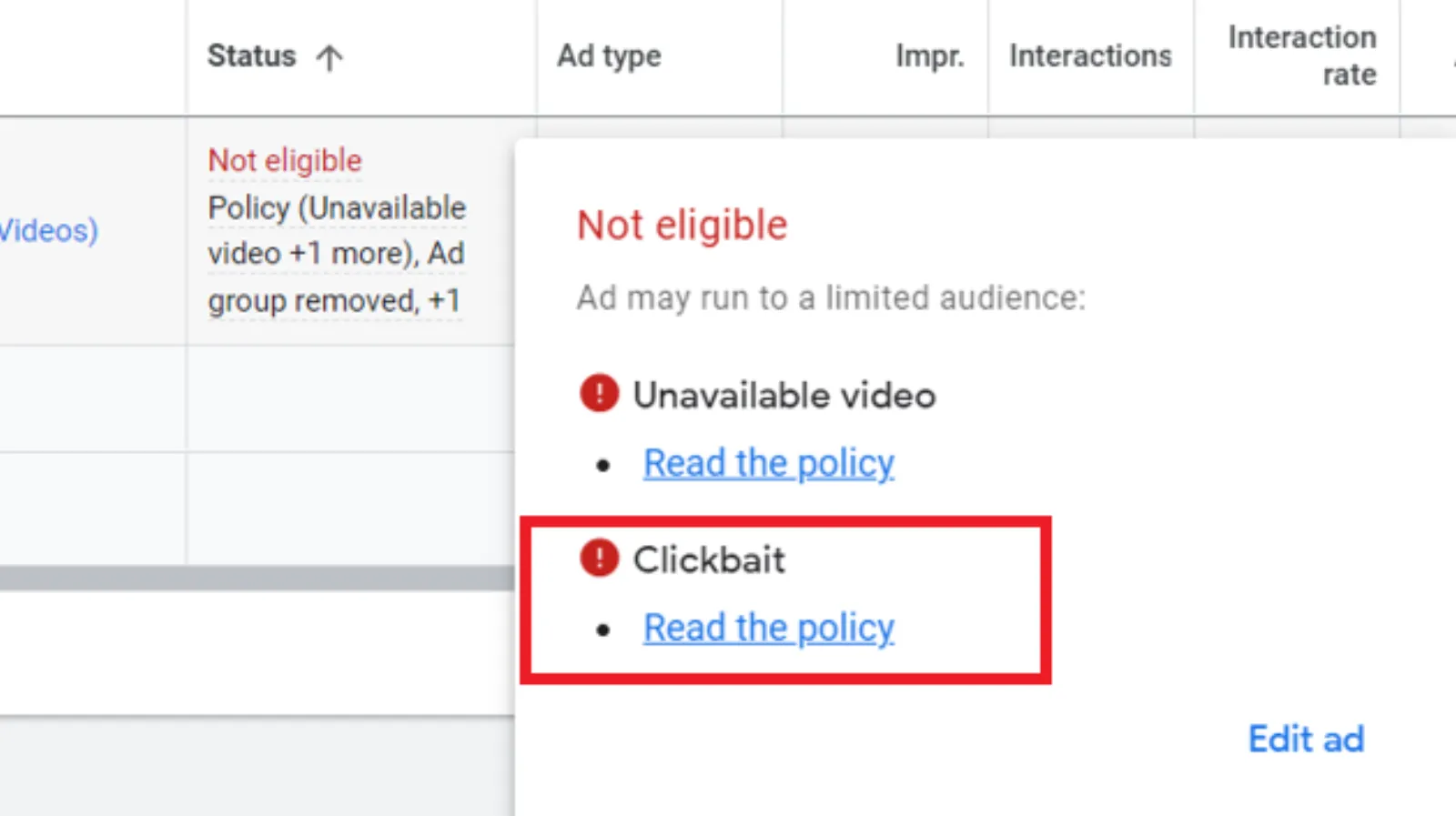
This is a common struggle. You want to be creative and capture attention, but you don’t want to cross the line. The good news is, there’s a way to walk that tightrope. It’s about understanding the difference between being edgy and being deceptive. It’s about creating ads that are clever, not manipulative.
So, let’s break down how you can keep your ads exciting and effective without landing in Google’s penalty box.
The Fine Line: What’s the Problem with Clickbait?
Google’s policies are designed to protect users. They want to ensure that when someone clicks on an ad, they are getting a good experience and that the landing page lives up to the promise of the ad. They don’t want users to feel tricked or misled.
Clickbait often falls short in several key areas:
- Misleading promises: The ad promises a specific outcome or piece of information, but the landing page doesn’t deliver. For example, a headline that says, “Lose 10 pounds in one day,” when the page is just a general article about diet.
- Sensationalism: The use of shocking, exaggerated, or violent language or imagery to grab attention. Think “Shocking news about your favourite celebrity!” when it’s just a gossip article.
- Exaggerated claims: The ad makes claims that are simply not believable. “Earn $10,000 in an hour from home.” This kind of claim erodes trust and is a red flag for Google.
- Vague or generic language: The ad is intentionally vague to create mystery, but it doesn’t actually tell the user anything about the product or service. “Discover the one secret they don’t want you to know.”
When your ad gets disapproved for these reasons, it’s not just a minor inconvenience. It can hurt your ad account’s performance score, lead to higher costs per click, and in some cases, even get your account suspended.
The Edgy-But-Not-Bait Checklist
So, how do you create an ad that’s memorable and effective without getting flagged? It comes down to a few key principles.
1. Focus on the Benefit, Not the Hype.
Instead of making a wild claim, focus on the real benefit your product or service provides. Your ad should answer the question, “What’s in it for me?” clearly and compellingly.
- Bait: “Discover the one thing that will change your life forever.”
- Edgy: “Tired of feeling stuck? This productivity app is designed to help you reclaim your time.”
The edgy version promises a real solution to a real problem. It uses a question to grab attention but follows up with a concrete benefit.
2. Use Curiosity, Not Deception.
Curiosity is a powerful human emotion. It’s what makes us want to learn more. You can use this in your ads, but it must lead to a genuine reveal on the landing page.
- Bait: “What are the three weird tricks to save money?” (The page has no specific “tricks.”)
- Edgy: “Think you’re a good negotiator? See what the pros say are the 3 mistakes you’re probably making.” (The page actually lists three common mistakes.)
The second example creates curiosity by challenging the user’s perception but follows through with valuable, relevant information.
3. Be Specific and Transparent.
Specificity builds trust. When you can be specific about what you’re offering, you’re less likely to be seen as a trickster.
- Bait: “The secret to glowing skin.”
- Edgy: “Get the skincare routine that helped a thousand customers achieve glowing skin in 30 days.”
The second ad is more compelling because it’s specific. It gives a number (“a thousand customers”) and a time frame (“30 days”), which makes it more believable and less like a generic, empty promise.
4. The Landing Page is the Delivery.
Your ad and your landing page must be in perfect alignment. The ad is the promise; the landing page is the delivery. If the ad talks about a specific product, the landing page should be about that product. If the ad promises a discount, the discount should be clearly visible on the page.
Google’s crawlers are getting smarter. They don’t just look at the ad text; they also analyse the content of the landing page to ensure it matches the promise of the ad. If there’s a disconnect, you’re at a high risk of getting a “disapproved for misleading content” message.
A Final Thought: The Long Game
Think of your ad campaigns not as a series of quick wins but as a way to build a relationship with your audience. Clickbait might get you a short-term click, but it can also lead to a high bounce rate, low conversion rate, and a negative association with your brand.
By creating ads that are edgy, honest, and aligned with your landing page, you’re playing the long game. You’re building trust, attracting quality clicks, and setting yourself up for sustainable success. The goal isn’t just to get a click; it’s to get the right click.
So, next time you’re writing a headline, ask yourself: Is this ad clever, or is it just trying to trick someone? Is it a genuine promise, or is it a wild claim? If you can answer these questions with confidence, you’re well on your way to creating ads that are powerful, effective, and approved by Google. You’re not baiting; you’re building. And that’s a strategy that always wins.

Written by Uzair Kharawala
Founder of SF Digital Studios, a Google Premier Partner agency. Uzair has been helping businesses grow with Google Ads since 2002 and teaches it every week on YouTube.
Get our best Google Ads tips by email
New articles and videos, straight to your inbox. Unsubscribe any time.