Hey everybody, welcome to the Approved Perspective podcast, powered by Approved Social. Thank you for coming on the podcast today, and I'm excited to have you join the Approved Perspective, where we're talking about marketing collaboration. We're talking about sharing information as much as possible with our users and our customers, but also anybody else who's out there listening, whether it's to you and your followers or to us over here as well at Approved Social. So super excited to have the expert in Google Ads here. Man, I've been looking forward to this call for a while. I told you that earlier. It's going to be fun.
Thank you so much for the invite, Preston. Truly appreciate your invite, and I'll try my best to answer any questions and give as much value as possible to you and your audience.
Fantastic, man, I love it. Well, we're going to get into some cool stuff. I know that we talked about how you've been able to rank on top with some of your YouTube videos very quickly, competing with big players like actual Google. Like, not just, yeah, showing up on the first page of Google, but competing with Google for their sort of listings, and also a lot of other actual, you know, SEO tips and tricks and things that you're going to be able to share with us today. So I am very excited about that.
But before we do that, tell me again, you've been doing this for like 21 years. How did you get started in this business, and tell me a little bit about the path that you've had so far, because it's got to be interesting. I mean, I think things have changed for me in the last 10 years. Things are changing tremendously in 21 years.
Absolutely. So photography was my passion and my hobby since I was 13, 14 years old, and the opportunity came along where we needed to get some additional income at that point in our lifestyle. So my wife was looking to do something part-time, and we had two young children at that point in time, and she went to a play group to get some photos done of our little daughter. And we came back and she goes, oh, that photographer was horrible, and I could have done a better job than him. And I said, why don't you? And as they say, rest is history.
So just from that little conversation, at that point in time the digital cameras were coming through, right? And I said, look, you know, you can take the photos, print them then and there, and then hand it out to the clients, instead of waiting three, four weeks by the time those photos come back from the photographer. And that idea really took off, and we started doing hundreds and hundreds of events, and we went into equestrian photography, social photography. I mean, equestrian was very big for us, like horses.
Interesting, look at that.
Very. Pony clubs, mounted games, cross country, you name it, we were shooting those events. Then the evolution of the mobile phone came along, where you had a camera on the phone. Then, those of you who remember those old cameras, the digital cameras came along, and then a video on the camera. So I knew, with my association with Nikon, because I used to be an evangelist for them, where technology is heading and where the trend is happening, because a phone has got a video on it, a camera has got a video on it, so there must be something going along. So I started looking deeper into it and found out that, yeah, people are loving it, and then YouTube came along all of a sudden.
Mhm, and that's how I started. Biggest search engine.
Yeah, yeah, yeah. So eight, nine years ago we started dabbling into YouTube, Google Ads and so on, because our marketing was getting more and more expensive, the offline marketing like newspapers, not radio, magazines, trade shows and so on. Yeah, sure. Started dabbling with Google Ads and we were getting results, and then before you know it, friends and other family members: so how do you do this? Can you do it for me?
And it started, doing Google Ads for your photography business, is that right?
Yeah, yeah, absolutely.
Cool. So that's how you literally learned how to do it, just by doing it for your own business, which is fantastic. Okay, cool.
So then, on every website there are three most important factors, or things. One is the photos, video and the copy of the text. So one day one of our clients said, look, you're doing our photo and the video, why don't you do my website? And then we thought, yeah, that's a really good idea. So we started dabbling with web design, and if you've got really good quality photos and videos, your website is going to look good anyway, basic minimum design. And when you've got a website, then you need traffic to it. So then we evolved 360 degrees completely, and now we just focus on Google Ads, which includes obviously YouTube ads.
Well, and the cool thing of course about going into this, and I'm sure you saw this, was going, okay, I can scale this, I can build a team, I can have multiple clients. But when I'm taking photographs, I can't go to multiple events at one time, right? And when you're an artist like that, and that's what you are as a photographer, you have to be the one doing it. You can't pass that off to someone else who's going to be as skilled.
You can only be you, you cannot scale it. And that was the problem with our portrait and wedding photography side of business, because if you are interested in photos, you will have that affinity for a particular style of photography. So if I show you my portfolio and then send my assistant to photograph your wedding, you can't do that. They want me, and I can't, you know, clone myself into more Uzairs. That was the problem. And with this model which we have right now, you know, we can have hundreds of clients, and we built up a team as well, and it works wonderfully for us.
That's great. And you typically do retainer type clients?
Yeah, yeah, yeah.
Okay, understood, very good. And is there like a range of a client that you're looking for? Let's say someone is hearing this conversation and they're looking for somebody like you. What's sort of your ideal customer profile, and, you know, what can they expect to spend on maybe ads? What do you recommend they spend on ads every month?
That's the most asked question: how much do I need to budget for my campaigns? And it's really tricky, because it all depends on how much are you willing to spend to test the product first, and the product market first. There's lots of things to test first. So if you want to go from A to B and you want to start with going at, let's say, 20 miles an hour, it will take you a long time compared to if you want to go at 70 miles an hour. The same thing with testing. If you haven't run ads before and you don't have any data in your account, first of all we need to test what's working, what's not working. If you start with $20 a day, it's going to take you longer time to test compared to $100 a day, which will be five times more faster. So which one do you want to do first?
So it depends on what you want to do and what kind of business it is. So for example, if it's a one-man band accountant or a bookkeeper, they can only handle a certain number of inquiries or customers in a month, compared to a bigger company who have got five salespeople waiting for the phone to ring. So we need to set up the budget accordingly to the capacity of that business. Same thing with e-commerce. If you've only got, you know, a handful of products and you have a big budget, you're going to sell out very quickly and you'll be out of stock, and you can't sell anymore. So you need to have the stock, so it goes hand in hand.
Yes. What we tend to do is we say to our clients, okay, we start off with the minimum budget for testing, see what happens, and as soon as we hit the break-even point, that's the most important point or the milestone. At that point it is not costing you to acquire a lead or a customer. Then you can scale the hell out of it. Sure. Because if I tell you, Preston, hey, if I run my ads for 6 months, run your ads for 6 months, and I give you a thousand customers at zero cost to you, would you be happy?
Of course.
There you go. Yeah, so as soon as, as quickly, we set up...
And I would go find the money to scale, you know what I mean?
If you were able to do the break-even point, you don't need to find the money, because what happens is you spend the money on ads, you get the lead, you convert the client, you earn from them, then you put more back in, and it just keeps on going. So it's self-funding, the campaign.
That's true, and that's a problem with, you know, most of... sorry, I think there's a little bit of a delay, I know you're over in the UK. But I was gonna say, I think a lot of folks, you know, don't understand how to sort of frontload an ad campaign. And whenever I'm talking to folks, you know, I mostly have done paid social in my experience, but what I'll say as sort of an example is like, okay, everybody talks about getting the snowball started and it picking up steam and getting bigger going downhill. But what you don't talk about is the size that you start off with, and if you make a bigger ball to begin with, you're going to get more momentum as you go down the hill. You're going to be an even larger snowball and get more speed and momentum and size, right?
So it's the same thing, I think, with these ad campaigns. You can test more quickly if you are able to frontload some of that spend. It can seem very difficult for a business owner or CMO or somebody to go, okay, I'm going to frontload and test a lot of things, because I'm wasting sort of a lot of that money. I'm learning through that money. I'm not wasting, but I'm learning through money.
Yeah, it's not wasting at all, because you're buying data from Google, right? Right. To see what works and what doesn't work, and what doesn't work you kill it off, and what works you start to scale.
But only if you have someone like you and your team who's running it, because if you try to do it yourself, I mean, you can, but you might miss things and you might cut off something that could be a top performer, right?
You do, and the most frightening thing for a business owner is that feeling that Google is going to take the shirt off my back if I start to scale. They don't look at the numbers properly, and I've seen it so many times, and I've told the client or the prospect, why aren't you scaling your campaigns? Why are you stuck at $30 or $50 or $100 a day? You sell your house and you give it to Google, because every time you spend $1 and you're getting five or six back or more, why would you stop after spending a hundred bucks a day? Right. And then they get it.
They said, yeah, but I'm scared of putting more money. Why should I give more money to Google? I said, well, then Google will not give you more customers. You've got to change that mindset that, you know, it's not about paying more to Google, it's about increasing your sales, your turnover and growing your business. So the more fuel you're going to put on the fire, the bigger the fire is going to be.
Exactly, exactly, it's a great example. Well, so there's a lot going on today in the AI world. There's a lot going on in, I think Google is releasing something with AI. Have you seen that?
Well, AI has been part of Google for a long, long time. So all those automated bidding, where Google says you leave the bidding to us, a lot of people are very cynical: oh, they're going to increase my click cost, they're going to eat up my budget or use my budget up very quickly. AI, it's not in Google's interest to waste your money, right? Because you're going to stop eventually. They say, oh, it's waste of time, waste of money, I never get any results. You do get results if you do it the right way, but you've got to follow the process and you've got to be patient.
You can't expect your campaigns to be profitable in two days or three days, like some people expect: oh, I set up a campaign today and by end of the week I'm going to be a multi-millionaire. Yeah, you can't expect that. It takes time, and you need to be patient. You need to read, you need to understand the data, know what to change, how to change and when to change. Don't make too many changes too quickly either.
So the automated bidding is AI. The algorithm, the bots, it knows that Preston likes buying expensive things, he is interested in sports cars, he likes playing football, or soccer as you guys say.
Yes, and you're an FC fan, right? You're Chelsea, is that Chelsea?
Yeah.
All right, good.
Yeah, our household is all Chelsea. So Google knows more about us than we know about ourselves. They know everything: our surfing history, which websites we go to, what we search, what's our habit. Do I go to 10 websites and then make a purchase, or do I go to the first website and click that buy button now? They know everything. So the algorithm, which is getting better and better day by day, is it knows the likelihood of that conversion happening or not, and that's where they show the ads to as much as possible.
It's so powerful, because, you know, when you're looking at Facebook ads, it's interesting to explain to somebody new getting in what's the difference between a clicks, engagement, conversion, you know, these different campaign objectives that you can set up and what they are for. And, you know, you don't think about the fact that the last 10 websites you visited or 10 ads that you saw, maybe you're that person who only clicks and goes to the website but doesn't convert for a while, right? They know that you're part of that click segment, and it's funny to see how that works and how you're categorized, if you're actually thinking about it, when you look at your own Facebook or your own Instagram and you see how those ads are relating to you.
So one of the things that I found interesting, so this is brand new and I'd love to get your take on this. As of yesterday, yeah, yesterday, November 7th, Google rolled out a generative AI feature in its Performance Max ad product as a beta to all US customers. And this is from a company, Marketing Dive, it's listed here on their website. That's pretty interesting. I know there's some tools out there like AdCreative, there's some others out there, but the platforms themselves are going to create these AIs. Why wouldn't they? They probably already have an even better one than any of the ad platforms out there that are creating them, because they have the resources.
So what do you think about that? Because when I look at some of those images, some of the AI generated content that it has now, it's just not as effective. It's very bland, it's very impersonal, it just doesn't seem like it would convert well to me. But I'm not the PPC Google expert.
So there will be a ton of content being put out on the internet, of which 95% would be all rubbish, because everybody has got ChatGPT. They're going to tell it, write me a 500-word blog on blah blah, and they're going to keep posting all day long, thinking that, okay, my blogs are going to get ranked on Google. The problem with that is everybody's going to do that. How would you differentiate yourself from all this noise?
Yeah, you can create a video with a, what you call it, a bot, a human bot, a spokesperson video without the human in it, right? And he or she will present that video and talk. You just give that app the script and that bot or human bot will make that video for you. How can you differentiate yourself? The only way to survive in this age of AI is to build up your brand, your voice, so that people trust you.
Are you going to trust somebody who is a bot, when he's, you know, he's very monotonous and very bland? You can just tell. You show your video: hello, I'm so and so, and I'm selling this product, and would you like to buy it? Compared to somebody who's actually a person, and people will get to know me, like me and trust me. And that's what I do, is we keep uploading video, and video marketing is where you need to be. We are on a video podcast, otherwise we could be on an audio podcast as well right now.
The funny thing is, I don't know whether you noticed this or not, radio has also become a TV, because they've installed these cameras, video cameras, in their radio studio, in the radio stations, right? And then they stream it live on their website, on TV stations and all that. But it's a radio program. Yeah. So they're creating another piece of content out of the audio program or radio program. So why are they doing this? Is because they want to put the face.
They do that. You know, I was listening to a podcast recently that was doing some live podcast, and it was actually, I think, an iHeart Radio show, so it's similar to what you're talking about. They're actually doing a podcast now to make it more of a video, but on YouTube they didn't have the actual live video feed, because it was a live event that they were doing. And the numbers on those versus the ones where you had a direct person that you could look at and view was just astonishing. I mean, the performance of, you know, getting this video out there directly to people is massive. People still want to have that direct face-to-face contact if they can.
So this leads us, I think, directly into another great thing that you and I talked about last time on our call when we were hanging out. It's this idea of you being able to take a video, any business be able to take a video, and get it to the top page quickly, through SEO alone, through a YouTube channel. And I think that's super powerful. This is like a superpower for businesses if you can do this, and you've done this for yourself and I'm sure you've done it for a number of clients. Tell us about it, man, because this is something I would love to learn.
We all want to rank on Google page one. So when somebody searches for a keyword or a phrase, you want your website to show up, right?
Yeah. What percentage is it that only visit the homepage, do you recall? There's like a...
When was the last time you went on... I mean, I can't remember. I heard from somebody the best place to hide a dead body is on Google page two. Nobody goes there.
Yeah, yeah, right.
So when was the last time you went on page two?
Never. Yeah, I honestly can't. Yeah, I mean, now I guess on mobile it sort of automatically, I think, scrolls.
Exactly.
But yeah, and it looks like, I just did a Google, just .63% of people click on the second page.
Yeah, wow.
Yeah, wow.
So I had this problem of ranking on Google page one. Although we were running mostly ads for our own company, I said, okay, why not leverage the organic traffic as well? I can't compete with the heavyweights. It's kind of, SEO is a boxing match, right? If you're a heavyweight boxer and I step in the ring with you, no matter how many punches I throw on you, it won't affect you, but one punch from you on me and I'll be on the floor, right? So if you see your competitors above you, you want to knock them down and you want to come up, right? And that is what SEO is, is constantly a battle. You know, you throw some punches, they throw some punches on each other. The strongest and the fittest will survive and stay at the top.
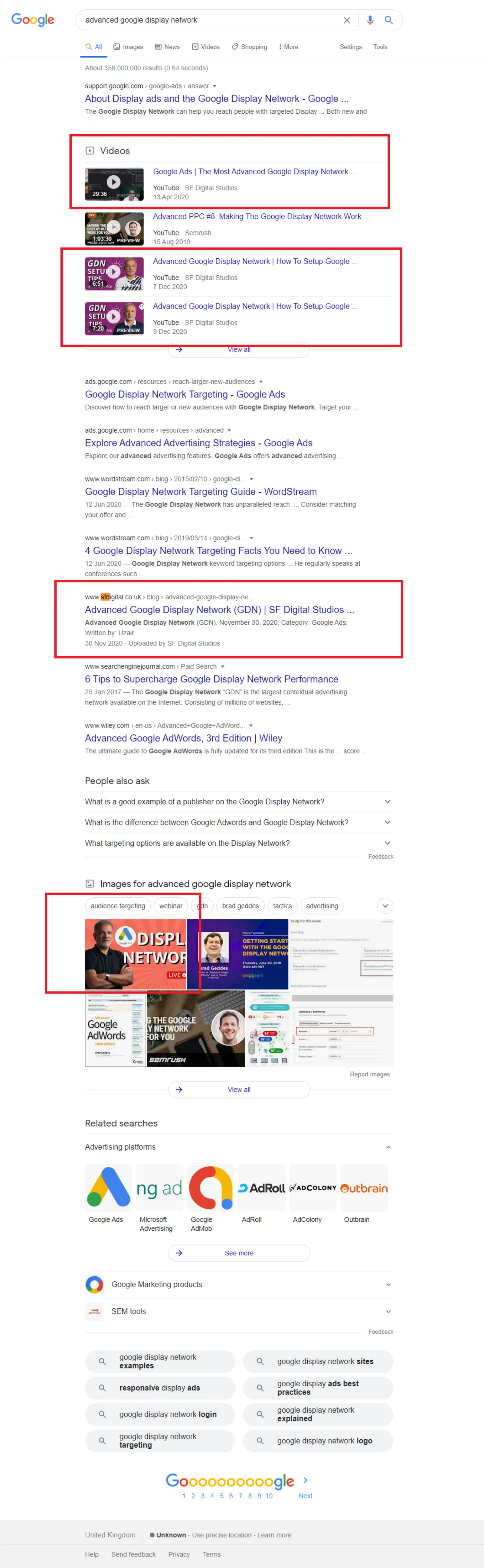
Now, I'm in Google Ads, and my niche has got some massive websites which there's no way in the world I can compete with. I'm the lightweight. So I figured it out, and I noticed that, okay, whenever you go to Google you have this video pack. Before it used to be one, then two, then three, and now four videos most of the time show, with the thumbnails of the videos. You will notice that, right? And I'm thinking, oh, this is very clever. You take up a lot of real estate on the page one, and secondly, your thumbnail with your headshot on it is there as well.
So we started uploading and targeting those keywords as to what were people asking on Google, and we started putting up content after content. We've got over 1,800, 1,900 videos on YouTube now. Wow. And eventually my videos started to rank on page one. So this is not like, oh, you upload one video today and you'll get ranked on page one tomorrow. No, it's like going to the gym. It may take you a few months before you start to get some results, right? And you need to go religiously and regularly, not just go once a month or once or twice in a month. You've got to go to the gym three times a week to get those results.
So I found that for my niche, and I would say for any kind of niche, if you want to rank on Google page one very quickly, you do not the SEO but the video SEO. Get those videos ranked on Google page one, and that's where you start to get a huge amount of traction and traffic from there.
Okay, and when you say video SEO, you mean what specifically? Like, what are you specifically looking at in that concept?
So let's say for me, if I target Google Ads, it's too broad. You need to go after the long-tail keywords. So I would say: how to set up a Google Ads campaign, what is negative keywords, what are sitelinks. So those kind of keywords, you know, solve somebody's problem. People are searching for these problems. And the more clicks you start to get, you are giving signals to Google that, ah, people like this kind of content from this creator. They're going to keep on adding more and more of those other keywords on other...
So are you doing keyword analysis to determine what is being searched, and then you're building the video that matches that thing?
You always reverse engineer, because you don't want to sell something where nobody's bothered about or knows about. Yeah, yeah. So you need to reverse engineer first how many people are searching for a certain product or service, and secondly, what's the least competition, because if you've got less competition, you'll rank up there very quickly.
Yeah, and you said something that I think is important. You said that I am the lightweight in this, and I think it's important for businesses to know sort of where they are. You know, if you're the little kid in the fight, you're punching up, and that's just what it is. And you need to learn to build your strategy in such a way and understand that I'm trying to take sort of the scraps, or the low-hanging fruit that those people aren't willing to go after, because it's maybe a little higher expense or it's not as scalable for them or whatever. And you're going to be picking out small slivers, niches that are still available to you, and that's sort of the place to start with, right? So look at those longer form, longer term tail keywords, so that you can actually have that in your video when you're creating it.
Absolutely, yeah.
So that way people aren't responding. They're not responding to things, they're creating ahead of time and they're planning that campaign and that content.
Yeah, so it's kind of like if you want to get fit, and you won't be able to go from zero to 10K on the treadmill straight up. You're going to go to, you know, half a mile, then a mile, then a couple of miles, then two, three, four, five. You'll slowly, slowly get that fitness. SEO is exactly the same thing. You go after the low-hanging fruit first, which will have the lowest volume of traffic. Don't worry about traffic. All you do is focus on getting ranked on Google.
Okay, once you start to get ranked and you've got 50, 60 links on your blog or website on Google, Google is then going to give you: ah, this guy is the authority in Google Ads, or podcasting, or social media, or whatever. Then they're going to get you ranked for more competitive terms with a higher volume of traffic, and then you keep on building up slowly, slowly, and that's how you would do it. So don't get frustrated: oh, I'm not getting any customers or leads because I'm uploading videos once a day.
We started our video marketing four and a half years ago, five years now in December. Literally every day we're uploading content, and during COVID I did a YouTube live for one full year every day.
Wow.
Every weekday, without...
That was an interesting test. How did that go?
It built up the brand very quickly, because everybody was stuck. Nobody knew how to do Google... well, I'm not saying nobody knew how to do Google Ads. A lot of business owners did. They weren't investing in it before, and now they knew that they needed to.
Oh, because they saw the power of online.
That's the only way they can communicate to each other, through Zoom or, you know, a podcast like this one.
They finally figured it out.
Yeah, well, the hard way. It woke them, you know, it gave them the shock of their life: oh my God, what are we doing? We'll go bust if we don't do it. And a lot of big brands went bust because they did not pay any attention to the online marketing, and Amazon cleaned up. That's why they're number one, right? Because they started, eBay and Amazon, they were the two big brands who took online marketing and ads very, very seriously. They threw hundreds and hundreds of millions of dollars on it, and look where they are now.
Yeah. I don't know if you saw this, but an interesting tidbit is Amazon is getting sued for, I guess, deceptive pricing practices. Not the cheapest, algorithm things to sort of make you see certain products at higher price points.
But they never claim to be the cheapest. No, they don't.
No, they don't.
No, we assume: oh, Amazon, I'll buy it from them and they'll be cheap. No, sometimes they double the price. But it's the trust factor and the convenience.
Yes, it is.
Trust. I know they're not going to not deliver my goods. If I have a problem, they're going to refund me straight up without any questions asked. I know that I will have my goods tomorrow. I know they do free shipping. All these factors pay a huge attention. You don't even look at any other stuff. If I want to buy a mug or a cup or whatever...
True.
Amazon, one click, convenience. I don't have to enter my life history in that shopping cart.
Exactly.
Done.
Even if it's an extra few dollars, the convenience of being able to get it immediately and, like you said, return it easily is probably going to end up saving you money. Maybe that's, I think, in our minds at least, we go, I can return this possibly if it's not a good fit, then I can make money. But what happens for me is some of those things sit in our house until it's not able to be returned, and then they've won on a number of levels.
Yeah, yeah, they're pretty good.
Yeah, yeah. Okay, so this is interesting for folks, and if we're looking at like a specific strategy for someone who goes, okay, this is interesting, Uzair, how do I actually implement some of this right now? What is a couple of tactics that someone could potentially start off with to do what you're talking about right now?
With video marketing?
Mhm.
All right. First of all, keep things very simple. Don't get overwhelmed: oh my God, I don't have lights, I don't have a microphone, I don't have this and that and everything. Everybody has got this, right? So that's the first thing. You've got super high quality, HD quality. You don't need anything else. You've got 4K in your pocket. Yep. All right. All you need is a $10, $15 microphone which you can clip on your shirt. Don't need any expensive equipment, right?
And a simple light. I don't know, you can't see my light. So any video light, or use a window. You face the window and that's it. You've got beautiful light coming through the window. You don't need any more lights. Then put the phone on a tripod or a stand so it's not shaky. Then you go to Google and find 10 questions about your niche, what people are asking for, and then you just face the camera and talk into your camera and create these 60-second short videos. Those are the most popular videos right now, shorts. Yep. Yeah, shorts are like the fast food of videos.
So are you creating long form content as well?
We do as well, yeah, we do as well. But shorts, you can batch record them, like 10 videos in like one hour. Sure. If you don't know how to do video editing, hire somebody. You can hire someone from the Philippines or India or Pakistan for like five, 10 bucks an hour. So it won't break the bank. They will be very talented, they know what they are doing, and all you do is just send them the file. They will put the captions, the transitions, the music, the whole lot, send you the file, and all you need to do is to check the file. You're happy with them, upload to YouTube, Facebook, Instagram, TikTok, wherever you want to.
Yeah, yeah.
Keep things super simple.
And this is sort of what we're trying to do with Approved Social as well, is to utilize it as an approval engine, right, for content. And you can actually upload a video like this, so you could have somebody in the Philippines or in India or wherever, they could actually be your designer, copywriter, take that video that you created, upload it into Approved Social and schedule it to be posted organically. And then you go through, you mark it up, you approve it, and you're streamlining that workflow and getting it into Google more quickly.
And, you know, it couldn't be easier. You've got the platform. There's no excuses.
Exactly, there are no bottlenecks. Yeah, and you can do stuff like this, where you can create some long form content as well and ship that to them, and then they can also cut that out for you. So you're duplicating your work, if you're able to, you know, do that.
And let me tell you, I've worked with some folks from the Philippines and overseas, other places, and they're extremely skilled at what they do. You're not talking about someone who is, you know, a big... I mean, yeah, sure, you can find those people, but you can find the experts at really good price points, and they're extremely happy to be making the amount of money that they're making.
Yeah, we feel that five bucks is, you know, ripping somebody off. No, you're not, because in that country five bucks is a lot of money. So, you know, you're helping them earn a really decent living.
Yeah, yeah. I've hired a few, and one of them, I was talking to her, and she's been on my team for about three years now, I think, and she's phenomenal, phenomenal. And I was asking, okay, I said, you know, how is it like in the Philippines? Like, I know that we're paying you well, but what does it look like sort of from... She goes, Preston, I make more than the most senior people in this world, in my country. You know, and they're extremely loyal to us, and they're becoming sort of like our family, and we, you know, we are very committed to them and they're committed to us, because we pay them really well and they're happy. And they can say, hey, I can get my parents a condo and I can do things. Oh my God, it's thrilling to be able to do that, and life-changing for them as well. So yeah, if you would need somebody out there...
They work, yeah, and they work really well, because they don't want to lose this gig or your job. Nobody's going to pay them this much. And I was once having a conversation with one of my team members, and she goes, over here average earnings is $5 per day, and I'm getting paid $5 an hour. An hour, right? So why would I not work hard and do the jobs before they are due? She's never late. She will do it before the time, the due date, and she's very enthusiastic and she just wants to learn more and improve herself. And as she grew with me, you know, we started to go from 5 to 7 to 10 to 15 and so on. And she works at home with her children. When they go to school, it suits her times, and yeah, it works wonderfully well for them.
It's so fun to see. Well, so, you know, you're a cricket fan, right? You're a supporter of Chelsea, and I know you started off doing photography in sports, and, you know, you said equestrian and some of those things. Is there any way that you've been able to sort of integrate your passions into your business? Do you serve clients that are related to that? Were you able to do anything like that?
Yeah, so photography and video is a big part of our business still. I've been to the US six times last year, I think, and we go to our clients, we shoot the videos and the content for about six months in one day.
Wow, okay.
Right, because what was happening is they would go and hire a company, and they will give them one video and they will charge them a few thousand. And I'm thinking, but we can't use only one video, we need more videos to split test and to do other stuff. So we've got a workflow where, you know, because we don't want to disrupt our client's schedule and work day and take over the whole office, so with minimal of equipment we go in, shoot the videos, bring it back, and then we can keep going for six months. So that part of my hobby, or photography or video, is coming in handy to this day.
That's cool. I love it, that's fun. And it's amazing that you actually put that much detail into the client, where you're literally coming out to shoot what you know to be effective. Because, you know, if you get something from a client that, you know, they want you to use, but you don't think it's going to be effective, yeah, it's not a good idea for you to just take that from the client and use it as an agency or as a marketer out there. You need to be able to have backbone enough to say to your client, this is or is not going to perform well based on my experience, and that's why you hired me. You hired me because I have this experience, so use it.
Not only that, Preston. The most important thing is most people come to me because they saw my video, right? They stumbled upon me because of my video, and I say to them, look, why aren't you doing video marketing? Oh, we don't have time, and all these excuses they will make. I said, yeah, but video marketing works. You are talking to me right now because of my video. And then that light bulb moment flashes in their mind, that he's right, video marketing does work.
And a lot of them will sometimes say, I've been following you for six months or three months or two years, and now I need help from you. So it's the case of just putting up content so they keep consuming it. So the more they watch your videos, the more they are being shoved down the funnel.
Yeah, and it's almost okay when people start to be aware of what you are doing to convert them as a customer, because you're showing them the exact strategy of what they can do. We are doing it for us. And oftentimes people don't get it. They go, oh, there's some other secret sauce. No, there's not, guys. We're literally, in our ad campaigns, in our emails, the things that you get from digital marketers is a strategy. We have built a strategy to reach out to you, and you can use that, you can model after that strategy, because we're walking the walk, not just talking the talk.
So yeah, I go into my ad account and I show them: look, this is how many leads we've got, how much we've spent, these are my landing pages, this is the conversion rate. And they say, well, nobody has ever been so transparent. Well, we don't hide anything, because it's what we do for ourselves. We sharpen up our skills, because when you spend your own money it's different to when you spend your client's money. It's tricky, right? So we sharpen up our skills and then we see what's working, what's not working. Then we implement those campaign strategies in our client accounts so that they get the best return on investment.
A lot of agencies don't have that same level of transparency. A lot of them keep their own ad accounts. Maybe they build a separate ad account for you when you're creating your ads or doing something like that, you know?
Tell me about it. I would say 15, 20% of agencies will advertise for themselves. Rest of them, the reasoning or the excuses they will give is, oh, we're too busy, we get referrals. Which is fine, I'm not saying it's not, but you can't grow and scale your business just on the basis of referrals. You have got to run ads, and that's how you put that fuel on the fire.
Yep, yep. And we have a lot of agencies as our customers and as our listeners, and so, you know, I think it's easy to be of the mindset of, hey, I can look and build a strategy out for someone else. It's much harder to build a strategy out for yourself and implement it fully. A lot of times marketers, CEOs, entrepreneurs, we can learn to cut corners, because we are good at accomplishing tasks in a short period of time. You know, that's why we're entrepreneurs. We're willing to kind of go day after day after day and push very hard to move forward. But, you know, it can be very tricky for folks to be able to actually sit down and build a real strategy for yourself and then implement it to a T.
We always want, as marketers, to sort of skip steps, but if you're going to build out this strategy for someone else, first build it out for yourself and prove that it works, prove that you can do it.
Absolutely.
And then you have the confidence to go to someone else and say, hey, look what we did for our business.
Exactly, that's the case study. You don't need anything else.
Not anything else, absolutely. Very cool. Okay, so you guys do a lot of different things, but I know we've talked a lot about SEO. For the most part you do SEM. What's the other big thing that you guys do over there at your agency?
Well, we used to do SEO, web design and everything under the sun, Facebook ads, but since the last three years we're just focusing on Google Ads. That's it. Okay. We want to be really good in one thing and one thing only. That's what we focus all our energy on.
I got a lot of feedback from people, specifically with Google Ads. They think that it's easy, I guess. They think that, you know, it's not super, super tricky, and I guess because they think it's text based only, and so I can get on and sort of write my own copy and it's done. That's a big objection that I've gotten from talking with clients. They go, okay, well, I don't know, it's gonna take a long time, it's going to, you know, cost me a lot, and I could just do this myself. But every time I've seen someone do it themselves, they are not able to get it to be successful. I mean, I would say almost every time, maybe 95% of the time, they can't, and it's confusing. Is this something that you see daily, and how do you react to that objection?
Yeah, they can certainly do it. They can either reach their destination or that goal in two years, or work with us and we try to reach that goal in five months or six months. It's up to them. So they will for sure waste a lot of money and a lot of time. You can go to YouTube, learn Google Ads, learn how to cook, learn how to build a house. YouTube is there, go ahead. We've got 1,800 videos, and I tell them, look, if you can't afford to hire us, go to my YouTube channel and cancel your Netflix and binge watch all day long for the next year, right? And you'll learn Google Ads.
But the thing is, the analogy which I will give you is you're watching a cooking program, let's say Gordon Ramsay. Everybody knows him, right? He will cook a steak and you'll think, oh, that's easy, he's only used three ingredients and it's so simple, I'm going to make the same steak. You try and do it yourself, it won't taste good, it won't smell that nice and it won't look that nice. Then what do we do? We go to his restaurant and spend our dollars, and that's how he has made his millions, on the back of showing his expertise as to what he can do.
So what you want to do is, by all means, you save money for your business, but don't try to be, we have a saying over here, be penny wise and pound foolish, right? So invest wisely. Yes, there will be certain agencies who will try their best and could not deliver the goods. Does not mean that they are a bad agency. It could be the bad product. It could be the product doesn't have the product-market fit. They don't have the data, the proof of concept that, yes, this product can actually sell. The pricing could be wrong. There was a lousy website. Yeah, lots of variations.
So you just cannot blame Google or Facebook or any other kind of advertising platforms: oh well, they wasted my money and I wasted thousands of dollars on it. You've got to test the whole funnel. So when we start, we test each and every stage of the funnel and see where the leakages are, and we optimize them and then move on to the next one and the next one, and then you start to see that the results are coming through.
Very cool. Okay, so explain leakage. When you say that, what do you mean?
So leakages is: I'm driving traffic to your website and your buy now button is not working.
I see.
Waste of money, complete waste of money, right? And you're thinking, what the hell is going on? I've spent so much money on these ads with this expensive agency. Now, it's the agency's responsibility to keep testing these things as well on a regular basis, because these things do break. You're going to the office and your car breaks down. Doesn't happen every day, but every now and then you might have a puncture, a tire or whatever, and anything can break down, and so will websites or forms, or somebody has made some changes on a website and something has broken. So you need to make sure. That is one example.
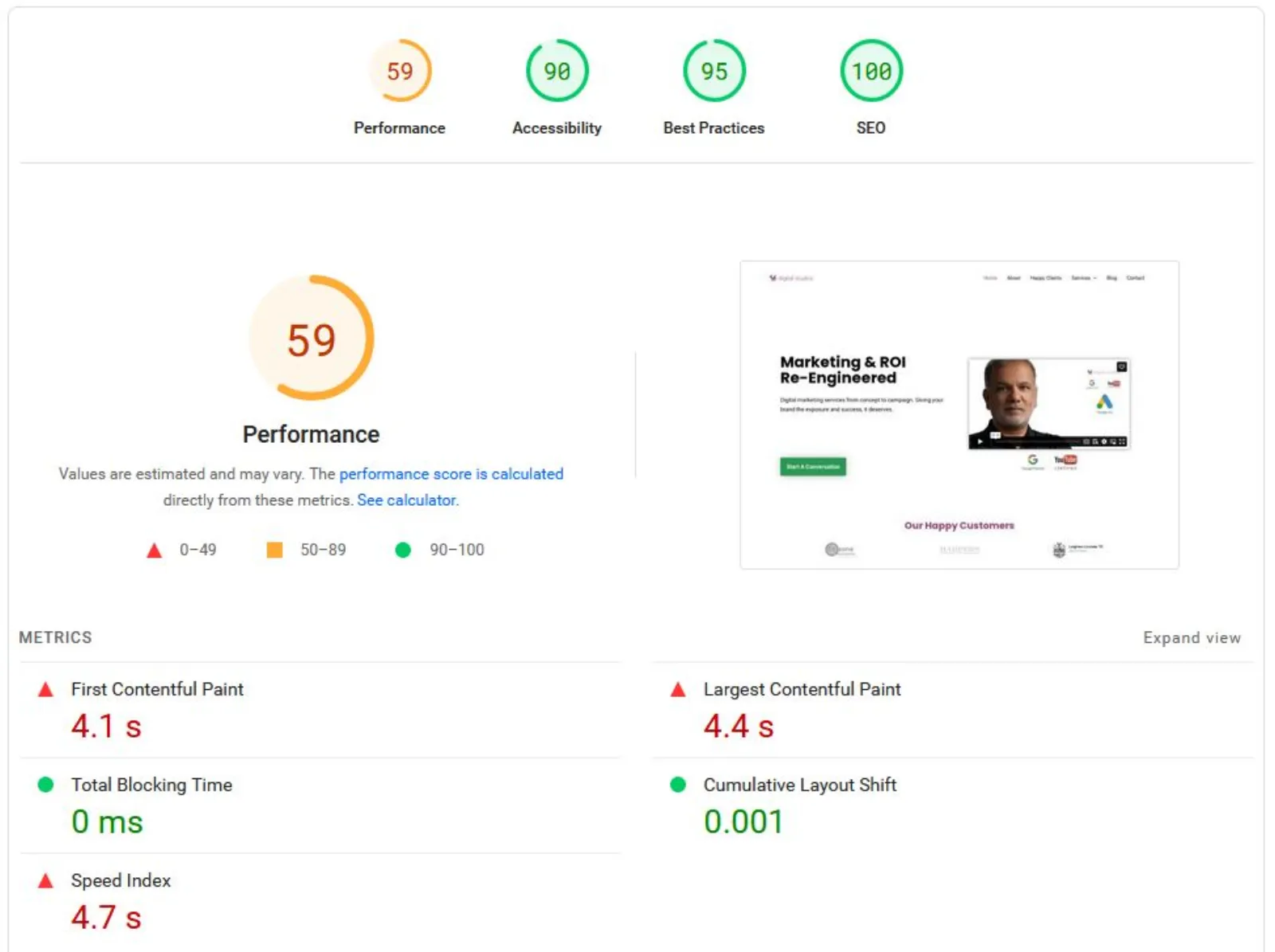
Sometimes you've got a service which you are not offering. Oh yeah, but we stopped doing that. So why are you still advertising? They haven't told us. Out of stock products and so on. But the most important thing is to make sure that your website is lightning fast. It loads up very quickly on a mobile. That's the biggest leakage, that the website is too slow and that click has gone away, or can't be bothered. People got bored or they got distracted or something. If it's like two seconds, or one and a half seconds I think is the Google recommended speed, that you've got to load up your site within that period. I see so many sites very slow. As soon as work has been done and the website has been speeded up, the conversions start to happen.
Yeah, that makes a lot of sense, and Google's crawling you better, they're ranking you better, you're getting, you know, more clicks, so that's showing Google that you have higher interest and you're relevant.
So Google, why do we love Google? Because it gives us the most relevant and the best solutions to our problem. We go to Google when we have a problem, right? I've got a neck ache, backache, whatever. Google is technically recommending us to come to our website, right? You're not going to recommend me if I'm not a good digital marketer, but if I'm a good one, you'll say to somebody, when somebody asks you, hey Preston, do you know somebody who can do ads? Oh, I know Uzair can do it for you.
So Google is doing the same thing. They do not want people to go to a lousy experience. So if you haven't done the stuff which Google is asking you, they're going to drop you down to page two and page three and page four, and the other ones who have done all the work, they're going to start ranking higher. So pay every attention to what Google says.
Yeah, and, you know, it's not rocket science in terms of some of those things. You can ship, you know, new information, new links from Google to your developer and ask them simply to do it, or if you're doing it yourself, there are different tools and optimizations you can have. Or you can go to people like Uzair to talk to him about this. And do you do any kind of strategy sessions, or do you have any sort of way, like if somebody's listening right now and they go, okay, I'd love to use Uzair and his team to help me, or maybe to talk to, how does that work?
Yeah, so they can follow us on our social channels or visit our website, fill in a form, and then we hop on a free consultation and see if we've got, you know, something in common and we align to each other and we can possibly work together.
Yeah, very cool. Okay, love it. So guys, if you're out there and you want to, please visit SF Digital Studios and talk to him about it. It looks like they've got tons of resources. He is an expert in this world of SEO and SEM and video SEO, and so definitely, definitely take the time to reach out. Well, Uzair, thank you so much for the conversation, it's been fun. Is there anything else that you want to share with the group of folks that we have in our audience?
Yeah, my last, you know, tip before we switch off is: don't give up too quickly. Keep plugging at it. And I always say this to everybody: what's the alternative to Google right now? There isn't any. So Google is your best friend. If it doesn't work, keep trying, keep trying, keep trying. Something will work, and eventually you're going to succeed.
I love that, that's fantastic. Well, thank you so much.

 LIVE