Amazing. Hi, everyone. Welcome to the MaxWeb video Podcast. I'm absolutely thrilled about today's episode. I met Uzair in Ibiza a few weeks ago, and we had the privilege of sharing the stage. And as the attendees and people in the audience were asking questions, I found myself nodding and really understanding that my newfound friend really knows what he's talking about.
So, without further ado, Uzair, if you want to take a few minutes to walk us through, your know, just whatever you want to share so people understand what you do and what's your role in the space. Welcome. Thank you. Thank you, Anna. And thanks for inviting me. It's great to be here. And thank you to everyone who is watching this podcast.
So, just a very quick and brief introduction as to who I am, what I do. Me and my wife, Farzana. We run SF digital. We've just passed our 21st business birthday. So it's a long journey. We've been going on for 21 years now. Lots of ups and downs, and we had to evolve. As the Internet evolved, you have to keep pace, because if you were still in the space where Yahoo and Lycos were there, you would not be on Google.
So as the Internet evolved, we had to keep pace. And my background is photography. That's how we started the business. But with photography, then came along video on a camera and on a phone, which we never used to have. Those of you who are old enough, we know this, all right? There were no videos. And we thought, there's something, the new trend is coming along.
So we had to hop on that bandwagon and start doing videos. Then one day, one of our clients said to us, oh, you're doing our photos and our videos. Why don't you do our website? That's a great idea. On the website, the three most important things are text or a copy, photos and video. We were doing two of them, so we thought, yeah, let's do that.
We started doing video website, and then he came back to me and said, well, I need people to come and see my nice new website. So that's how we started Google Ads in 2009, or somewhere along at that time when it was very new. We were getting clicks for like, one cents per click, and I had no idea what we was doing.
We just put up a campaign and we started to get phone calls and stuff like that. And that's how we then knew that there's a big demand and requirement for businesses to hop online and get started. So here we are in 2023. Now, 21 years ago, we started the business, and now we have an agency for Google Ads where we run campaigns, as well as we coach business owners and marketeers how to run ads profitably.
That's fantastic. And I think that's why I was so excited to have you join our podcast, because we have over 40,000 affiliates now, and sure, a lot of our affiliates do email marketing or native ads. Social. Facebook is very profitable. However, many affiliates do love running Google Ads. As you said, a lot of our super affiliates that have been with us for years have shared some of the struggles and what it means to run Google, GDN and now YouTube, right?
If we have time, we'll touch base on YouTube as well. If not, we'll do a different episode just for wanted before the podcast. I'm a Taipei big nerd, so I wrote a few questions down, and I know we're going to go through the mistakes of Google Ads, but before, I really want to take the time to learn from you, right?
Our specialty is native ads. So when it comes to Google Ads, I have so much to learn. So I would love for us to walk our friends through the basics. So let's pretend I'm an affiliate. I can be an affiliate that has the budget aside, right? But I'm now running native or Facebook, and I would love to get started with Google Ads.
So walk us through a bit of what's the best way to learn Google Ads, where do we start? What do we do first? Okay, so you need to be a bit careful with running affiliate offers with Google because Google frowns upon affiliate links in the ads and stuff like that. What you need to do is to first of all, create a bridge page where you offer some kind of value to your affiliate.
How to lose weight, how to get a six pack, how to run a marathon, how to learn Google Ads or whatever. Don't send the traffic direct to that page because you're not tracking the traffic and you're not Pixeling them. You're paying for that click. What happens to that on the website, you don't know and you don't have any control over.
You don't have an email either. So you create a bridge page and then send them through to the affiliate offer. What you have done now effectively is building up your audience list. So, as you must have heard millions of times, the money is in the list. For me, the money is in the audience list, not in the email list is there as well.
The problem with email list is the open rates keep going down and down and down. I may have a list of 100,000 or million people. If people are not reading my emails, what's the use? Amen. But if I have an audience list who have been to my website in hundreds of thousands or millions of times, I can run remarketing as if Google allows them in that niche.
Because some medical campaigns you can't do remarketing and some niches if it's allowed, like insurance, car insurance or home insurance or something like that. Insurance is the best one, because after ten months, you should start up a remarketing list because the renewing people have to renew it, right? So you don't want to lose those. So you land them onto your landing page, pixel them in, and then start to remarket.
And if you got more value to offer, then you drive them to a blog post or to a YouTube video. So you keep pushing them further down the line. So if somebody wants to learn Google Ads, the first name in their mind should be, I know Uzair. I trust him. I know him. I like him and I trust him.
And this is why it's important that we first of all build up our audience. Right? I agree. And you mentioned bridge pages, so it might be the same as what we call in Native Ads, a pre sell. Like a pre lender. A pre lender. Am I correct? Okay, beautiful. So we know what those are. How do you build those?
Do you build those in house? Like, you have a team and usually build those pages yourself? Or do you use specific tools? So we use a tool called Unbounce. There are lots of tools, like ClickFunnels, Leadpages, all these kinds of but the most important thing is you A/B split test. So headline one versus headline two, a photo of a woman versus a photo of a man, a young person or an old person or something like that.
And then you run ads 50:50 or whatever you want to do and see which one is the winner. The loser. You ditch and bring in a new challenger to the winner. So you're always competing this A/B. Yes, we do the same for native. Exactly. So I'm glad because one of the questions that I wrote down was to talk to you about A/B testing and if it's just important for Google Ads as it is for native.
Right? And the audience, many times, like, I've noticed our friends, they found this idea of testing like a very complicated concept, but it's not the way I usually advise our affiliates. It can be as simple as changing the gender of the person in the video or the headline. Do you find the same thing as in Google Ads?
It is. You don't need to make big changes, small changes, and one at a time. Because if you change the photo and the colour of the call to action button or the text on the sub headline or something like that, you don't know why you are getting results better or worse than before. True. If you just change the headlines, okay, I'm going to do a headline split test, then you know, everything is the same except the headline or the video or the photo or whatever, just change.
Make one change. This is why it's called A/B split testing. Otherwise it's called multivariate testing because there are multiple variations on a landing page. I love it. That's beautiful. I talk about this all the time, so it's so exciting that it's not that hard. Right? If you're an affiliate listening to this, and you are currently doing native ads, it really is very similar to how we do things.
All right, talk to me about monthly budgets. I know. If that's a general question, right? I know. But a ballpark of maybe a medium budget, right? Let's assume the affiliates we work with have a bit of a budget now, right? So we start a new campaign. How much money should we set aside? Any recommendation? Is that a legitimate question?
No, because it's extremely difficult. How fast you want to fail, get up and get going. That's I would say the right answer. Because if you have got a $10 budget per day, you have to wait a lot of time, lot of days and weeks to get the right data in, because then you can make data driven decision.
But if you want to put in 100 a day and then get the data in faster, ten times faster, and then you say, oh, it's not working, then you stop the campaign and do something else. So that is what you want to do. So what you want to do is be prepared to test. And the mindset needs to be, I'm prepared to lose this money to buy the data.
You're not losing the money, actually. You're not wasting money. You are buying data. If you're brand new, you don't have any data in your Google Ads account. You will have to start somewhere. Right? And also, it also depends on the click cost on the search network. Your click cost for an insurance or a campaign could be like $30, $50 a day.
And if you say, I've got $100 a day, you're only going to get two, three clicks per day, which is not enough, right? Absolutely. It's all relative. If you're going after keywords, which are very expensive, then you need hundreds and thousands of dollars per day budget. But if your click cost is, let's say twenty cents, thirty cents, then you don't need that much, but you set up a budget and say, okay, this is my testing budget, a testing budget, let's say, for YouTube or Display Network $3,000 to $5,000, and I'm being very conservative, you can get started quite easily.
And the goal of the campaign is not to go into profitability, but to reach the breakeven point as quickly as possible so that it's not costing out of your pocket. And with affiliate offers, you don't have to buy any stock or anything like that. You send the traffic, they sign up, you get paid after X Money number of days, and that's the way you need to manage your cash flow.
If your payout is going to take 30 days, then you make sure that you got enough money to pay to Google for the ads you are running. So you need to manage your campaign as well or manage your cash flow. That is what you do. If you got more cash, you got more budget to play with. If you got less cash, then you need to be conservative because you don't want to throw away spend all your cash and then at the end of the month, you worry, oh, how am I going to pay the rent or mortgage or buy food and stuff like that.
You really don't want to be in that situation. So managing that cash flow is critical. I agree. And we do YouTube besides native, right? And our media buyers, usually you were right, usually around $5,000. It's a good indication if, okay, this offer can bring us more money or not. After $5,000, I feel like we know if it's a winner or not.
And how you said it's very important not to expect after just a few thousand dollars, especially on YouTube, to make a lot of profits. Right? Some traffic sources are expensive. Exactly. We need to be honest. People say make money online and they assume it’s just poof it's in there. Right? Exactly. And making money online and also something like passive income.
It's not passive. You have to work. You have to do podcasts like this. You have to upload videos, you have to create content. And then you're going to start earning passive incomes. It's not easy. It's not a laptop on a beach lifestyle. I can't work on a beach because it's too bright, first of all, and it's too windy and you don't want to have a laptop on the beach.
I agree. I completely agree. Because in our space, it's no secret we have a lot of gurus, people that tell you, just follow me, I'll make money online. And in a way, it hurts us because the digital marketing industry is so profitable. But we need to be realistic. I mean, you need to work hard, especially if you're getting started.
If you want to tackle Google Ads, it's going to take a while. You need to follow industry experts that actually run those traffic sources and they know what they're talking about right? That have years of experience and the knowledge to give you good information. I agree. All right, so I made a mental note because you mentioned keywords earlier.
So I wanted to ask you what's the best way to check trademark keywords? Because that's very important for a lot of affiliate offers. All right. Obviously, if you're going after something like, let's say Apple, Samsung, all these big companies have got their trademarks in, right? Some companies will allow you to bid on their trademark. Some most won't because they want to control their own brand campaigns, because everybody is bidding on their brand so what I would do is if I was you and you are not allowed to run campaigns on a particular brand name or a trademark is stay away from the search network.
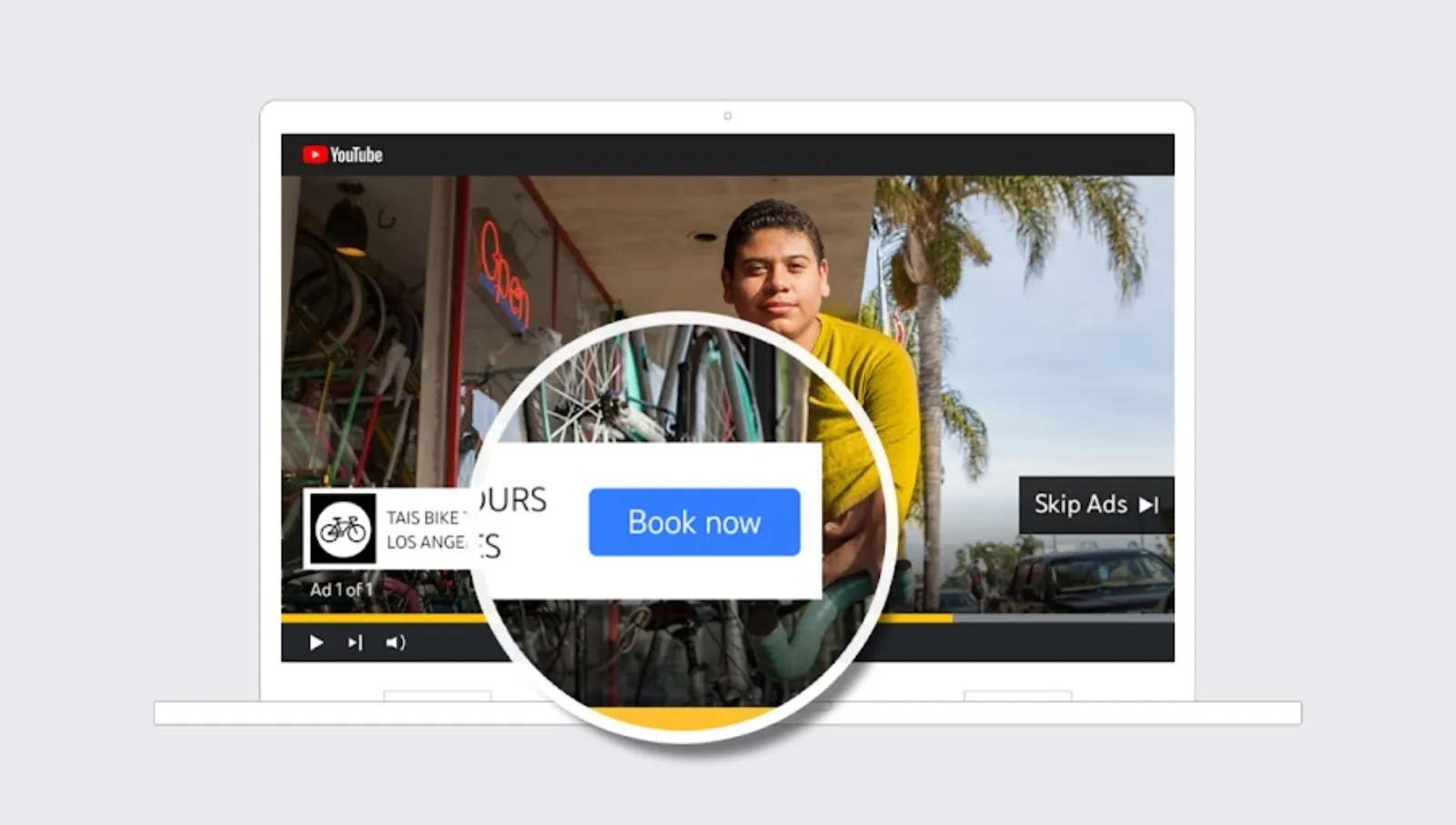
Search network is only one network on Google. So when you go to Google and you type in buy iPhone and your four ads pop at the top, that's the search ads, right? You search for something, the ads popped up. When you go to Google or YouTube and you play a video football or golf or whatever, that five second skippable ad pops up there you can put your ads straight away.
You don't have any problems in those places. You go to CNN or ESPN, Wall Street Journal to read the news. You will see banner ads over there. So you can have a custom audience and said, hey, Google, show my ads to people who visit Apple's website on the iPhone. Because Apple has got multiple products, right? Apple watch, Apple AirPods, laptops, computers.
So if you're in the phone market, iPhone or phone niche, then you go and tell Google in the audience targeting, I'm only after people who are looking to buy an iPhone or a Samsung or a Google smartphone, and you can put those URLs and create audiences. It's a very powerful way of targeting. So Google knows exactly. So kind of like you're pinching away Apple and Samsung and Nokia's traffic.
Legally and ethically it's not exactly the same, but Google will say. Yes. We can show your ads to people who have been to these kind of websites. Amazing. It works really well and they perform really well because the audience has got intent. Most people will say, well, on display network and YouTube, there is no intent. Well, YouTube is the second largest search engine in the world.
You go to YouTube, how to bake a cake, how to make a burger, how to play football, how to play golf. Right? Absolutely. So we can target those people with our ads on YouTube and all over the display network. Amazing. I'm taking notes here too. All right, I think you answered this earlier, but it was one of the questions that I had for you.
Can you run ads without a website? Because for native, theoretically you can, but I wouldn't recommend it because it's so good to have a presale, right? Yes. What do you think, Same? Yeah, absolutely. You want to capture that audience and build up your brand. So a website you would definitely there's so many tools out there like, you know, from ClickFunnels to all the new ones.
Yeah. All right. Tips increase conversions. I know a lot of affiliates that are using Google Ads will be very interesting to hear if you have any tips, specific tips to increase conversions. So first of all, you need to pick up an offer which is converting well, which has got proven concept, proven data that, yes, this offer is you have to pick the right horse, right?
The winning horse. And first you do that, and then all you do is you have two other variables. One is your targeting or the audience, and the other one is your pre lander or the bridge page. And then you just keep on testing different messages, different audiences, and see which audience goes through and starts to convert. So something like Clickmagick, I believe, does really well, where you can see which campaigns are working and which ones aren't.
And the best way to track these conversions is to segment the campaigns out as much as possible. So you may have dozens of campaigns running at the same time, more work, but it will give you the best dividends because first of all, the budget is controlled at the campaign level. In Google, unlike Facebook, which is at ad set level, it's complete opposite.
So in Google Ads, you run the budget at campaign level. If you've got multiple ad groups, we don't have any control whether ad group one is going to eat up all the budget or ad group seven. So I would say one campaign, one ad group, one audience targeting, and then you run it, spend some money and say if it's not converting, switch it off.
So you got lots and lots of campaigns running at the same time. The beauty with Google Ads is they've got a free tool called the Google Ads Editor. Very few people use it and it can create the workflow in a way, which is, I would say, 50 times faster than what you do on the interface. You can copy paste scale campaigns and build up your campaigns at lightning fast speed and then throw everything at Google.
Because if you are capable of creating 200 campaigns in no time, and someone who is working in the interface, like the online interface, there is nowhere in the world they're going to sit there for hours on end creating all those 200. Unless they are very dedicated to their work. It's highly unlikely they're going to do that because most people are lazy.
They'll say it's too much work. I'm just going to put all the audiences, all the targeting in one campaign, but they don't split them out. Whereas with the editor, you are able to do that in a matter of minutes. So we use an Excel spreadsheet or a Google Sheet, and from there you copy paste. So, like a spreadsheet, whether you're copying one row or 1000, it takes you the same amount of time.
That's how it works. If you are a serious affiliate marketeer and you want to run Google Ads, learn Google Ads Editor. Google Ads Editor. If you guys want to take anything important, that's one of the things. Write down. That's the biggest takeaway from this session would be the editor. If you haven't heard for it, you can thank me later.
I love it. All right, how do we I mean, what tools should we use? Because I always have specific tools that we use for native. Are there any tools like the one you just told us about that we can use for split testing? We use Unbounce U-N-B-O-U-N-C-E. But you can have lots of other A/B split test landing pages, tools like Leadpages, I believe, ClickFunnels.
And there are loads out there. Unbounce, we've been using for, I think, eight, nine years now. Works wonderfully well. So I would highly recommend that. Beautiful It’s tools are very specific. Right? Because you've been doing this for so long, many times, it's common sense with the tools that we have out there. All right. This is a big one, because you can imagine for affiliate offers, it can happen often.
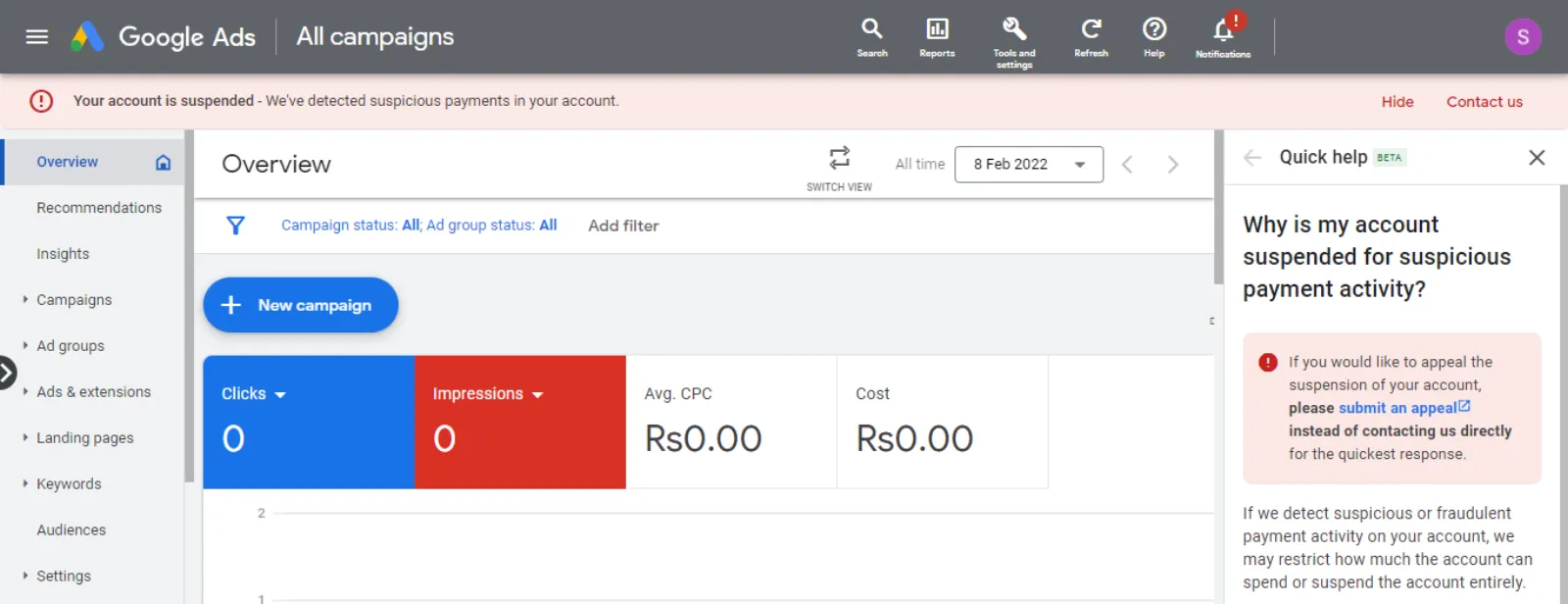
Our affiliates are very good, and we've been very clean in the way we present the offers. Right? No crazy tactics, lose weight overnight, or what used to go seven years ago. Obviously, we need to be very discreet and have a diplomacy when we present the offers. But how do we deal with suspended accounts? Okay, so with Google suspended accounts, there's at least light at the end of the tunnel.
Unlike Facebook, where they don't even reply back, once you raise an appeal, Google Ads will reply back to you. Sometimes it may take them a bit longer, but they do reply back, that's for sure. And if you've got a Google rep, then they can expedite that process a bit faster. And they can tell you this is the problem.
Quite often they will say, oh, there is a malware on your website, or it’s a Clickbait, or some issues which they found which are against their policy. So you have to go through that process. Don't have to pay anyone. If somebody comes to you and says, well, I'm going to unsuspended your account, they can't, because at the end of the day, the buck stops.
With Google Ads, you just fill in the form online appeal and try to get the account back. But before you start running ads, go through what you are allowed to do and what you're not allowed to do. My account has never been suspended because we follow Google's guidelines. It's like a teacher at a school. If they tell you, don't do this, you'll be in their good books, but if you start misbehaving or being disruptive in the class or whatever and go against what they are teaching you, you're going to get punishment or detention and all that stuff.
So Google will throw you in the sin bin as well. If you are trying to be clever, a lot of time people say, oh, I'm going to get this page done, get my ads approved, and then I'm going to change my offer. Do you think Google is that stupid? Right? Don't try to be clever. Google knows more about us than we know about ourselves.
So don't try to act smart with them. Don't try to be clever. Follow the guidelines to the dot and you will find that you won't have any problems. If it's not allowed, it's not allowed. Don't try to bend the rules or try to do something which you feel is clever, you'll get suspended. That's a great point. And you said something very important.
I have seen a lot of companies make money from telling affiliates, hey, I can unsuspended your account. And they do it with Facebook. With Google. So I've always obviously tell people to be very weary and careful. I think the easiest way to do this is by talking to your reps. I know with Facebook it's very hard because you barely get one, but with Google, I mean, we know wonderful people at Google.
If you're watching this and you need a contact, the MaxWeb team will gladly introduce you to someone. And honestly, I think that's the safest and smartest way than paying someone to unsuspended your account. Am I right? That's right. Yeah, absolutely. Absolutely. But as you know, first follow the rules. Of course. And it can be something like many times, even if you follow all the guidelines, maybe something that is not up to you.
Maybe there's something a bug malware on your website, Right? And it's okay to fill in the form as the question, even if you felt like the headline and the other guidelines were right, it could be something that's easily fixable. So I wouldn't panic until you know. Another couple of tips I would say is even on your landing page or the bridge or the pre lander, you must have your Terms of Service and Privacy Policy.
That is really critical because that won't get your account suspended, but that will get your ads disapproved. That okay. You haven't got all these information on. Google will check those links. You've got to have those pages on there, and then you should be good to go. That's wonderful advice. I really like that. Okay, so now let's talk about the biggest mistakes to avoid, because we kind of clickbait our friends with the title of the podcast.
And I know we already covered a bunch, but it's a video podcast. But we also have a lot of friends that are just listening to this on Spotify or Google on their way to work. Some, they just scroll to the end, right? So let's give them some good information about the mistakes that should be avoided. Because you have a lot of friends that do Google Ads already.
So the first thing you want to do is to do remarketing. Don't leave a lot of cash on the table for your competitors to swipe from under your nose is run remarketing campaigns if you're allowed to remarket in your niche. Right? Second one I would say right now is video ads. Really important? Video builds up the know, like and trust at a fraction of the cost.
Very few people do this properly. We've built up our entire business for the last five years on video ads. That's it. 90% of our budget on Google Ads goes on YouTube because it converts well, and it builds up that trust. This is why it's critical that you be the face of your brand. Look at Richard Branson. Everybody knows him, right?
But if I were to ask you, Anna, can you tell me the CEO, the name, who is the CEO of American Airlines? Nobody will know. Perfect point, right? Nobody knows. So he Richard Branson comes on well, not every ad now, but he used to be the face of virgin. And you will find that this is how you are going to differentiate yourself from all the other affiliates.
My niche and space. Google Ads. Digital marketing, again, very competitive. So we keep on uploading video a day. Try to upload video a day. For the last four years, we've got over 1600 to 1800 videos on YouTube now. And then they get ranked on Google, which, again, brings us organic traffic for free. Because video SEO is, again, the quickest way to land up on Google page one.
And you will see, every time you go to Google and you search for something, there'll be a three or four video pack, which Google will show, that shows you that Google is giving a lot of emphasis to video. So that's, again, a very low hanging fruit. So go after the low hanging fruit. You want to fight against the amateur or the lightweight boxes and not against the heavyweight, because no matter how much you train, you're not going to beat them.
So that's one more thing, which most people don't do, is to run with video ads. Display network again is huge. It's massive. But most people say it's waste of money and waste of time. I call it instead of the Google Display Network, I call it the Golden Display Network because it's gold out there in there. But you just need to find where it is and you keep digging and you'll get the gold over there.
I agree. We love GDN. GDN has made us a lot of money, especially affiliates that have learned over the years how you said how to deal with the reps, how to present the offers in a way that follows the guidelines. Completely agree. Yeah. I really love your Instagram channel. I know a lot of our viewers are probably more they are on YouTube more.
Would you be comfortable sharing your Insta handle so people can share it on the chat? Awesome. Yeah. Or I can do it after SF Digital. Yeah, perfect. I will add it. And genuinely, I don't follow a lot of people on Instagram, but the channel, that's the one. Yeah. Thank you. Of course. My pleasure. And the videos are so good, and you're so good about making it sweet and clear.
It doesn't take you an hour to present something that you can talk about in five minutes. And many times that's key, too, even for a podcast. I always try to keep it under 40 minutes to try to just give the information that is most usable with tips that makes sense. All right, so we have a bit more time, and if you are comfortable, I would love to talk about YouTube Ads.
And if you have any type of advice for our affiliates when it comes to ads or good practices, that would be amazing. So the good thing about YouTube Ads is not like Facebook, where you need a ton of creatives to test, test, test. Every time I speak to a guy who's running Facebook ads, oh, I create new creatives every week.
So many of them, hundreds of them. And this and that the way we run is first of all, you need to know your customer avatar, any kind of advertising. First you need to know your customer avatar and what we call the empathy mapping. What is the pain point, what is the challenges, the pain point, what gives them sleepless nights and all that, right?
You take those problems and then you create five different hooks. And then the five so you can get away with three as well, right? Five of about 10 seconds. So important when it's specific to know how many hooks, right? Yeah. So let's say you want to lose weight. So we have five hooks of are you a new mom who wants looking to lose weight?
Are you running a marathon in six weeks or ten weeks? You want to lose weight. You just want to feel healthy and have energy. Energy, yeah. So you have five different hooks, you know, five different hooks. And then the body has the benefit and the offer of your product or service so that remains the same and the call to action.
Click here around the video to get my cheat sheet, white paper, free webinar, free consultation or whatever it is, right? Just the top, the first hook, hook 1, 2, 3, 4, 5. And then you create five video ads. And you run those five videos as ads in the same campaign to one campaign, one ad group, one audience, and three to five ads.
And the ones which are not resonating or not giving you the performance, you keep switching them off. The ones which are running and performing or giving you the conversions, you keep scaling those budget. So, YouTube, you keep things very simple, highly scalable. That is the beauty. You do not get suspended like Facebook. As soon as you start to scale, you get suspended or your CPA goes through the roof.
YouTube or Google Ads is a fairly stable platform where you can spend 10,000 a day without any problems and more. Some affiliates are doing massive numbers, big numbers. They really are, especially on YouTube. I would never, always want to be very honest with the type of ways you can make money online. And I can generally say a lot of our affiliates make even not 80k like they used to, like last year when things were easier, but easily 30k, 40K.
Obviously they reinvest a lot of that money, but huge amounts on YouTube. And I've seen it, too. And you're right, it's probably because, yes, you have to put in the work, especially with the videos, but you're not going to get banned like you do with Facebook, and you have that conversation going with the Google reps, right? I really think that's a big reason why.
Absolutely. And that's why I love YouTube. And this is one of the reasons why we run YouTube for our own company, for our own ads. Spending client money is easy, right? It's other people's cash. But when you want to spend your own cash, that's when it really hurts. It hurts as well when we spend client cash and the results don't go our way, but then that's the beast.
So we test and tweak on our campaign, see what's working, what's not working, and try to do the same on our client campaigns. Amazing. All right, we've been so good and we covered so much. We're under 40 minutes here. And now let's assume some of our friends are just skipping to the end of the podcast, as a lot of overachievers do.
What are the three things you want our audience to take away? I know you shared more than three things with us today, from mistakes to tips, but three important things that you want them to take away from our podcast. Firstly, there is no other better alternative to Google and YouTube right now. Okay? TikTok and Facebook and all these other ones are there, but it's not intent.
The intent is every time we have a problem, we go to Google. Bing is there, but the market share is very market is very small. We go to Google. So the intent is there. So there's no other alternative. If you have failed and haven't got the results, be patient. It's not Google's fault. It may be the product, it may be the campaign setup, it could be any number of reasons.
So keep trying and don't give up. That's the biggest takeaway. I'm going to say. You have to keep going. If you fail, get up and get going. If you fail again, get up and get going. Just like running a business, Anna, you've been running the business for a long time and I'm sure you've had lots of challenges and problems, but we don't give up, right?
This is why we've reached 21 years now in our business. And it hasn't been plain sailing, it's been up and down, but mostly up. So that's the first thing. Never, ever give up. Try to stay away from the Red Ocean. The Blue Ocean is YouTube, right? Search campaigns is the Red Ocean. Everybody is killing each other for those top four positions up there, right?
That's the other thing. The third takeaway I would say to you, okay, these YouTube, display, search campaigns are there, but if you don't know how to set these up quickly and efficiently, then you won't run them properly. So learn Google Ads Editor. It will take a bit of time, but it'll be worth your time investing in learning Editor and how to do this.
So those will be my top three takeaways. I love them and I could listen to you for a long time. So let's promise our audience we're going to do another episode soon because you have to say yes, because now we're live. Of course, anytime we can do something on Editor that would be really interesting. I would love that.
I'll open up and we do a walkthrough. How to do this. Yes. You see, I always put my friends on the spot because you're live. It's not like you can really say no. Thank you. All joke aside, I appreciate you so much. I know how busy you are and how hard you work every day for your company.
Sometimes we'll go a few months without having a podcast because I'd rather not have someone on unless it's someone that actually knows what they're talking about when it comes to their field. So I'm so honored that you took the time to help us. And I've noticed the team already shared the Instagram page. If it's okay with you, we'll do the same with your YouTube page.
If you don't mind our audience reaching out to you. Yeah, no problem at all. We try to answer each and every comment, so no problem at all. But thank you so much for the invite and it was lovely meeting up with you and Ibiza, and we had a great time over there. It was lovely having you here.
Thank you so much. Thanks, Anna, and thank you to everyone for being here. Thank you so much, everyone. We're going to end our lovely video podcast. If you've been listening to us on YouTube or on Spotify, Apple on your way to work, make sure you come back to Facebook or one of the social channels because it's so beautiful to put a face with the name.
So if you have any questions, please drop them in the comments on the Facebook page. We're going to add our friend's YouTube channel also besides Insta, and we are so open to your questions. We love you, we appreciate you, and thank you so much for listening to us today. And thank you, Uzair, again. No. You're most welcome, Anna.
Thank you. Bye. Thank you.


 LIVE