
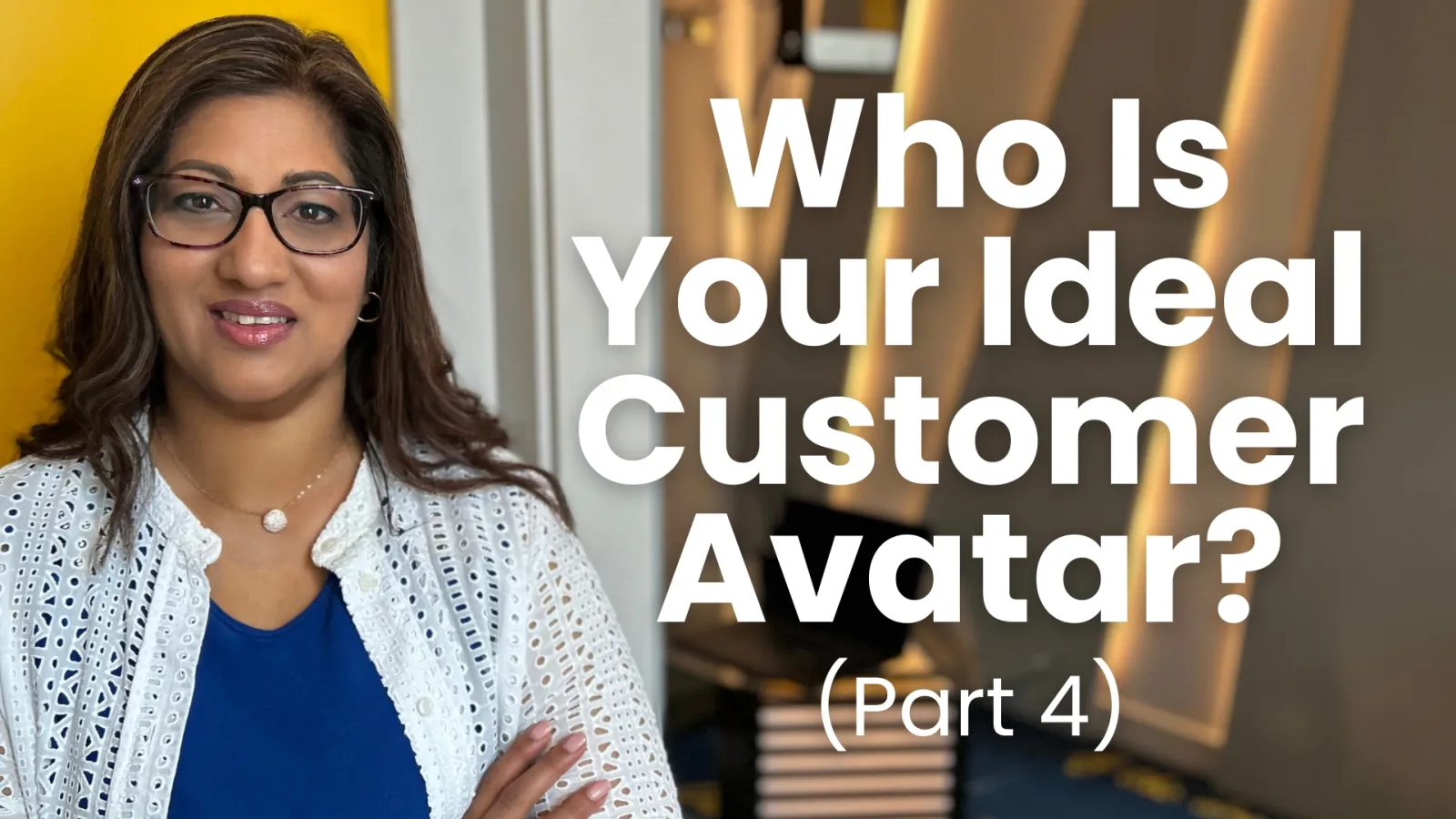
When building a business, one of the most important things to understand is who you’re serving. This means identifying your ideal customer — often called your Customer Avatar. If you get this right, everything else falls into place. But if you don’t, you’ll struggle to connect with the people who need what you offer the most.
So, who exactly is your ideal customer? Let’s break it down in simple terms, using an example from the world of course creation.
Get Found, Get Chosen, Get Your Time Back
A free one-day marketing seminar in Milton Keynes · 10 November 2026
Understanding the Ideal Customer’s Needs
Imagine you’re offering a course that helps business owners like Richard, who has a lot of clients but struggles to provide a consistent service. Richard is your ideal customer, but to truly serve him well, you need to know exactly what he’s looking for.
Get your free Marketing Action PlanNot sure where to start? Answer a few questions and get your plan in about a minute. No email needed.
Get my plan →Richard is a business owner with a goal: he wants to improve his client care system. Right now, he’s juggling different needs for each client, which is time-consuming and inefficient. After purchasing your course, Richard expects a transformation — one where he can confidently serve his clients with a consistent system, saving time and improving service.
This shows us that Richard has specific pain points: lack of time, inconsistent client care, and a need for a better system. When you understand this, you can craft a solution that directly addresses his struggles.
 LIVE
Live every Tuesday at 2pm UK. Bring your marketing questions.
Get your Google, local SEO and AI questions answered live.
Core Values and Authentic Service
Knowing your ideal customer also means understanding your core values. In this case, one of your values might be to serve authentically. If you’re offering a product or service that doesn’t align with these values, then it’s not going to be a good fit. Authentic service means ensuring that your customer gets real value, not just a quick transaction.
For example, Richard isn’t looking for a course with hidden fees or limitations. He’s tired of purchasing online courses that have time limits, restricted access, or require him to upgrade to another tier. He wants something that he can use for the long term — a solution that offers lifetime access and real value.
This means that to serve Richard authentically, you need to offer something he can trust and rely on. It’s not about selling something; it’s about creating a relationship where both sides benefit.
Defining Before and After States
A powerful way to understand your customer avatar is by looking at their “before” and “after” states. In Richard’s case, his “before” state is chaotic: he lacks a system, struggles to manage his clients, and feels overwhelmed. The “after” state is where he has a streamlined system, is more confident, and can serve his clients more effectively without losing time.
This transformation is the crux of your offering. When you design your product or service with these “before” and “after” states in mind, you’re ensuring that it meets your ideal customer’s needs and provides real value.
Conclusion
Knowing your ideal customer avatar is about more than just identifying their demographic. It’s about understanding their pain points, aspirations, and values. When you can align your offer with their needs, you’re no longer just selling; you’re building a relationship based on trust and mutual benefit.
Understanding who you’re serving and why is the foundation for successful marketing, sales, and customer retention. So, take the time to dig deep into your ideal customer’s needs, and watch your business grow.

Written by Uzair Kharawala
Partner at SF Digital Studios, a Google Premier Partner agency. Uzair has been helping businesses grow with Google Ads since 2002 and teaches it every week on YouTube.
Get our best Google Ads tips by email
New articles and videos, straight to your inbox. Unsubscribe any time.