
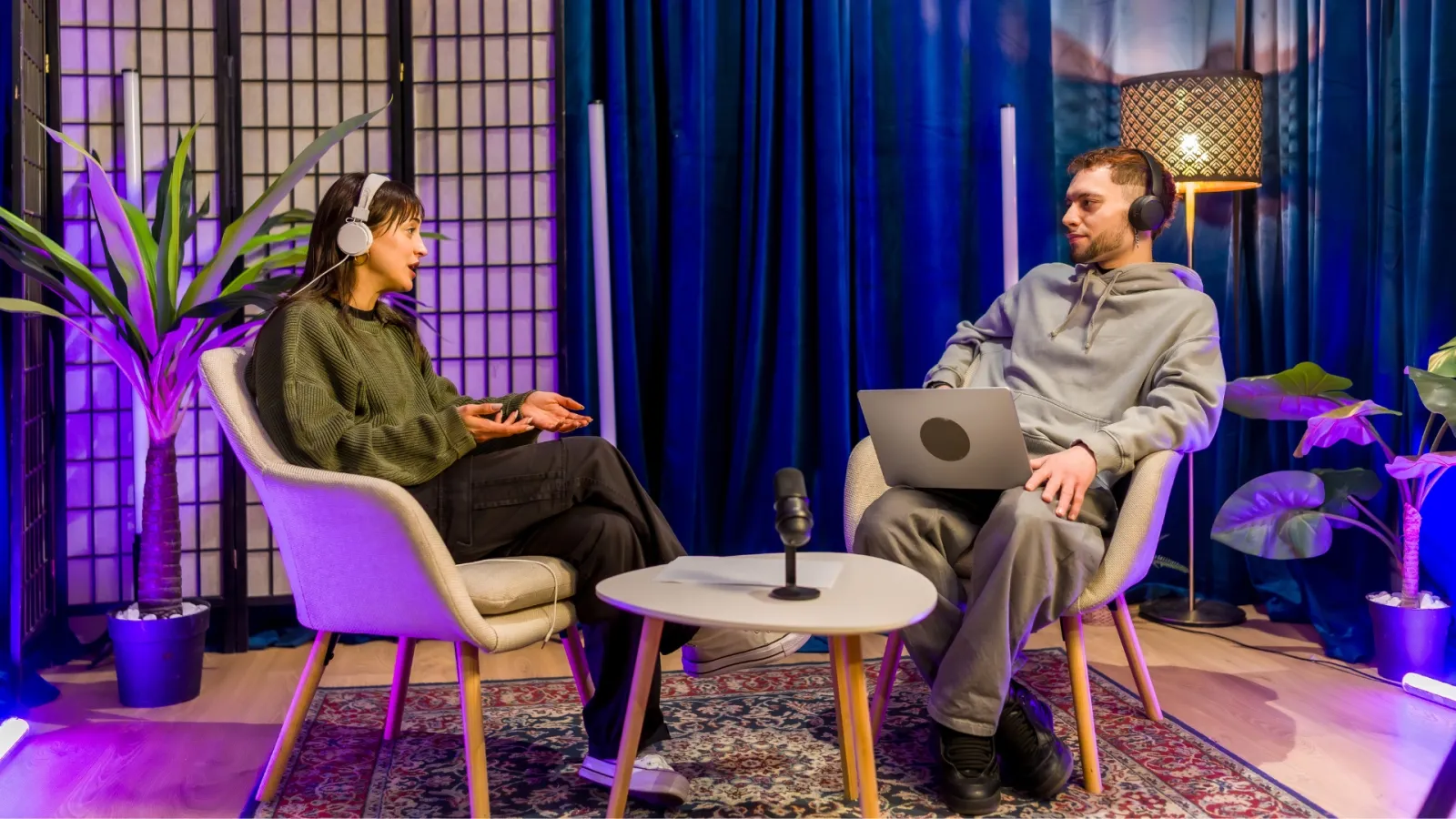
The popularity of live streaming and video content has never been as high as now. When attention spans are shrinking day by day, audiences increasingly prefer video format with interactive features over passive textual or audio content.
For brands and businesses, video emerges as one of the most effective communication mediums for increasing visibility, building trust, and driving revenues.
This post focuses on the latest video content and live streaming trends in digital marketing. Read on to stay on top of the latest developments and to be able to leverage the video format potential for the maximum benefit of your brand.
Get your free Marketing Action PlanNot sure where to start? Answer a few questions and get your plan in about a minute. No email needed.
Get my plan →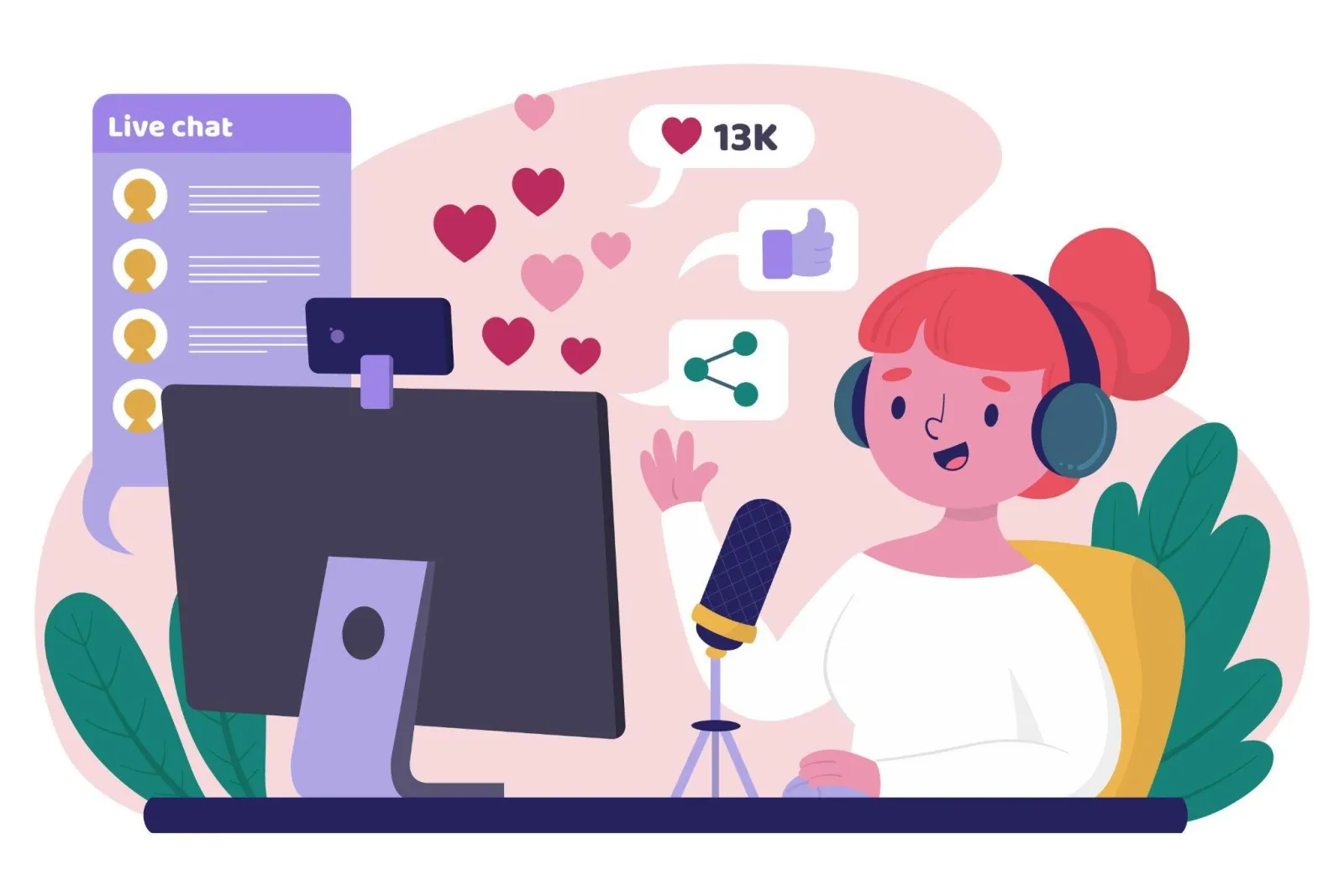
Source: Freepik
1. AI-Generated and AI-Optimized Video Content
Just a few years ago, AI-generated video content was more like a fantasy, a wishful thinking. Then it became a reality, but the video quality and production speed were not good enough and left much to be desired.
Very quickly, though, AI technologies became good enough, and AI-made videos are now impossible to distinguish from real videos. Virtually everyone who has mastered AI tools can now produce and publish AI-made videos and compete even with Hollywood.
It’s a new trend and a new reality for everyone, marketers included. Tellingly, modern-day AI video creation is defined less by technical limits and more by how efficiently it fits into marketing processes.
This technology has revolutionized the way video is produced and optimized for different audiences.
In particular, AI-driven video production has enabled:
- Rapid content ideation and scripting.
- Automated editing and formatting, e.g., for various streaming platforms.
- Hyper-personalization and localization of video content for various customer personas.
- Consistent publishing across channels.
- Continuous optimization using real-time customer engagement data.
These superpowers make video output easier to sustain. Even if the initial product doesn’t bring a desired outcome, a live streamer can easily review and further optimize their video SEO strategies based on the initial performance.
Creativity and cognitive abilities are no longer the bottlenecks; AI tools work faster, they never sleep, never rest, or take a sick leave. As a result, AI empowers live stream marketing teams to achieve more and spend less with just a fraction of the effort previously required.
2. Live Commerce and Real-Time Selling
Although not a very new trend, it is increasingly popular. Modern live streaming technologies, interactive features, live commentary, and effective product demonstrations are all fostering involvement and boosting viewer engagement.
Brands use this video format to start sales of their new products. The real-time selling event is usually announced in advance, and users bookmark or subscribe to the channel in anticipation.
Techniques that work the best in live commerce:
- Limited-time offers create a sense of urgency.
- Trust-building through live product testing and demonstrations.
- Real-time interaction between hosts and viewers through chat and reactions.
- Encouraging audience questions and answering those online.
In 2026, many effective live campaigns rely on reacting to current events, which is a core principle of real time marketing in digital channels. Hosts and organizers of live commerce streams reference trending topics or breaking news, which further boosts audience engagement.
And they actively listen (via social listening) to what the audience is already discussing and address these points in their live content and real-time selling campaigns, shaping the future of live commerce execution.
For brands, it’s critically important to make the product immediately available at the time of the event and right after (in abundant supply). The hype is high, and the task of a skillful marketer is to monetize it while it’s peaking.
3. Shoppable and Interactive Video Experiences
Video format traditionally used to be passive, i.e., a viewer wasn’t able to interact with the content. That was the case until the exponential technological boost enabled immersive and interactive experiences.
Suddenly, video content elements have become clickable and responsive to user actions. The latter can participate in polls and make purchases without leaving the video environment.
The video, in this sense, has become both a format and an interface, shortening the route from interest to conversion.
Here is what “interactive” actually implies:
- Clickable elements inside the video player.
- In-video polls, quizzes, or reaction buttons.
- Branching paths based on viewer choices.
- Short CTAs that respond to user behavior in real time.
Among all live streaming trends, this one aligns perfectly with the shortening attention span and mobile-first user experience. It supports faster decision-making while driving up engagement and other sustainable metrics besides views.
4. Authentic, Low-Production Video Content
Hollywood and other video content production giants have made us all spoiled. We’ve got used to stunning visual effects and action, never-ending action in Hollywood movies.
Perhaps, because of that or because of the nostalgia for old-fashioned, thoughtful, slow-paced, and dialogue-based movies, we now crave authenticity and simple setups with little or no special effects.
That’s the essence of the authentic, low-production video content trend. It is characterized by the following:
- Minimal editing and basic production setups.
- Natural lighting, informal framing, and simple backgrounds.
- Real people instead of actors or scripted performances.
- Conversational tone rather than promotional language.
- Short, direct messaging with clear intent.
Marketers use this and other video streaming trends to their advantage. Instead of spending fortunes for high-end video graphics and expensive actors, businesses and personal brands now favor an authentic, simple video format as a way to build visibility, capture scarce attention, and make a difference in the crowded video market.
Modern websites favor homepage videos that load fast and explain quickly. Because visitors don’t like watching lengthy presentations, especially on mobile, when they travel or commute between home and workplaces.
Such video content feels more natural and less staged. It drives attention and trust better than fancy graphical content, that especially recently got further boosted by AI technologies.
5. Cross-Platform Video Repurposing
A video that has worked successfully on one platform can be repurposed and reformatted effectively (and quickly!) for another platform.
That’s not about duplication of content, as some may think, but a carefully calculated context-aware dissemination of the best-selling content timed for special occasions and optimized for multiple platforms.
The benefits that come with it include greater awareness and higher conversions. Just like reselling and upselling work in traditional marketing, so do video marketing trends of cross-platform video repurposing empower digital marketers to reach different audiences using the same core idea.
This is how repurposing works in practice:
- Long-form videos can be divided into short-form clips and disseminated across social media.
- Aspect ratios need to be adjusted for feed, stories, mobile, and web formats.
- Captions can be rewritten to match the platform’s tone of voice.
- Even hooks and openings can be customized per platform and channel.
- Video insights can be repurposed into guest posts, as there are plenty of ways to support link building through external publications.
This trend enables digital marketers to get more output from the same source. Since they don’t need to invent new content from scratch, they also significantly speed up the delivery time.
Furthermore, armed with AI-assisted editing tools, marketers can optimize repurposing and deliver highly personalized content experiences to specific geographic audiences and even to specific customer profiles.
Dealing with platform-specific optimization also includes Facebook SEO, where Windsor.ai outlines practical techniques for improving content visibility. These include optimizing business page information, using relevant keywords in descriptions, improving video metadata, and maintaining consistent posting activity.
The Bottom Line
Over the past few decades, video content has moved from the big cinema and blue television screens into the pocket-sized smartphone displays. Users can now enjoy on-demand, highly personalized and interactive video content — a situation that perfectly aligns with the mobile-first and the shrinking attention span economy.
The key video content and live streaming trends that reshape this new video content economy are:
- AI-generated, edited, and personalized video content.
- Live commerce and real-time selling.
- Interactive video experiences for users.
- The proliferation of authentic, low-production video content.
- Easy video repurposing across multiple platforms.
Despite the apparent oversaturation with different video formats for all tastes and lifestyles, videos in digital marketing don’t seem to be losing momentum. Marketers continuously come up with new ideas and approaches that balance human creativity and technological efficiency and speed.

Written by Uzair Kharawala
Partner at SF Digital Studios, a Google Premier Partner agency. Uzair has been helping businesses grow with Google Ads since 2002 and teaches it every week on YouTube.
Get our best Google Ads tips by email
New articles and videos, straight to your inbox. Unsubscribe any time.