
When you first step into the world of Google Ads, all the different keyword match types can feel a bit overwhelming. You’ve probably seen terms like Exact Match, Phrase Match, and then this thing called Broad Match. If you’re wondering what Broad Match is and how it works, you’re in the right place.
This guide will walk you through Broad Match in a way that’s easy to understand, no marketing jargon, just the basics you need to get started.
Get Found, Get Chosen, Get Your Time Back
A free one-day marketing seminar in Milton Keynes · 10 November 2026
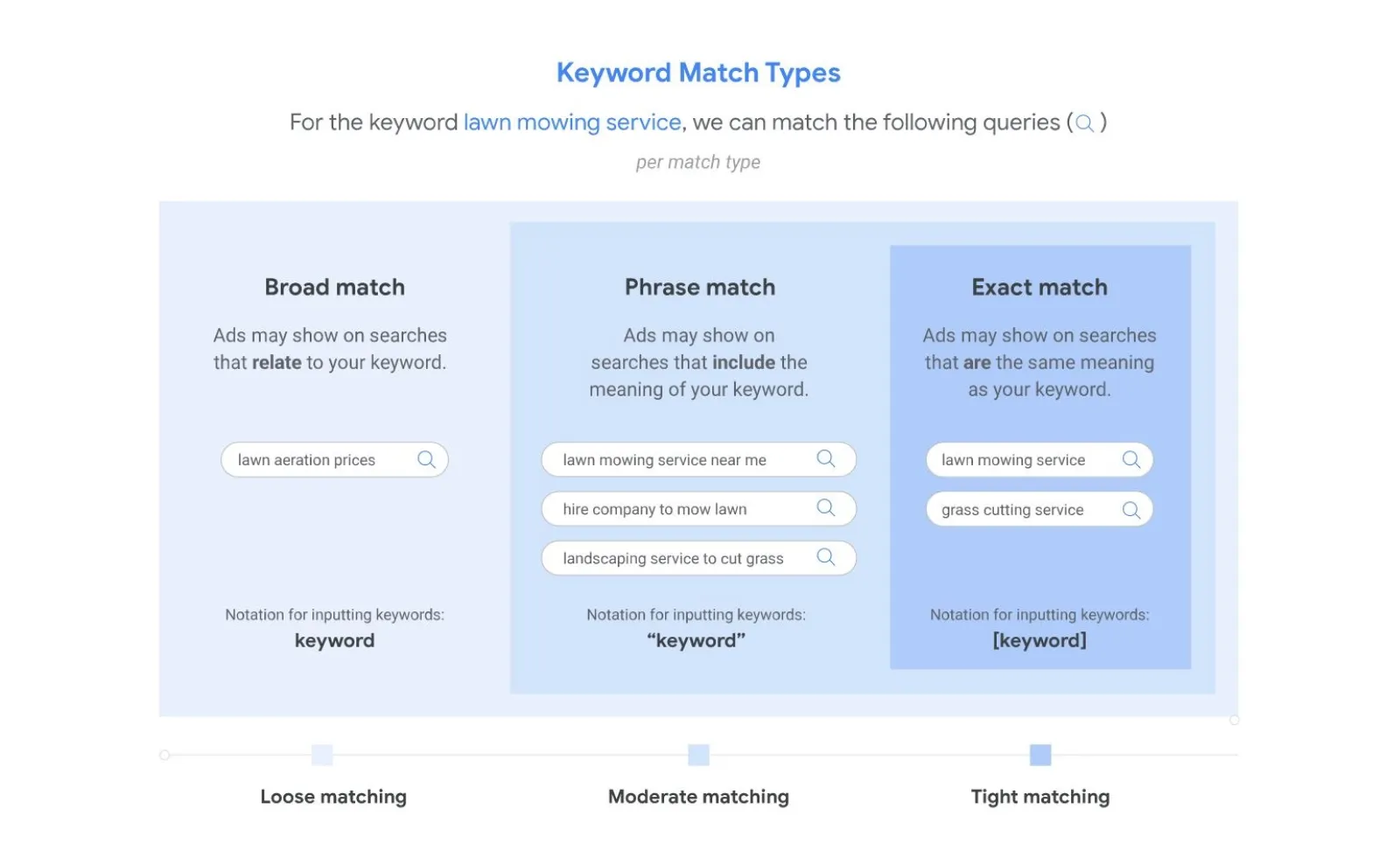
What Is Broad Match?
Broad Match is one of the keyword match types you can use in Google Ads. When you add a keyword using Broad Match, you’re telling Google:
Get your free Marketing Action PlanNot sure where to start? Answer a few questions and get your plan in about a minute. No email needed.
Get my plan →“Show my ad to people searching for this keyword, or something close to it.”
That means your ad can appear for searches that include:
 LIVE
Live every Tuesday at 2pm UK. Bring your marketing questions.
Get your Google, local SEO and AI questions answered live.
- Similar phrases
- Synonyms
- Misspellings
- Related searches
- And even searches that don’t include your exact keyword, but are considered relevant by Google
Example: Let’s say your Broad Match keyword is: women’s running shoes
Google might show your ad to people searching for:
- Ladies jogging sneakers
- best shoes for running
- athletic footwear for women
- female gym shoes
- Buy running shoes near me
You can see that not all of those include your original keyword, but they’re close in meaning. That’s what Broad Match is all about: casting a wide net.
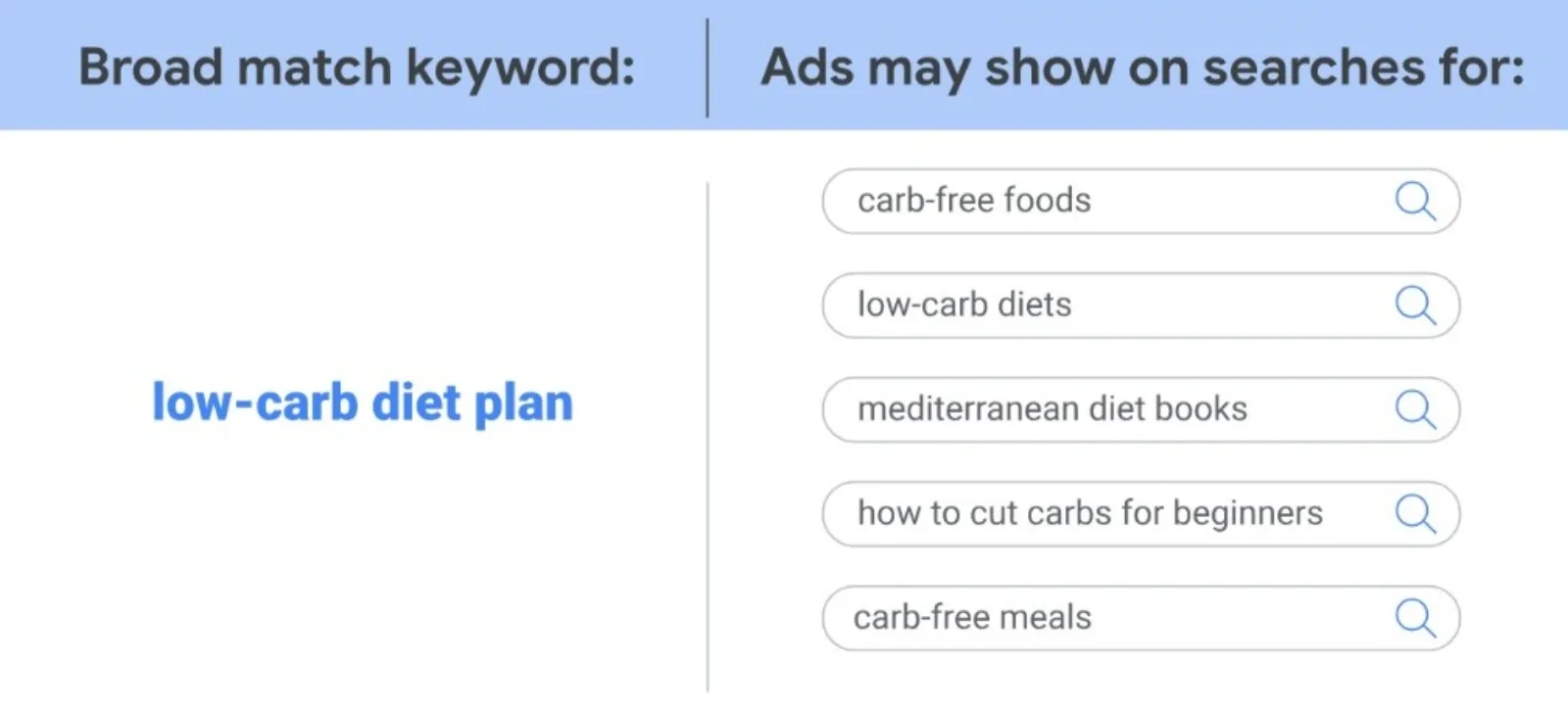
Why Use Broad Match?
Broad Match is helpful if you want to:
- Reach a wider audience: Your ad gets shown to more people, not just those who type in your exact keyword.
- Find new keyword ideas: You might discover searches you hadn’t even thought of before.
- Let Google’s AI do the work: Google’s algorithms are getting smarter. Broad Match uses machine learning to try and match your ads with relevant searches.
But here’s the catch: more reach doesn’t always mean better results. That brings us to the pros and cons.
Pros of Broad Match
- Higher visibility: More impressions and clicks (sometimes).
- Good for discovery: Helps you find new keywords and audience segments.
- Less time spent on keyword research: You don’t need to think of every variation manually.
Cons of Broad Match
- Less control: Your ads might show up for searches that don’t really match your product or service.
- Potential for wasted spend: If you’re not careful, you might pay for clicks that don’t lead to conversions.
- Requires close monitoring: You’ll need to keep an eye on your search terms report and add negative keywords.
Tips for Beginners Using Broad Match
- Start small: Don’t put your entire budget into Broad Match. Test it with a few keywords first.
- Use Smart Bidding: Broad Match works best with automated bidding strategies like Maximise Conversions or Target CPA. These help Google figure out when it makes sense to show your ad.
- Watch your search terms: Check which searches are triggering your ads. If you see anything irrelevant, add those as negative keywords.
- Combine with other match types: You don’t have to go all in on Broad Match. Mix it with Phrase and Exact Match keywords for better balance.
Final Thoughts
Broad Match is a powerful tool if used the right way. It can help you reach more people and discover new opportunities, but it also comes with risks. As a beginner, take it slow, watch your performance, and don’t be afraid to experiment.
The key is to stay curious and keep learning. The more you understand how people search, the better you’ll get at matching your ads with what they actually want.

Written by Uzair Kharawala
Partner at SF Digital Studios, a Google Premier Partner agency. Uzair has been helping businesses grow with Google Ads since 2002 and teaches it every week on YouTube.
Get our best Google Ads tips by email
New articles and videos, straight to your inbox. Unsubscribe any time.