
If you’ve just started exploring Google Ads, you’ve likely encountered the term’ broad match keywords‘. It sounds simple, but there’s more to it than just matching broad terms. This blog will break down what broad match actually means, how it works in real campaigns, and where it fits in your strategy. I’ll also give a few clear examples to make things easier to understand.
What Is a Broad Match Keyword?
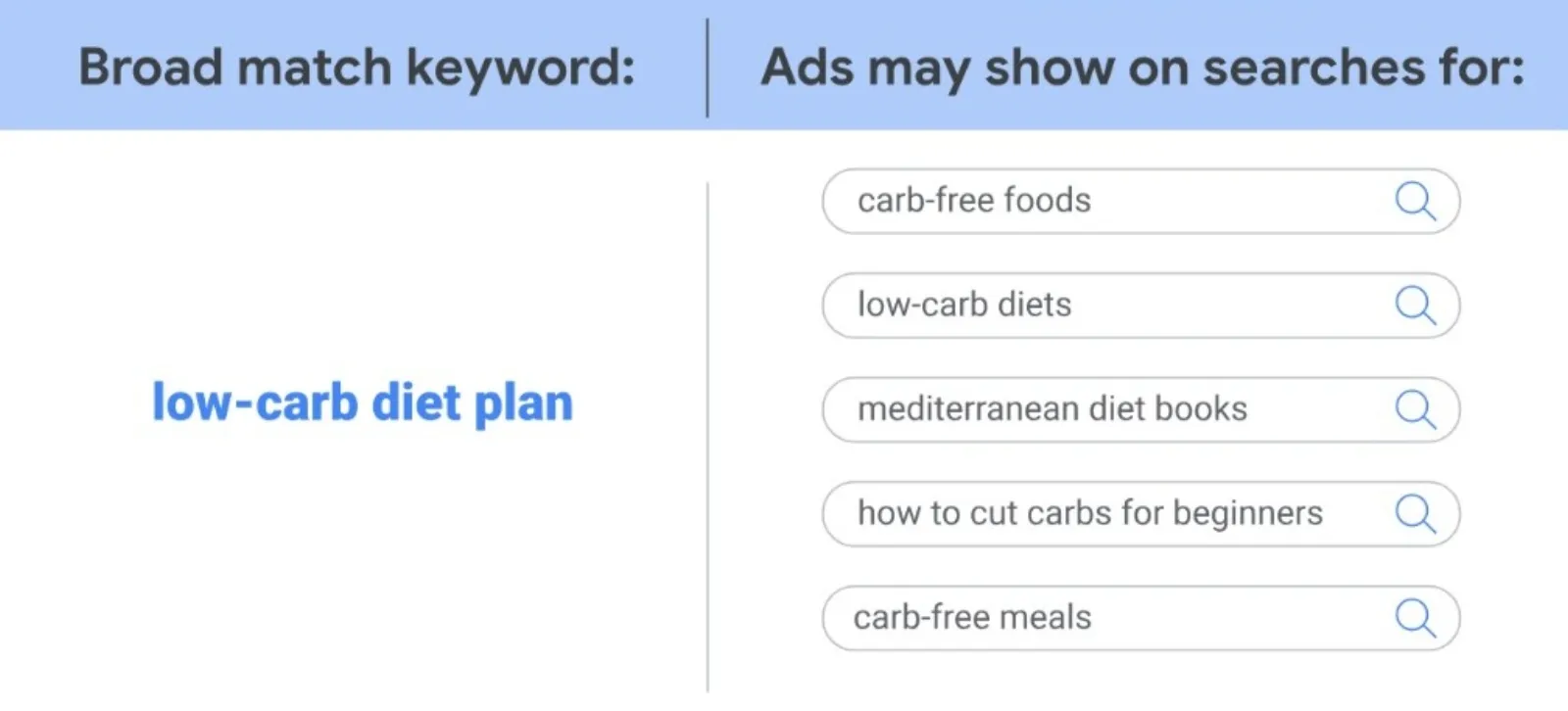
Broad match is the default match type in Google Ads. When you use it, Google shows your ad for searches that are related to your keyword, not just exact matches. That includes synonyms, related phrases, or even searches that don’t contain your exact keyword but mean the same thing.
Get Found, Get Chosen, Get Your Time Back
A free one-day marketing seminar in Milton Keynes · 10 November 2026
So if your keyword is “running shoes,” your ad might show for:
Get your free Marketing Action PlanNot sure where to start? Answer a few questions and get your plan in about a minute. No email needed.
Get my plan →- Best sneakers for jogging
- Buy athletic footwear
- Running gear for men
You didn’t mention “sneakers” or “jogging gear,” but Google connects the intent behind the searches and shows your ad anyway.
Why Use Broad Match?
Broad match helps you reach a wider audience. If you’re trying to get more impressions and discover new search terms that people use to find your product or service, broad match can be beneficial.
But here’s the trade-off: your traffic might not always be super relevant. Because Google is using its own judgment about what’s “related,” you could end up paying for clicks from people who aren’t exactly looking for what you offer.
That’s why broad match works best when combined with:
- Smart Bidding (like Target CPA or Maximise Conversions)
- Strong negative keyword lists to block unrelated traffic
- Good conversion tracking, so Google knows what success looks like
Example 1: Broad Match in Action
Let’s say you sell eco-friendly water bottles.
You add this keyword to your campaign: broad match keyword: reusable water bottles
Google might show your ad to people searching for:
 LIVE
Live every Tuesday at 2pm UK. Bring your marketing questions.
Get your Google, local SEO and AI questions answered live.
- “best bottles for hiking”
- “BPA-free drink containers”
- “eco drinking solutions”
- “metal flasks for gym”
Some of those are useful, but some might be a stretch. Maybe someone looking for “metal flasks” is after alcohol containers, not water bottles. That’s where negatives help.
You might add negative keywords like:
- whiskey
- liquor flask
- alcohol bottle
Example 2: The Flip Side
You run a local plumbing business in Dallas.
You use this keyword: broad match keyword: plumber
Google could show your ad for:
- “How to fix a leaky pipe”
- “emergency plumber near me”
- “Dallas plumbing company”
- “bathroom remodelling contractors”
Again, some of these are great, but others (like “remodelling contractors”) might not be the service you offer.
To stay focused, you might adjust the match type or layer in more keywords to help Google stay on track.
When To Avoid Broad Match
Broad match isn’t always the best option. If:
- Your budget is tight
- You only want high-intent traffic
- You’re in a very niche market
…then start with phrase match or exact match instead. You can always expand to broad match once you’ve built up some data.
Final Thoughts
Broad match keywords can be a great way to scale your campaigns and discover new search trends. But they require some control, either through smart bidding strategies or negative keywords, to keep your traffic relevant and cost-effective.
If you’re just starting, experiment with broad match on a few keywords and monitor the results closely. Over time, you’ll figure out where it fits in your campaigns and where it doesn’t.

Written by Uzair Kharawala
Partner at SF Digital Studios, a Google Premier Partner agency. Uzair has been helping businesses grow with Google Ads since 2002 and teaches it every week on YouTube.
Get our best Google Ads tips by email
New articles and videos, straight to your inbox. Unsubscribe any time.