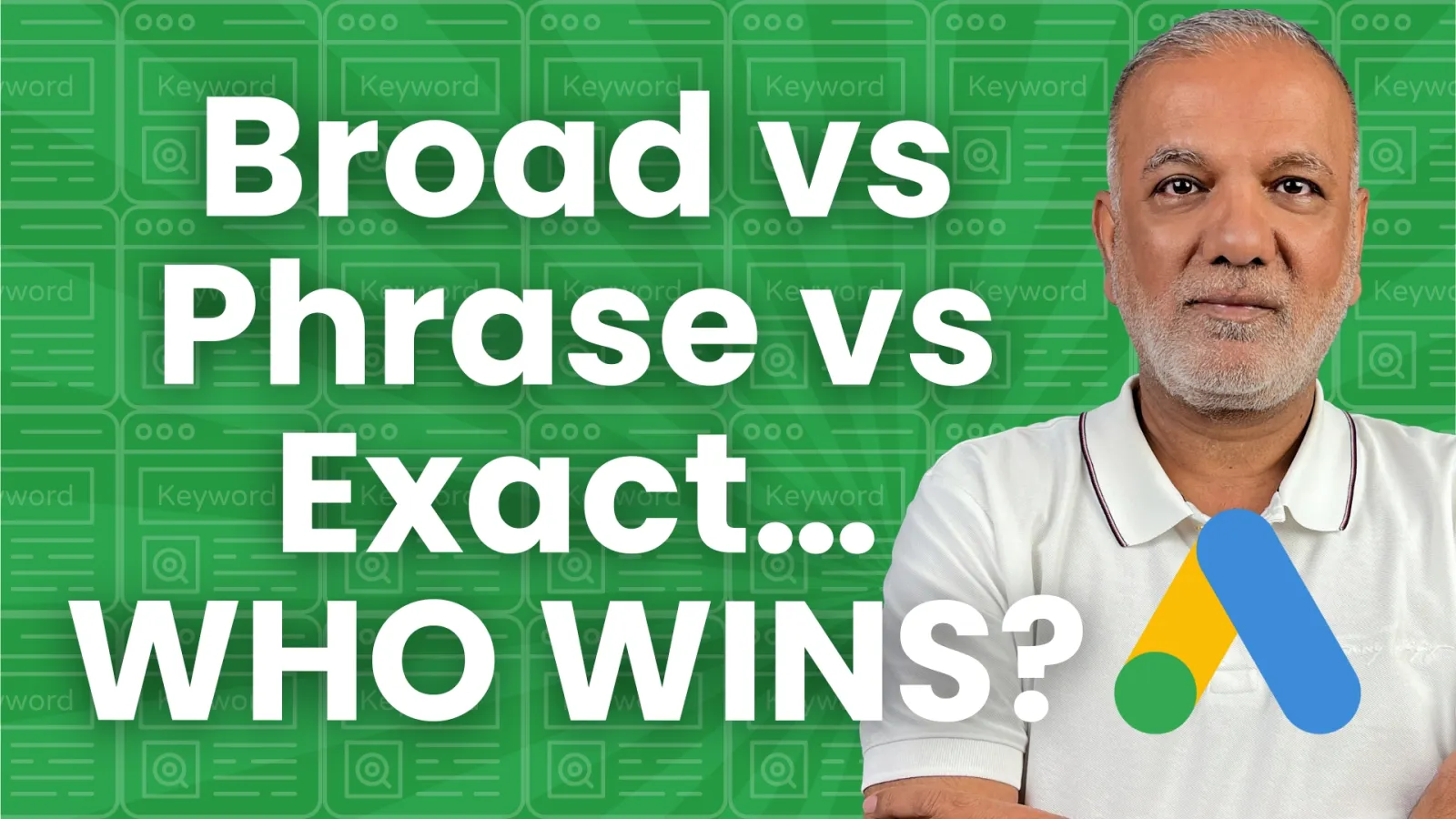
If you’re running Google Ads in 2025, choosing the right keyword match type is more important than ever. Google has changed a lot over the years, and the way match types work today isn’t the same as it was a few years ago.
In this blog post, I’ll explain what Broad Match, Phrase Match, and Exact Match are, how they work now, and when to use each one depending on your campaign goals.
Get Found, Get Chosen, Get Your Time Back
A free one-day marketing seminar in Milton Keynes · 10 November 2026
Let’s get into it.
Get your free Marketing Action PlanNot sure where to start? Answer a few questions and get your plan in about a minute. No email needed.
Get my plan →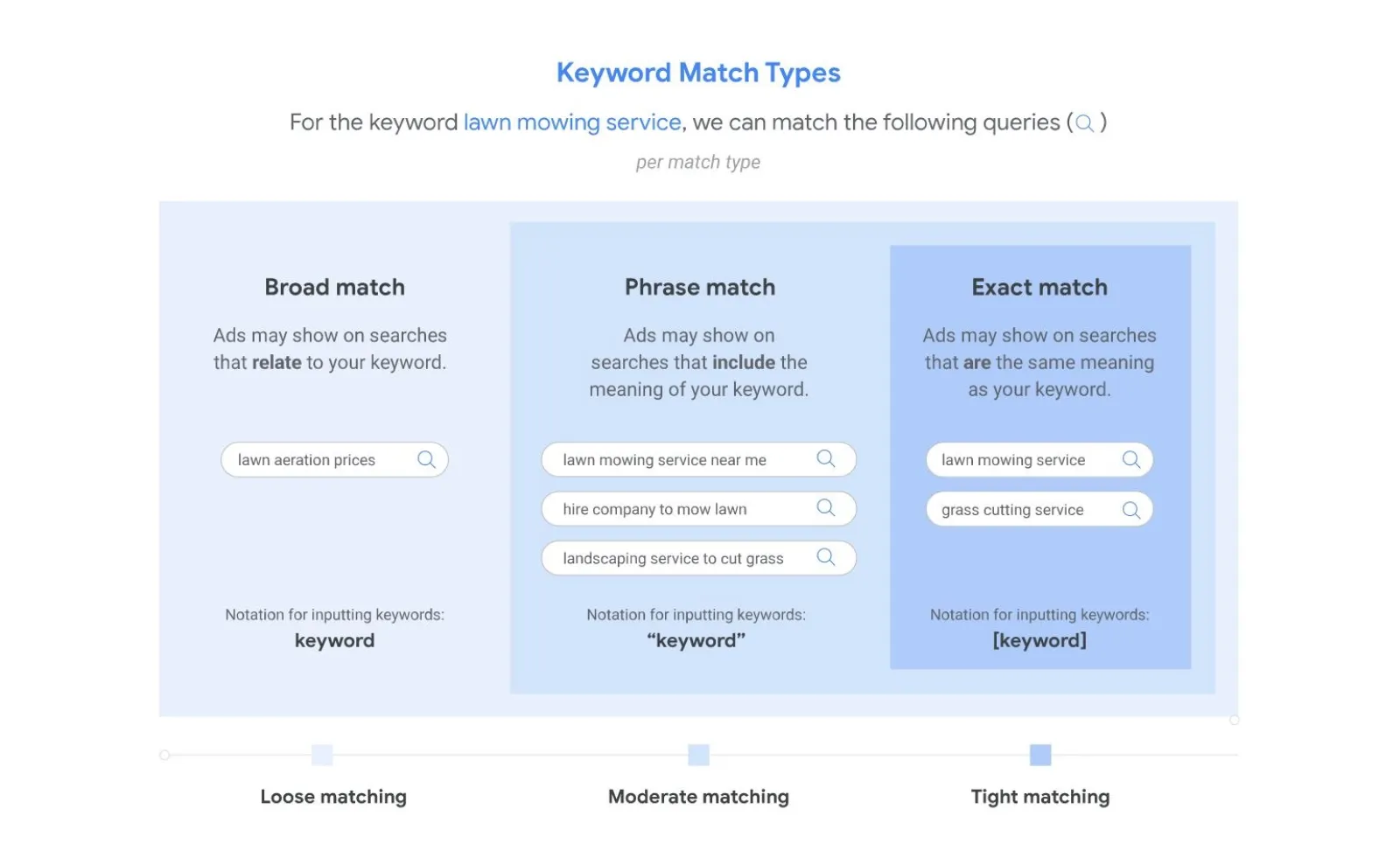
What Is Broad Match?
Broad Match is the default match type in Google Ads. When you add a keyword in broad match (without any symbols), Google shows your ad to searches that are related to your keyword, even if they don’t include the exact words you added.
Example: If your keyword is running shoes, your ad might show for searches like:
- “best sneakers for gym”
- “jogging footwear for men”
- “comfortable trainers”
Broad Match gives you the widest reach, but it’s also less controlled. You might get irrelevant clicks if Google’s algorithm misunderstands your intent.
When to use Broad Match in 2025: Use it if you have a flexible budget and want to find new keyword opportunities. It works best with smart bidding (like Maximise Conversions or Target CPA), as Google uses AI to optimise who sees your ads.
What Is Phrase Match?
Phrase Match is more focused. You add quotation marks around your keyword, like “running shoes”, and your ad will show for searches that include that phrase (or close variations), in the same order.
Example: With “running shoes”, your ad might show for:
 LIVE
Live every Tuesday at 2pm UK. Bring your marketing questions.
Get your Google, local SEO and AI questions answered live.
- “best running shoes for women”
- “Buy running shoes online”
But not for:
- “shoes for running” (because the order is different)
- “gym sneakers” (too far from your phrase)
When to use Phrase Match in 2025: Use it when you want a balance between reach and relevance. It’s a great option for advertisers who want some control but still want to reach a good amount of traffic.
What Is an Exact Match?
Exact Match is the most specific. You use square brackets, like [running shoes], and Google will only show your ad to searches that mean the same as your keyword.
Example: With [running shoes], your ad may show for:
- “running shoes”
- “running shoe”
- “shoes for running” (Google sometimes allows close meaning)
But not for:
- “best running shoes 2025”
- “Nike running shoes”
- “Buy jogging sneakers”
When to use Exact Match in 2025: Use it when every click matters. If you have a tight budget or need very high-quality leads (like in B2B or high-ticket products), Exact Match gives you more control and better-qualified traffic.
Which One Should You Use in 2025?
There’s no one-size-fits-all answer. Here’s a simple way to decide:
| Your Goal | Use This Match Type |
| Discover new search terms | Broad Match + Smart Bidding |
| Get relevant traffic at scale | Phrase Match |
| Maximise control & precision | Exact Match |
In 2025, Google’s automation is more advanced, especially with Broad Match. But that doesn’t mean you should blindly trust it. Always monitor your search terms report, and use negative keywords to block irrelevant searches.
Final Thoughts
Choosing the right match type depends on your goals, your budget, and how much control you want. Broad Match can be powerful with automation. Phrase Match is the safe middle ground. Exact Match is your best bet when you need precision.
Test each type in your campaigns and keep an eye on performance. Google Ads is always changing, but understanding the basics like match types will keep your strategy strong in any year, including 2025.

Written by Uzair Kharawala
Partner at SF Digital Studios, a Google Premier Partner agency. Uzair has been helping businesses grow with Google Ads since 2002 and teaches it every week on YouTube.
Get our best Google Ads tips by email
New articles and videos, straight to your inbox. Unsubscribe any time.