
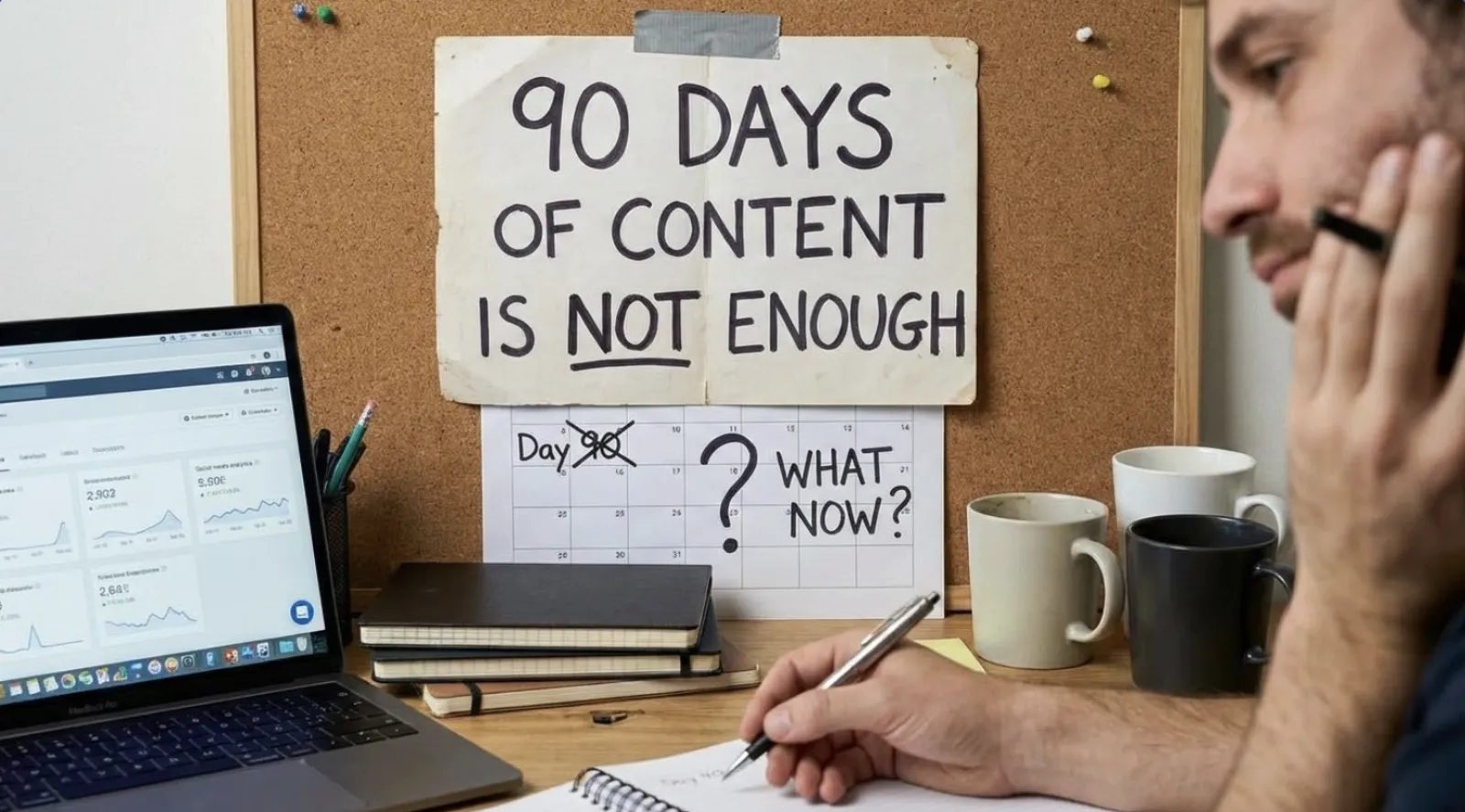
Imagine pouring your heart and soul into 90 days of consistent content creation, only to see minimal results. Many content creators and small business owners fall into this trap, believing a short burst of effort will transform their online presence.
But what if the very premise of ’90 days to success’ is fundamentally flawed? This isn’t just about effort; it’s about understanding the true nature of digital growth and audience engagement. Alex Hormozi challenges this notion, emphasizing a more enduring commitment for sustainable content marketing success.

Get Found, Get Chosen, Get Your Time Back
A free one-day marketing seminar in Milton Keynes · 10 November 2026
The Illusion of Instant Content Marketing Success
The “Quick Win” Trap in Content Creation
The allure of quick wins is powerful in content creation. Many small business owners, drawn to promises of rapid growth, launch with enthusiasm for 90 days, only to find initial momentum fading without the expected surge.
Get your free Marketing Action PlanNot sure where to start? Answer a few questions and get your plan in about a minute. No email needed.
Get my plan →This leads to burnout, not because their content was bad, but because expectations were misaligned with the reality of building an audience. Content marketing is a marathon, not a sprint, requiring time to build trust and authority.
Understanding the Algorithm’s Long Game
Digital platform algorithms need time to understand your niche and audience. For content to gain traction, especially for new accounts, 90 days is often insufficient for this learning phase.
Consistent effort over a longer period is needed for algorithms to “trust” your content and give it broader distribution. Furthermore, SEO strategy relies on building topical authority through sustained, high-quality output, which takes months, not weeks.
The Alex Hormozi Perspective: Why Consistency Outweighs Intensity
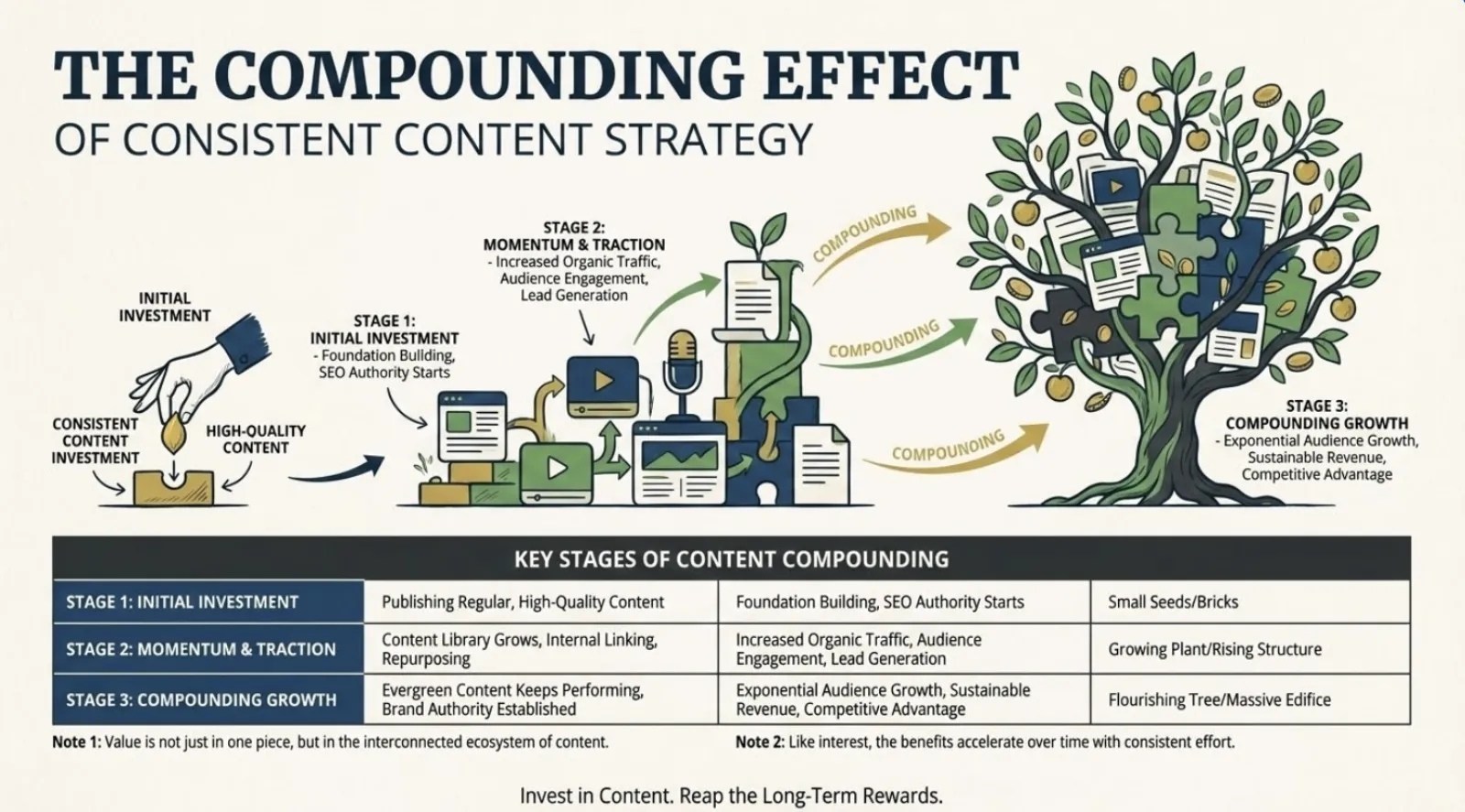
The Compounding Effect of Consistent Content Strategy
Alex Hormozi emphasizes that business success, and content marketing success, is about consistent, incremental improvements that compound over time. True growth is often exponential, but only after a significant initial period of linear effort.
Like daily small investments yielding greater returns than a single large one, every piece of content, every interaction, adds to your brand equity. Ninety days merely scratches the surface; it’s planting the seed, not the harvest.
Building Audience Trust and Brand Loyalty Through Longevity
Trust isn’t built overnight. It’s forged through consistent delivery of value, reliability, and authenticity over an extended period. When an audience sees a brand or creator consistently showing up and providing helpful insights, a deeper level of trust is established.
This trust converts casual viewers into engaged followers and paying customers. A 90-day content push rarely fosters the deep-seated loyalty that drives repeat business, referrals, and true community building.
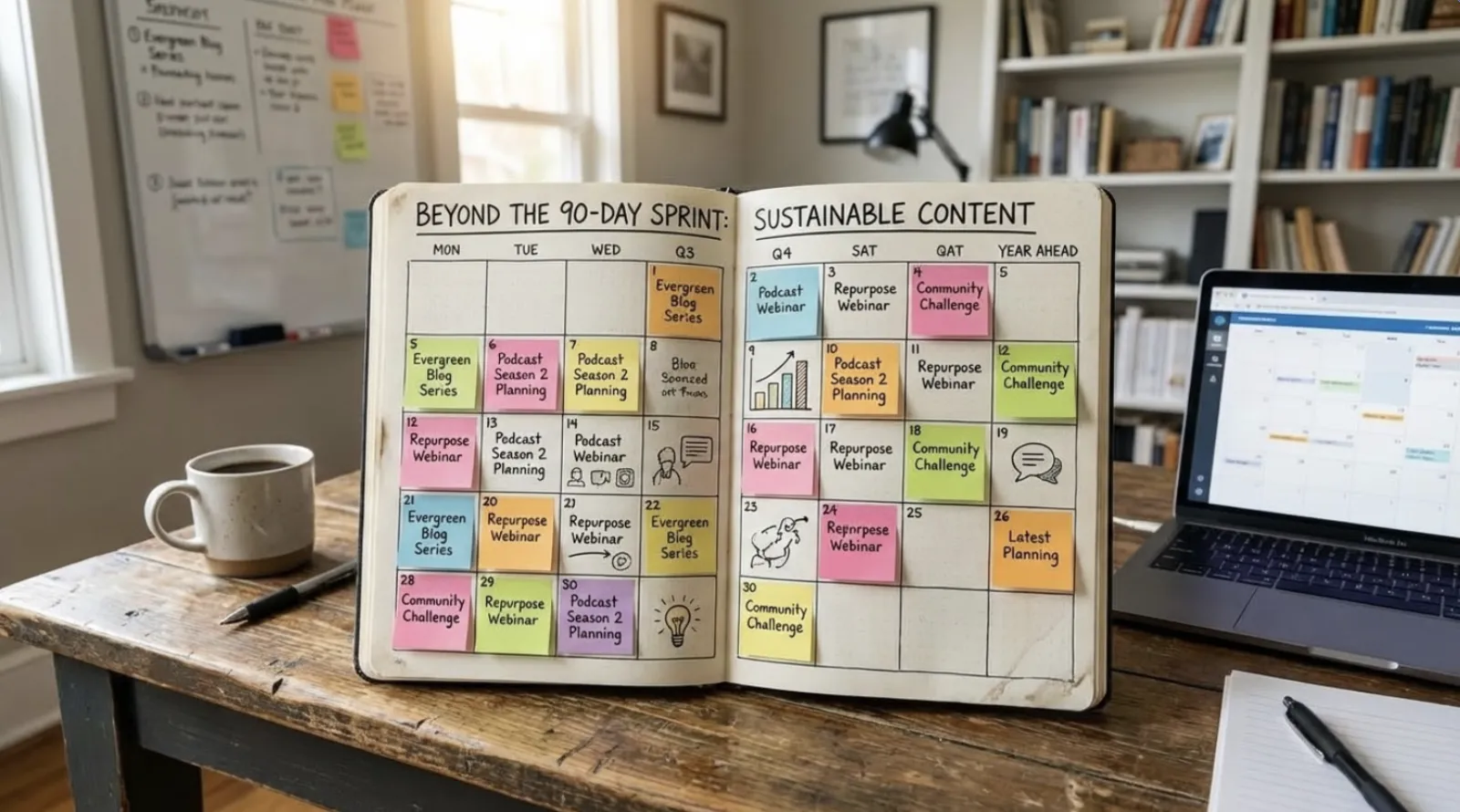
Beyond the 90-Day Sprint: Crafting a Sustainable Content Calendar
Strategic Planning for Long-Term Content Marketing Impact
Instead of a 90-day sprint, adopt a multi-year content strategy. Plan broad themes annually, breaking them into monthly topics to ensure cohesive, relevant content aligned with your brand’s mission.
Diversify your content pillars across various formats like blogs, videos, and social media. This strategic diversification increases discoverability and engagement, establishing multiple touchpoints with potential customers for enduring digital marketing success.
Repurposing Content: Maximizing Your Efforts
Content repurposing is crucial for maintaining consistent output without burnout. A single long-form piece, like a blog post or YouTube video, can be transformed into dozens of smaller pieces – social media updates, infographics, or email tips.
This strategy, often highlighted by Alex Hormozi for maximizing leverage, ensures your initial effort yields maximum return. It keeps your content pipeline flowing, reinforcing your message across platforms and extending your content’s life and reach.

Actionable Steps for a Long-Term Content Strategy
1. Define Your Audience Deeply
Go beyond basic demographics to understand your audience’s pain points, aspirations, and questions. Creating detailed buyer personas will guide every piece of content you produce, ensuring it resonates deeply and provides genuine value. This deep understanding allows you to craft messages that truly connect, fostering engagement and loyalty over the long haul. Without a clear target, your content will feel generic and struggle to gain traction.
 LIVE
Live every Tuesday at 2pm UK. Bring your marketing questions.
Get your Google, local SEO and AI questions answered live.
2. Commit to a Consistent Publishing Schedule (Not Just for 90 Days)
Consistency is more important than sheer volume. Whether it’s a weekly blog or daily social media updates, stick to it. This builds audience anticipation and signals reliability to algorithms.
Use content calendars and scheduling tools to plan ahead. A steady drip of quality content over a year will almost always outperform a flood of content for three months followed by silence, driving more effective brand building.
3. Prioritize Quality Over Quantity
Never compromise quality for consistency. One well-researched, insightful, and engaging piece of content is more valuable than ten rushed ones. Focus on providing genuine value, solving problems, and educating your audience.
High-quality content attracts more engagement, earns backlinks, improves SEO, and establishes your authority, all contributing to long-term success. Alex Hormozi’s own content exemplifies delivering massive value concisely.
4. Analyze and Adapt Your Content Performance
Content marketing is an iterative process. Regularly review your analytics to understand what resonates and what doesn’t. Identify top-performing topics and formats, and where engagement drops.
Use these insights to refine your content strategy, adjust your calendar, and improve future creations. Don’t fear experimentation and pivoting. The digital landscape evolves, and your strategy must evolve with it for sustained organic growth.
5. Build a Content Asset Library
View your content as assets that appreciate over time. Aim for evergreen material—relevant for months or years. Store and categorize these assets, making them easy to update and repurpose.
This library becomes a powerful resource for your audience, driving organic traffic and positioning you as an authority in your niche. Such assets contribute significantly to your overall SEO and brand visibility for years to come, securing your business results.
Case Studies and Relatable Examples
The Growth of Leading Content Brands
Leading content brands like HubSpot and Neil Patel, and Alex Hormozi’s own growth, demonstrate that influence and audience size are built over years, not 90 days. HubSpot, for instance, established its empire on thousands of educational blog posts and resources, consistently updated over more than a decade. This long-term commitment allowed them to become a dominant force in inbound marketing, showcasing the power of sustained effort.
Small Business Success Stories: The Power of Persistence
Even at a smaller scale, persistence yields results. A local baker starting a YouTube channel might see minimal views initially. But by consistently posting one high-quality tutorial per week for a year, their subscriber count grows, videos rank higher, and a community forms.
This consistent content creation eventually drives more customers to their business than any short-term ad campaign. It’s the continuous value that builds loyal following and tangible business results over an extended period.
FAQ Section: Your Content Marketing Questions Answered
1. Why do people believe 90 days of content is enough?
This belief stems from a desire for quick wins and marketing messages promising rapid growth. While 90 days can show initial progress or validate an idea, it’s rarely enough for true market penetration, deep audience trust, or substantial ROI, leading to a common misconception about the timeline of content marketing success.
2. What’s a realistic timeframe to see results from a consistent content strategy?
Most experts suggest committing to at least 6-12 months of consistent, high-quality content creation before expecting significant, measurable results like substantial organic traffic, lead generation, or sales. Building authority and a loyal audience simply takes considerable time and persistent effort.
3. How can small businesses with limited resources maintain a long-term content strategy?
Small businesses should prioritize efficiency and content repurposing. Start with one or two core formats (e.g., weekly blog, social snippets). Plan in batches, reuse existing material, and utilize scheduling tools. Consistency at a manageable pace is far more effective than an unsustainable burst of activity, ensuring sustainable growth.
Final Thoughts: The Marathon, Not the Sprint, of Content
Alex Hormozi’s reality check is vital for any content creator: sustainable success is a long game. The 90-day sprint offers initial excitement, but consistent, strategic effort over months and years builds authority, cultivates loyal audiences, and drives significant business results.
Embrace the compounding effect, prioritize quality, and commit to a sustainable, long-term content strategy to transform your online presence into a powerful, enduring asset. Shift your mindset from overnight virality to building lasting value; your audience and the algorithms will reward your persistence. The content you create today, consistently, will be the foundation of your success tomorrow.

Written by Uzair Kharawala
Partner at SF Digital Studios, a Google Premier Partner agency. Uzair has been helping businesses grow with Google Ads since 2002 and teaches it every week on YouTube.
Get our best Google Ads tips by email
New articles and videos, straight to your inbox. Unsubscribe any time.