
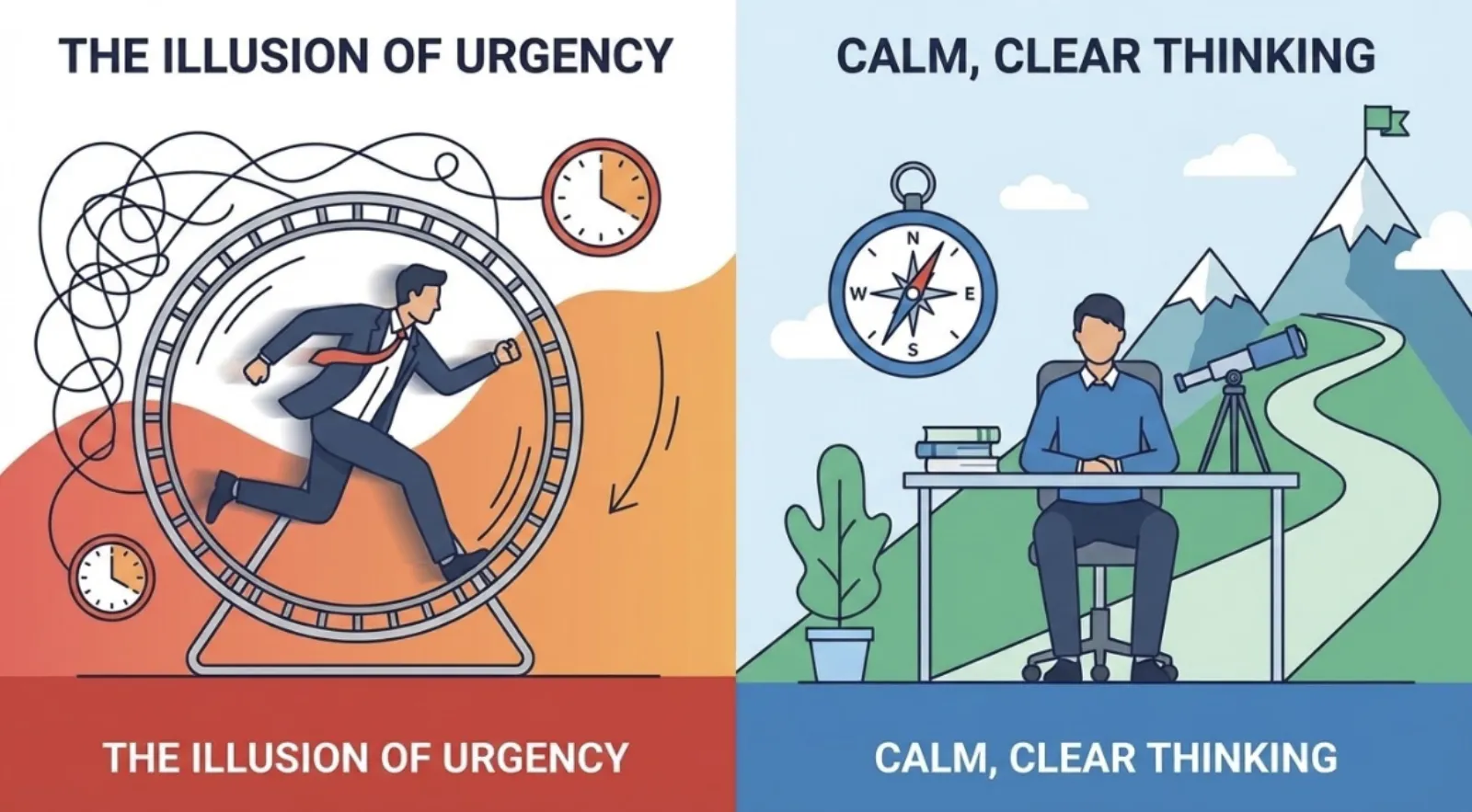
In modern business, does speed and noise feel like the only path to success? Many leaders get caught in reactive cycles, mistaking urgency for impact. What if your most powerful tool isn’t speed, but clear thinking? Imagine decisions made with quiet confidence, yielding superior outcomes. This is the secret weapon: calm, clear thinking.
The Illusion of Urgency: Why Speed Isn’t Always Strategic for Business Growth
The modern business landscape champions rapid responses, creating a sense that speed is paramount. This push often leads to haste being mistaken for progress, causing rushed judgments and complications. Ultimately, this pursuit can hinder sustained success and strategic advantage.

Get Found, Get Chosen, Get Your Time Back
A free one-day marketing seminar in Milton Keynes · 13 January 2027
The Relentless Pace of Modern Entrepreneurship and Its Hidden Costs to Clear Judgment
The “always-on” digital age bombards business owners, impairing cognitive functions. Decision-making, creativity, and foresight suffer, leading to stress, burnout, and costly mistakes, fostering reactive strategies. A calm, clear mind, however, pauses, analyzes, and crafts thoughtful responses, averting crises and building loyalty, crucial for any small business.
Get your free Marketing Action PlanNot sure where to start? Answer a few questions and get your plan in about a minute. No email needed.
Get my plan →Distinguishing Between Urgent Action and Strategic Haste in Critical Business Operations
Leaders must differentiate truly urgent situations from perceived urgency. Urgent action is vital in crises, but clear thinking ensures swiftness isn’t reckless. Conversely, strategic haste involves rapid decisions without analysis, yielding suboptimal outcomes, wasting resources, and missing opportunities. Recognizing this is key to valuing deliberate thought over mere speed, fostering true business growth.
Cultivating Mental Clarity: Practical Steps for Savvy Business Leaders to Enhance Focus
“Mental clarity” is a practical skill for improving business performance. It develops resilience and focus, shifting leaders from constant reaction to thoughtful response.
Mindfulness and Focused Attention: Powerful Tools for Sharpening Your Business Acumen
Mindfulness is being present without judgment. In business, this means full attention to any task. Practices like short meditation exercises or pausing train your brain to reduce mental clutter, enhance concentration, and sharpen your business acumen. Before negotiation, a mindful leader focuses on breath, arriving with a clear head to influence dynamics and achieve favorable outcomes.
Strategic Pauses: How Intentional Breaks Lead to Breakthrough Business Solutions and Insights
Strategic pauses foster deeper insights and creative problem-solving. This involves short walks, silent reflection, or dedicated “thinking time.” These breaks allow your subconscious to process information and generate ideas that might not emerge under constant pressure. Many breakthroughs come during relaxation; embrace these moments for effective strategic thinking and breakthrough business solutions.
The Tangible Business Benefits of Calm Decision-Making and Strategic Steadiness
Calm, clear thinking profoundly impacts a business’s bottom line. Composed leaders make sounder, aligned decisions, creating concrete advantages. This fosters a positive environment and ensures sustainable business growth.
Enhanced Problem-Solving and Innovation: Seeing Beyond Immediate Business Challenges
Calm optimizes cognitive abilities to analyze situations, identify root causes, and generate diverse solutions. Clear thinking encourages innovative solutions, countering stress-induced narrow focus. This provides a significant edge in anticipating trends and navigating hurdles. While a stressed leader might slash prices, a clear-thinking leader calmly analyzes, identifies gaps, and innovates a superior value proposition, providing long-term competitive advantage.
Building Resilient Leadership: Inspiring Confidence and Stability Through Composure
Leadership involves influencing and guiding. Composed leaders inspire confidence and foster security among teams, especially during challenges. Employees stay focused and loyal when leaders navigate uncertainty with grace, which also translates into effective crisis management. A calm leader rallies their team, communicates, and guides the business through storms, cultivating resilient leadership through consistent calm, clear thinking.
 LIVE
Live every Tuesday at 2pm UK. Bring your marketing questions.
Get your Google, local SEO and AI questions answered live.
Real-World Application: Case Studies in Calm Leadership and Strategic Foresight
Calm, clear thinking is observable in successful leaders. Composure and deliberate thought are cornerstones of effective leadership. Examples illustrate how steadiness transforms outcomes, solidifies reputations, and fosters robust organizational culture, providing inspiration for calm strategies.
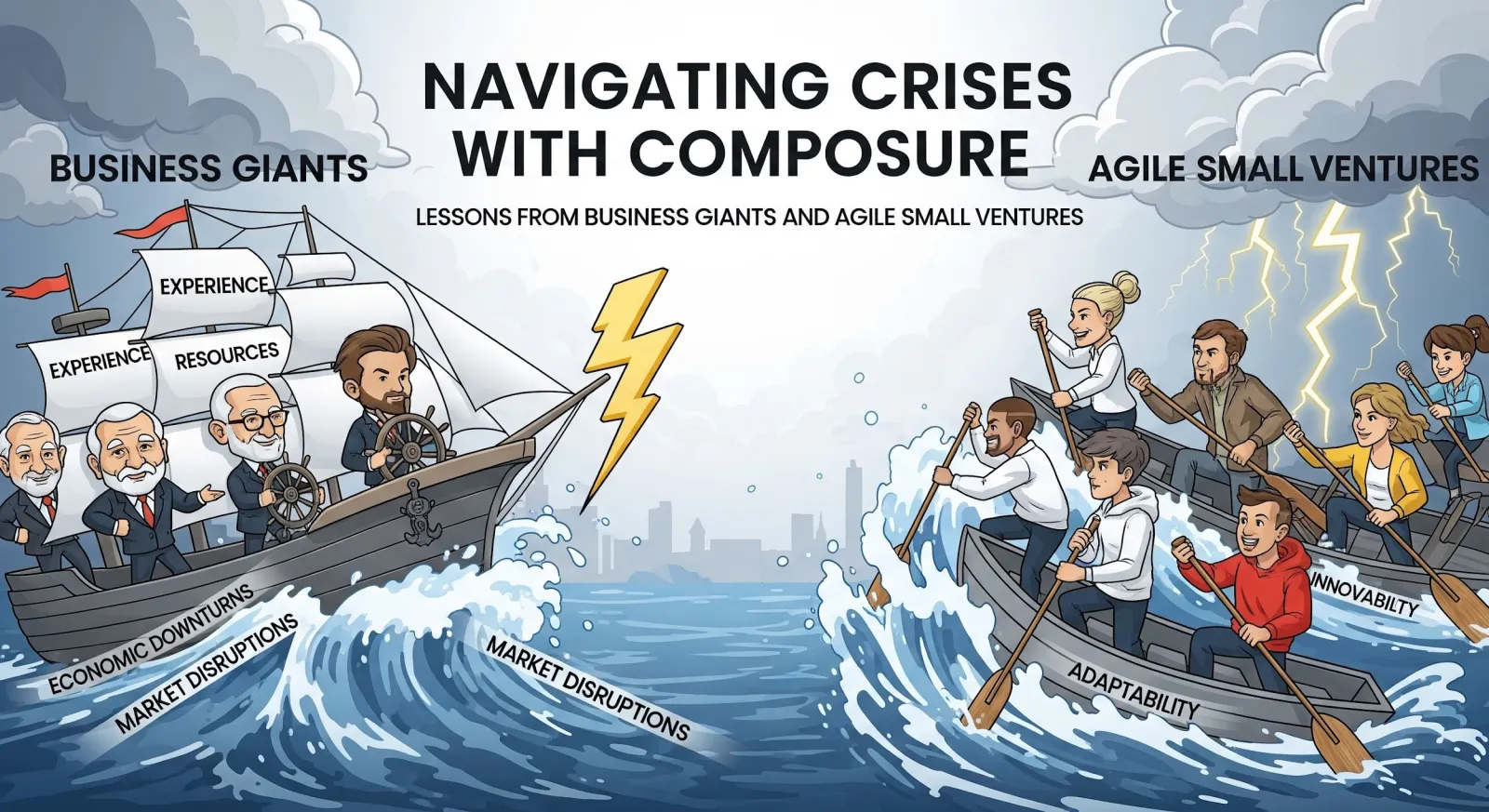
Navigating Crises with Composure: Lessons from Business Giants and Agile Small Ventures
Captain “Sully” Sullenberger’s calm landing epitomizes composure under pressure. Similarly, business leaders remaining calm during the 2008 financial crisis strategically re-evaluated and emerged stronger. A restaurant owner calmly addressing a health scare rebuilt trust, showing composure in a crisis reinforces values. A small tech startup CEO, facing a critical bug, called a calm meeting, methodically resolving it to instill confidence and guide the venture, proving agile businesses benefit from deliberate thought.
Developing a Culture of Deliberate Thought: Transforming Your Organizational Mindset for Success
For competitive advantage, calm, clear thinking must permeate the organization. Building a culture of deliberate thought involves shaping team approaches, starting with leaders modeling listening, thoughtful questions, and encouraging debate. Practices like “deep work” blocks and breaks foster this. “Pre-mortem” or post-mortem meetings identify pitfalls/lessons. Promoting reflection empowers teams, leading to robust, innovative collective intelligence and sustained competitive advantage built on clarity and thoughtfulness.

Frequently Asked Questions About Calm, Clear Thinking in Business Leadership
Understanding calm, clear thinking is one thing; implementing it raises practical questions. Here are common questions leaders ask about integrating this vital approach.
How Can a Busy Small Business Owner Find Time for Calm and Reflection?
Even 5-10 minutes daily makes a difference. Dedicate the first 15 minutes of your workday to planning. Schedule “thinking time” as non-negotiable. A short walk provides a mental reset. The key is intentional consistency, building micro-habits.
Is Calm Thinking the Same as Being Slow or Indecisive in a Fast-Paced Market?
Absolutely not. Calm thinking is deliberate decision-making, not procrastination. It means pausing to gather information, analyze, and plan. This often leads to *faster*, more effective outcomes by reducing rework. Indecisiveness stems from lack of clarity; calm thinking *generates* clarity for decisive action.
How Can I Maintain Composure When Faced with Unexpected Business Crises?
Preparation is key; develop contingency plans. During a crisis, take a conscious “pause”—deep breathing helps. Focus on facts, identify control, and communicate calmly. Your composure sets the tone, turning panic into a structured response. Practice scenario planning to build resilience.
What Role Does Emotional Intelligence Play in Developing Clear Thinking?
Emotional intelligence is fundamental. It involves understanding your emotions and others’. Awareness of how stress clouds judgment helps mitigate impact. Understanding team emotions allows effective communication and positive decisions. Thus, higher emotional intelligence leads to clearer thinking, enhancing both.
How Can I Encourage My Team to Embrace a More Calm and Deliberate Approach?
Lead by example, especially under stress. Create an environment where questions are encouraged, mistakes are learning, and thoughtful contributions celebrated. Implement brainstorming or “no-meeting days.” Empower your team with considered judgment, fostering trust and reasoned action.
The Unseen Advantage: A Concluding Reflection on Steadiness in Business Success
In a demanding world, calm, clear thinking emerges as a profound competitive advantage. It reshapes how challenges are perceived, decisions made, and leadership exercised, ensuring informed actions. Embrace deliberate thought daily, and encourage your team to do the same. This shift transforms your approach, invigorates decision-making, and elevates your business. Embrace the competitive edge of clarity.

Written by Uzair Kharawala
Partner at SF Digital Studios, a Google Premier Partner agency. Uzair has been helping businesses grow with Google Ads since 2002 and teaches it every week on YouTube.
Get our best Google Ads tips by email
New articles and videos, straight to your inbox. Unsubscribe any time.