
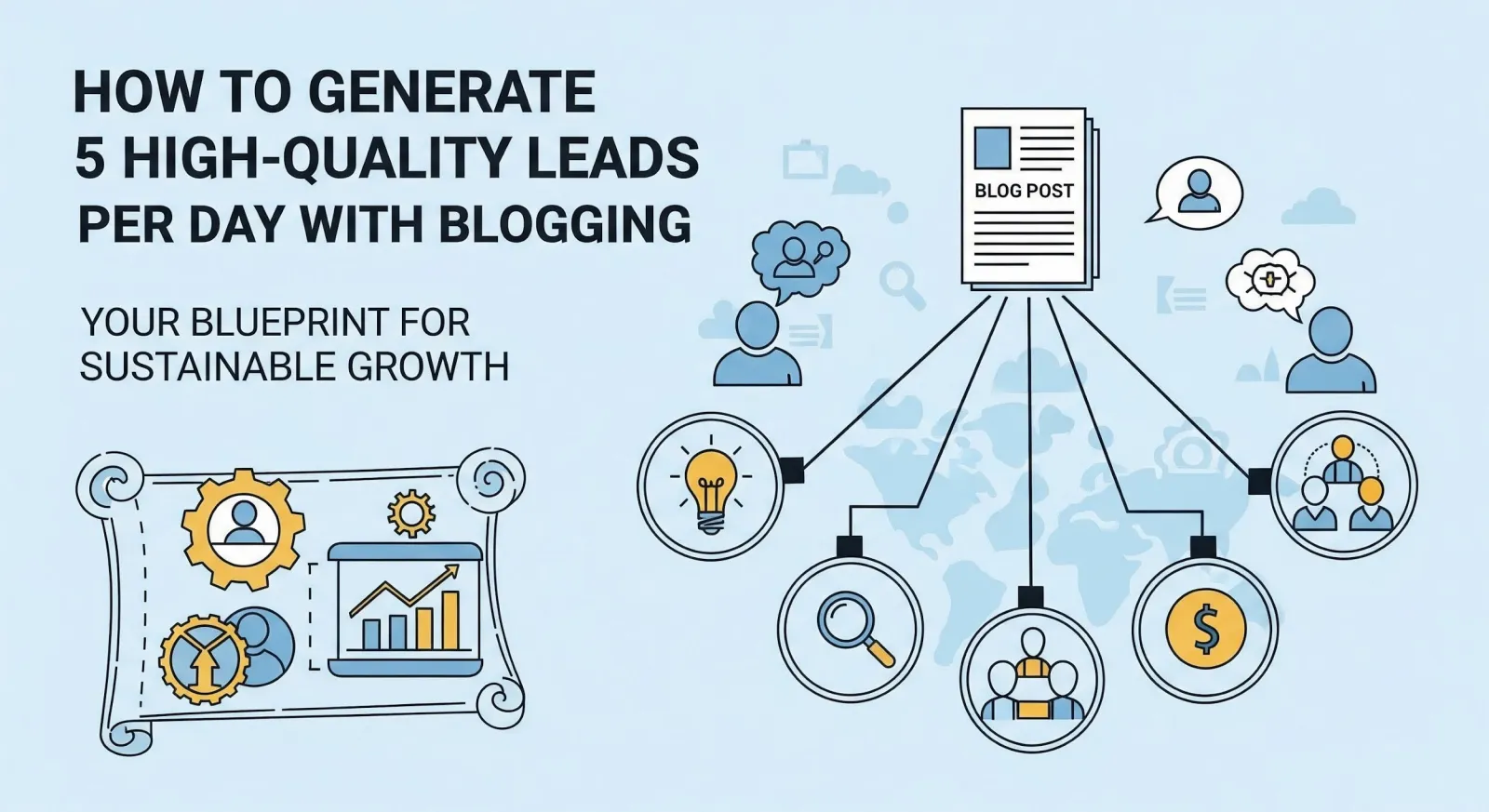
Are you tired of pouring effort into your blog only to see minimal return in terms of new business? Many small business owners and aspiring entrepreneurs struggle to translate their valuable content into tangible leads.
Imagine a world where your blog isn’t just a digital diary, but a powerful engine consistently bringing in interested prospects. It’s not just a pipe dream; with the right strategy, your blog can become your most reliable lead generation tool, paving the way for consistent growth and real conversions.

Get Found, Get Chosen, Get Your Time Back
A free one-day marketing seminar in Milton Keynes · 13 January 2027
Understanding High-Quality Leads: More Than Just a Contact Form Submission
Before diving into the “how,” let’s clarify what a high-quality lead truly means. For many, a lead is simply someone who fills out a form. However, a high-quality lead is much more nuanced. It’s an individual or company that not only expresses interest in your offerings but also fits your ideal customer profile, has a genuine need for your solution, and possesses the authority and budget to make a purchasing decision.
Get your free Marketing Action PlanNot sure where to start? Answer a few questions and get your plan in about a minute. No email needed.
Get my plan →Defining a High-Quality Lead for Your Business
Every business is unique, and so is its definition of a high-quality lead. For a B2B SaaS company, it might be a decision-maker at a company of a certain size within a specific industry. For a local service provider, it could be a homeowner within a particular postcode facing a specific problem. Take the time to articulate the key characteristics of your ideal client.
Actionable Step: Create a detailed buyer persona for your ideal high-quality lead. Give them a name, job title, and backstory. Understand their daily challenges and aspirations. This persona will guide all your content creation efforts.
Why Focusing on Quality Over Quantity Matters
Chasing every possible lead can be an expensive and time-consuming endeavor, often leading to burnout and frustration. When you attract high-quality leads, your sales cycle can shorten, conversion rates improve, and your marketing spend becomes significantly more effective. Prioritizing quality ensures your business grows with solid, engaged customers, not just a long list of contacts.
Case Study Example: A small marketing agency shifted its blogging strategy from general marketing tips to highly specific content addressing the pain points of e-commerce store owners struggling with ad spend.
They saw a drop in overall website traffic but a significant increase in discovery calls from legitimate e-commerce businesses. Their conversion rate from lead to client tripled within six months, demonstrating the power of quality over sheer volume.
The Foundational Pillars of Lead-Generating Blogging
Generating high-quality leads through blogging isn’t about luck; it’s built on a strategic foundation. Just as a sturdy house needs strong pillars, your lead-generating blog needs solid planning around understanding your audience, researching keywords, and crafting a cohesive content strategy. These foundational elements ensure every blog post serves a purpose and moves a prospect closer to becoming a customer.
Knowing Your Ideal Client: The Buyer Persona Blueprint
Revisiting your buyer persona is crucial here. Beyond demographics, delve into their digital behavior: what websites do they visit? What questions do they type into search engines? Understanding their journey allows you to position your blog content as the solution to their specific problems. This deep understanding is the bedrock of creating truly relevant and impactful content that resonates with your target audience.
Keyword Research for Lead Generation: Finding Intent-Rich Topics
For lead generation, focus on long-tail keywords with strong commercial intent. These are often phrases that indicate a person is further along in their buyer’s journey, actively looking for solutions or comparing options. Think “best CRM for small businesses” or “pricing for graphic design services.” Tools like Google Keyword Planner, Ahrefs, or SEMrush can help you uncover these valuable keywords.
Expert Insight: Analyze the “intent” behind the keyword. Is someone just researching a topic, or are they looking for a product or service? Keywords like “review,” “comparison,” “cost,” “vs,” and “best” often indicate higher commercial intent and a closer proximity to a purchase decision. These keywords directly funnel high-quality leads to your blog.
Building a Content Strategy That Attracts and Engages
Once you know your audience and the keywords they use, map out your content. Your strategy should include a mix of content types that address different stages of the buyer’s journey. At the awareness stage, create educational posts. For the consideration stage, offer in-depth guides or case studies. Finally, at the decision stage, provide content that showcases your solution, like testimonials or demos.
Framework Tip: The Content Pillar Strategy. Choose a broad topic (a “pillar”) central to your business. Create one comprehensive, long-form piece of content (your pillar page) on this topic. Then, create multiple supporting blog posts (cluster content) that dive into specific subtopics, linking back to it. This approach strengthens your SEO and provides interconnected content.
Crafting Content That Converts: From Blog Post to Lead Magnet
Having a great topic and keywords is just the beginning. The magic truly happens when your content doesn’t just inform but actively converts readers into leads. This involves a blend of persuasive writing, strategic content structure, compelling storytelling, and irresistible lead magnets. Every word and call to action should be designed with the ultimate goal of capturing a high-quality lead.
Structuring Your Blog Post for Maximum Impact
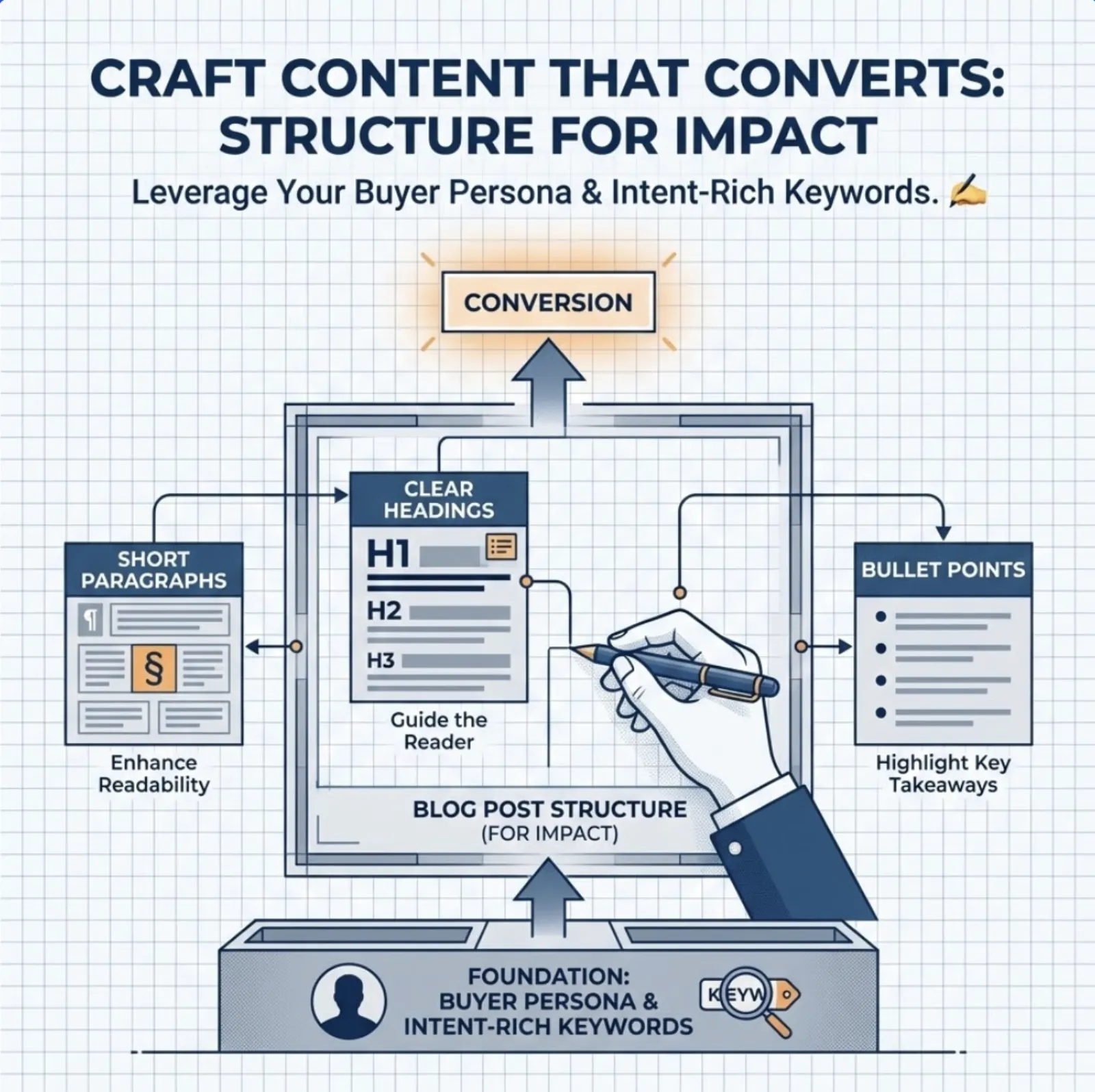
Even the most brilliant content will fall flat if it’s difficult to read or navigate. Start with an engaging introduction. Use clear headings and subheadings to break up text and improve readability. Incorporate bullet points, numbered lists, and short paragraphs to make complex information digestible. Conclude with a strong summary and, most importantly, a clear call to action.
Writing Requirement: Keep paragraphs short, ideally 3-5 sentences. This improves readability, especially for online audiences who tend to skim. Use bolding for key phrases to draw attention to important points, enhancing comprehension and engagement.
The Art of Storytelling in Business Blogging
Humans are wired for stories. Incorporating storytelling elements into your blog posts makes your content more memorable, relatable, and impactful. Share customer success stories (with permission, of course), describe a common pain point through a narrative, or even share your own journey and lessons learned. Stories evoke emotion and build connection, making your brand more trustworthy and likable.
Relatable Example: Instead of just stating “Our software boosts productivity by 30%,” tell a short story about Sarah, a small business owner overwhelmed with manual tasks. Describe her frustration, how she discovered your software, and the relief and success she experienced. This personalizes the benefit and makes it more tangible.
Creating Irresistible Lead Magnets and Content Upgrades
A lead magnet is valuable content offered in exchange for contact information. For high-quality lead generation, your lead magnets must be highly relevant and solve a specific problem.
Examples include: a checklist, a template, an in-depth guide, a webinar replay, or a free consultation. A “content upgrade” is a lead magnet specifically tailored to the topic of the blog post it appears on, making it incredibly relevant and effective.
Tips for a Successful Lead Magnet:
- Make it immediately useful and actionable.
- Solve a specific pain point that your target audience faces.
- Position it as a “shortcut” or a way to achieve a desired outcome faster.
- Ensure it’s high-quality and professionally presented.
- Promote it prominently within your blog post.
Writing Compelling Calls to Action (CTAs)
Your CTA is the bridge between your blog post and your lead magnet. It needs to be clear, concise, and compelling. Avoid generic phrases like “Click Here.” Instead, use action-oriented language that highlights the benefit, such as “Download Your Free Lead Generation Checklist” or “Schedule Your Free Strategy Session.” Place your CTAs strategically throughout your post and make them visually distinct.

Driving Traffic to Your Lead-Generating Blog Posts
Even the most brilliant, lead-generating blog post won’t work if no one sees it. Driving targeted traffic is a critical component of your strategy. This isn’t about getting just any visitors; it’s about attracting the right kind of people, those who align with your ideal customer profile and are most likely to convert into high-quality leads. A multi-channel approach ensures maximum visibility.
SEO Best Practices for Organic Visibility
Search Engine Optimization (SEO) is fundamental for long-term lead generation. Ensure your target keyword is naturally integrated into your blog post’s title, headings, introduction, and body. Optimize your meta description to entice clicks.
Build high-quality backlinks to your content from reputable sources. Consistently applying these SEO best practices helps your content rank higher, bringing a steady stream of relevant, organic traffic.
Key Phrase: Focus on topical authority. Instead of writing one-off posts, aim to cover a topic comprehensively across several interconnected articles. This signals to search engines that you are a go-to resource, improving your overall domain authority and ranking for a wider range of related keywords.
Leveraging Social Media for Blog Promotion
Don’t just share a link and hope for the best. Craft engaging social media posts that tease the value of your blog content. Ask questions, share a compelling statistic, or use a powerful quote from your article.
Tailor your message to each platform and use relevant hashtags. Actively participate in groups and communities where your target audience hangs out, sharing your blog post as a helpful resource when appropriate.
 LIVE
Live every Tuesday at 2pm UK. Bring your marketing questions.
Get your Google, local SEO and AI questions answered live.
Email Marketing: Nurturing Your Audience
Your email list is one of your most valuable assets. When you publish a new blog post, send it to your subscribers. This keeps your audience engaged, drives repeat traffic, and reinforces your position as an authority.
For new subscribers, create an automated email sequence that introduces them to your best lead-generating content over time. Email marketing allows for a personalized connection, helping to nurture prospects.
Guest Blogging and Collaborations for Wider Reach
Guest blogging on other reputable websites in your industry can introduce your content to a new, relevant audience. Choose sites whose audience aligns with your buyer persona. When writing a guest post, include a link back to one of your relevant, lead-generating blog posts or lead magnets within your author bio. Collaborating with other businesses or influencers can also expose your content to their followers.
Optimizing for Conversion: Turning Readers into Qualified Prospects
Once you’ve attracted visitors to your blog with valuable content, the next crucial step is to convert them into leads. This isn’t just about having a lead magnet; it’s about optimizing every touchpoint on your blog to encourage action. From the design of your landing pages to the placement of your opt-in forms, every element plays a role in transforming a casual reader into a qualified prospect.
Designing High-Converting Landing Pages
When a reader clicks on your CTA for a lead magnet, they should land on a dedicated page designed solely for that offer. A good landing page is clean, focused, and eliminates distractions.
The headline should clearly state the value of the lead magnet, matching the promise made in your blog post. Use concise, benefit-oriented copy and compelling visuals. A well-designed landing page significantly boosts your conversion rates.
Implementing Clear and Accessible Opt-in Forms
Your opt-in forms should be as frictionless as possible. Ask for only the essential information you need to qualify a lead (e.g., name and email for a download; company and role for a demo). Place forms strategically: within the blog post, at the end, in a sidebar, or as a well-timed pop-up. Ensure they are mobile-responsive and load quickly. A cumbersome or slow form will deter potential leads.
Insight: Consider a two-step opt-in process for some lead magnets. Instead of showing the form immediately, a button or link first prompts the user to click, and then the form appears. This leverages the “micro-commitment” principle, often leading to higher conversion rates as the user has already taken an initial action of intent.
A/B Testing Your Content and CTAs for Better Results
Conversion optimization is an ongoing process. Don’t assume your first attempt is the best. A/B test different elements of your blog posts and landing pages. Test different headlines for your blog posts, variations of your CTAs, different images for your lead magnets, or even different lengths of your landing page copy. Small tweaks can often lead to significant improvements in conversion rates. Continuous testing is the secret sauce.
Measuring Success and Scaling Your Blogging Efforts
To truly generate 5 high-quality leads per day consistently, you need to understand what’s working, what isn’t, and how to replicate success. Measurement isn’t just about vanity metrics; it’s about gathering actionable data that informs your strategy and allows you to scale your efforts efficiently. Without robust measurement, you’re essentially flying blind.
Key Metrics for Tracking Lead Generation Success
Beyond simple website traffic, focus on metrics directly related to lead generation.
- Conversion Rate: The percentage of visitors who become leads.
- Cost Per Lead (CPL): If running paid promotion, how much does it cost to acquire one lead?
- Lead Quality: Track how many of your leads become qualified sales opportunities or customers.
- Time to Convert: How long does it take for a blog reader to become a lead?
- Traffic Sources: Which channels (organic search, social media, email) bring the most high-quality leads?
These metrics provide a holistic view of your blogging’s effectiveness.
Tools to Monitor Your Blogging Performance
Several tools can help you track and analyze your lead generation efforts:
- Google Analytics: Essential for website traffic, user behavior, and conversion tracking.
- Google Search Console: Provides insights into organic search performance and keywords.
- CRM (Customer Relationship Management) System: Crucial for tracking leads through your sales pipeline and assessing lead quality.
- Marketing Automation Platforms: Helps manage lead magnets, email sequences, and track lead interactions.
- Heatmap and Session Recording Tools (e.g., Hotjar): Visualize user interaction with your blog posts.
Leverage these tools to gain deep insights and make data-driven decisions.
Iterating and Improving Your Strategy Based on Data
The insights you gain from your metrics should directly inform your next steps. If a particular blog post is attracting traffic but not many leads, perhaps its CTA or lead magnet isn’t compelling enough.
If one traffic source consistently delivers high-quality leads, allocate more resources there. This continuous cycle of analysis, iteration, and improvement is key to scaling your lead generation efforts and consistently hitting your goal.
Common Pitfalls to Avoid in Your Lead Generation Blogging Journey
While the path to generating high-quality leads with blogging is clear, there are common missteps that can derail your efforts. Being aware of these pitfalls allows you to proactively avoid them, saving you time, resources, and frustration. From a lack of strategic planning to neglecting crucial follow-up, understanding these common errors is just as important as knowing the best practices.
Writing Without a Clear Lead Generation Goal
One of the biggest mistakes is blogging just for the sake of it. Every blog post you create should have a clear purpose tied back to your lead generation objectives. Before you even start writing, ask yourself: What specific action do I want the reader to take? What problem does this post solve for my ideal client? Without a clear goal, your content risks becoming aimless.
Neglecting Your Lead Nurturing Process
Capturing a lead is only the first step. Many businesses make the mistake of not having a robust lead nurturing strategy in place. Once someone downloads your lead magnet, what happens next?
Do they receive a series of valuable emails? Are they segmented based on their interests? A well-planned nurturing sequence builds trust, educates prospects further, and gently guides them towards a purchasing decision.
Inconsistent Publishing and Promotion
Blogging for lead generation is not a “set it and forget it” activity. Inconsistent publishing can lead to a drop in search rankings and decreased audience engagement. Similarly, writing great content without actively promoting it is like building a beautiful store and never opening the doors. Develop a realistic content calendar and stick to it. Consistency in both creation and distribution is vital for building momentum.
Ignoring SEO and Audience Intent
Failing to conduct proper keyword research or ignoring SEO best practices means your content won’t be found by the right people. Writing about topics that don’t align with your audience’s pain points or search intent is equally detrimental. Your content might be fantastic, but if it doesn’t appear when your target audience is searching for solutions, it won’t generate leads. Always start with understanding your audience’s needs.
Frequently Asked Questions About Generating Leads with Blogging
What is the ideal blog post length for lead generation?
While there’s no single “ideal” length, longer, more in-depth posts (1,500-2,500 words) often perform better for lead generation. These comprehensive articles allow you to cover a topic thoroughly, rank for more long-tail keywords, and provide enough value to justify a lead magnet. However, prioritize quality and depth over word count.
How quickly can I expect to see results from lead generation blogging?
Blogging for organic lead generation is a long-term strategy. It typically takes 6-12 months to see significant results from consistent, SEO-optimized blogging due to search engine indexing and authority building. However, you can see quicker results by actively promoting your content on social media, through email, or with paid advertising. Patience and consistency are key.
Should I gate all my content to generate leads?
No, not all content should be gated. Your blog posts themselves should generally be free and accessible to build trust and authority. Gate only your most valuable, in-depth resources or tools (your lead magnets) that offer a significant benefit in exchange for contact information. A balance of free, valuable content and premium, gated resources is often most effective.
How do I know if the leads from my blog are high-quality?
Track your leads through your CRM. Monitor their engagement with your nurturing emails, what content they consume, and how many convert into qualified sales opportunities or actual customers. Gather feedback from your sales team on the quality of leads they receive from blogging. This closed-loop feedback is essential for refining your lead definition and content strategy.
What if I’m a beginner and not a great writer? Can I still generate leads with blogging?
Absolutely! You don’t need to be a professional writer to generate leads. Focus on clarity, value, and solving your audience’s problems. Use tools to check grammar and spelling, outline your posts meticulously, and prioritize actionable advice. Consider hiring a freelance writer or content strategist if writing isn’t your strength, but your unique insights and expertise are invaluable.
Final Thoughts: Your Path to Consistent High-Quality Leads
Generating 5 high-quality leads per day with blogging is not an overnight miracle, but a highly achievable goal. It requires a deep understanding of your ideal client, meticulous keyword research, and the creation of valuable, conversion-focused content.
By implementing these strategies, you transform your blog into a powerful, automated lead generation machine. Every blog post is an opportunity to connect with a potential customer and guide them toward your solution. The journey requires patience, but the rewards of a steady stream of qualified prospects are immeasurable, leading to sustainable growth.
Take Action Today: Start Building Your Lead-Generating Blog
Don’t let another day pass by without harnessing the immense power of your blog. Start by revisiting your buyer persona and conducting in-depth keyword research. Outline your first lead-generating blog post, focusing on a clear problem and an irresistible lead magnet. Implement the actionable steps, frameworks, and tips shared here.
The sooner you begin to optimize your blogging efforts for high-quality lead generation, the sooner you will see the transformative impact on your business. Your future leads are waiting for your valuable content. Take the first step today and watch your lead pipeline grow!

Written by Uzair Kharawala
Partner at SF Digital Studios, a Google Premier Partner agency. Uzair has been helping businesses grow with Google Ads since 2002 and teaches it every week on YouTube.
Get our best Google Ads tips by email
New articles and videos, straight to your inbox. Unsubscribe any time.