
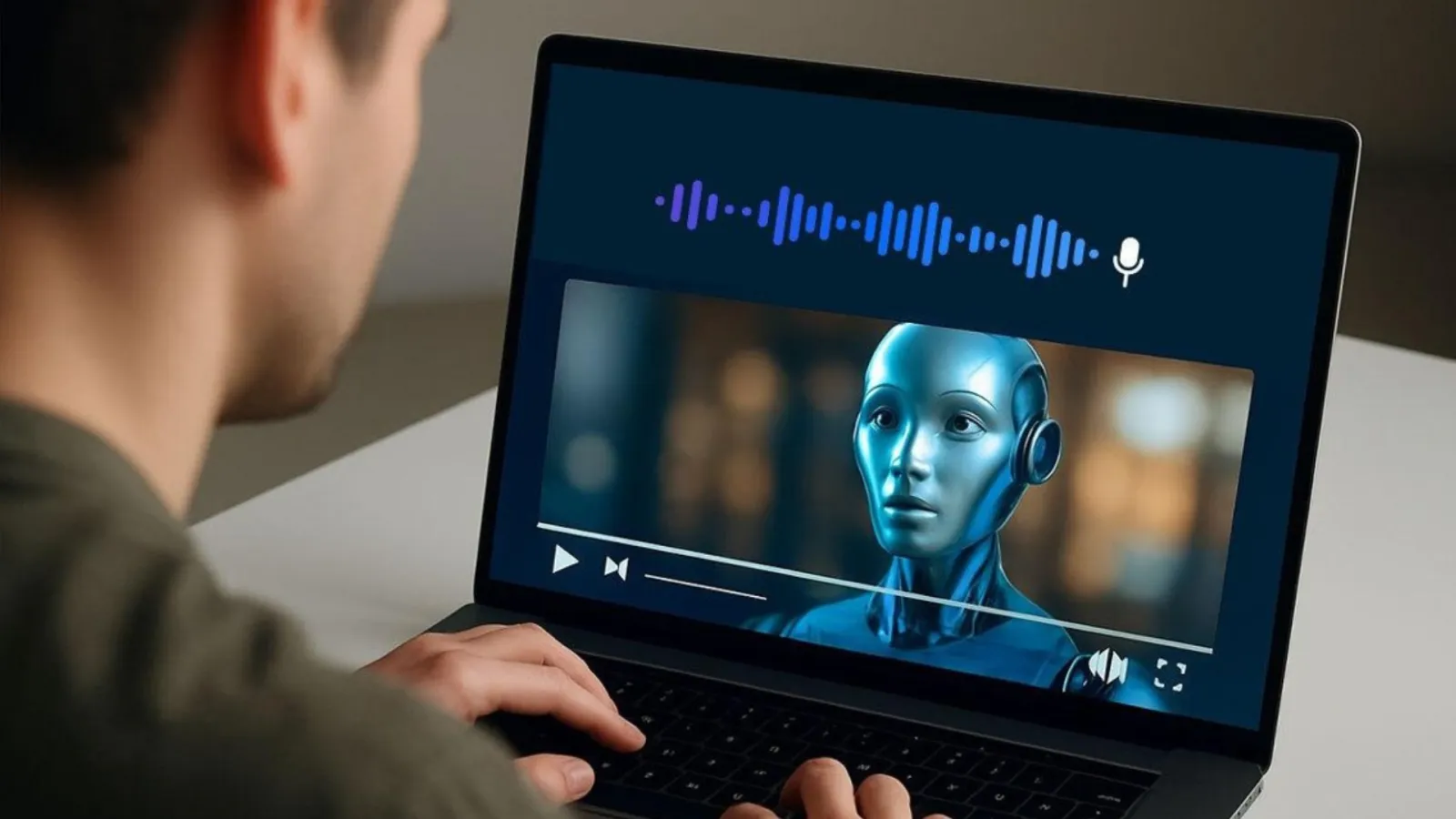
Here’s an idea worth taking a moment to consider: imagine if the voice you’re hearing in an ad wasn’t a human being at all, but you wouldn’t know. That isn’t some science fiction idea anymore. Behind the scenes of digital marketing’s advance, one understated revolution is gaining momentum: synthetic voices supplanting actual ones.
This isn’t about saving money or sounding cool. It’s about being flexible, consistent, and fast. If brands can create credible, emotionally engaging audio content without hiring a voice actor, why wouldn’t they? Let’s parse what’s going on here and why human voices in commercials could become the exception rather than the rule.
And yes, an AI voice generator can now provide tone, emotion, and clarity so indistinguishably that it is difficult to discern the difference. That revolutionises the game.
The Practical Transition: Cost, Time, and Control
Operating a voiceover campaign that has a human actor involves casting, scheduling, recording, editing, retakes, and sometimes even travelling. It gives production layers. AI voices reduce that to hours, not days.
This is not about substituting people for the sake of it. It’s about how companies, particularly small and medium-sized ones, can make professional-sounding audio without struggling with logistics or expense. Need to alter the tone? Shift a line? Attempt three takes at one line? You don’t have to schedule another session. You just adjust and reproduce.
That kind of control offers marketers a lot more latitude to try things, test, and move fast. Human-driven production does not necessarily enable that.
The Consistency Advantage
Suppose you have a campaign that’s going to run across five countries with the same brand voice. It’s difficult to maintain tone and cadence with various human voice actors, even when they are well-directed. AI voices, however, present consistency in languages and platforms.
This is especially important in digital campaigns where brand voice literally needs to sound the same every time. Audio generated by AI removes variability – there are no off days, no vocal fatigue, no missed lines. That’s a serious edge when you’re trying to keep your messaging tight and on-brand across formats like radio ads, podcast intros, explainer videos, and TikTok voiceovers.
Creative Autonomy Without Waiting on Anyone
Want to try out a snarky version of your ad? A more emotional one? One in a whisper? You can do all that in a flash with voice AI. No sending scripts, waiting for responses, booking sessions, or praying that the actor gets the tone you’re going for.
And since it’s cheaper and quicker to produce voice content, creative teams are more enabled. They can experiment and take risks without fear of going over budget or taking too long.
This creative flexibility isn’t about being experimental. It’s about real-time adaptation. Need to replace a voiceover due to a new product feature, a new audience segment, or changed language guidance? You can do it today, not next week.
Multilingual Campaigns Made Simpler
Localisation is more than translation. It’s about tone shifting, pacing adaptation, and context modification for new markets. Historically, this would mean contracting local talent per market, which is a costly and labour-intensive process.
AI voice technologies now support localised voices that are natural-sounding, fluent, and emotionally attuned to the culture. You can deploy a global campaign with native-sounding voice-overs in multiple regions at lightning speed.
The kicker: you don’t give up control. You can still manage the tone and message from the centre, maintaining brand integrity while scaling effectively.
When Human Voices Still Matter
Let’s be unambiguous: this is not an obituary of voice actors. There are still applications where human nuance, improvisation, or lived experience cannot (yet) be fully emulated. Such as real stories, emotional storytelling, and acts where unpredictability is part of the appeal, that are still better with human delivery.
The issue is that AI voice software is no longer a cheap alternative to using professionals for minor tasks. They’ve moved into areas once exclusively used by professional voice actors and, in many cases, are outshining them in terms of speed, consistency, and ease of use.
Brands must now intentionally decide: must this message sound like it is spoken by a human, or is that a habit?
Training Your Ears for the Future
The majority of listeners can no longer hear a difference between human and artificial voices—and it will only get more true in the next couple of years. That means voice AI isn’t going to be a novelty or a backup choice. It’ll be a part of the normal toolkit, along with stock photos or motion graphics.
Brands and ad agencies will have to retrain their instincts. Scripts won’t need to be tailored to fit the rhythm of a particular actor’s voice. They’ll be created with modularity and flexibility in mind. Revisions won’t be the bottleneck that they used to be. Campaigns can be more responsive, more localised, and more adaptive.
So, Should You Use an AI Voice?
If your ad needs emotional nuance, lived experience, or spontaneous humour, stick with humans — but for speed, scale, consistency, and creative agility, AI voice is now a powerful, polished option.
The tools have matured. The results sound good. And the creative process doesn’t just remain intact – it gets sharper, faster, and more flexible.

Written by Uzair Kharawala
Founder of SF Digital Studios, a Google Premier Partner agency. Uzair has been helping businesses grow with Google Ads since 2002 and teaches it every week on YouTube.
Get our best Google Ads tips by email
New articles and videos, straight to your inbox. Unsubscribe any time.