
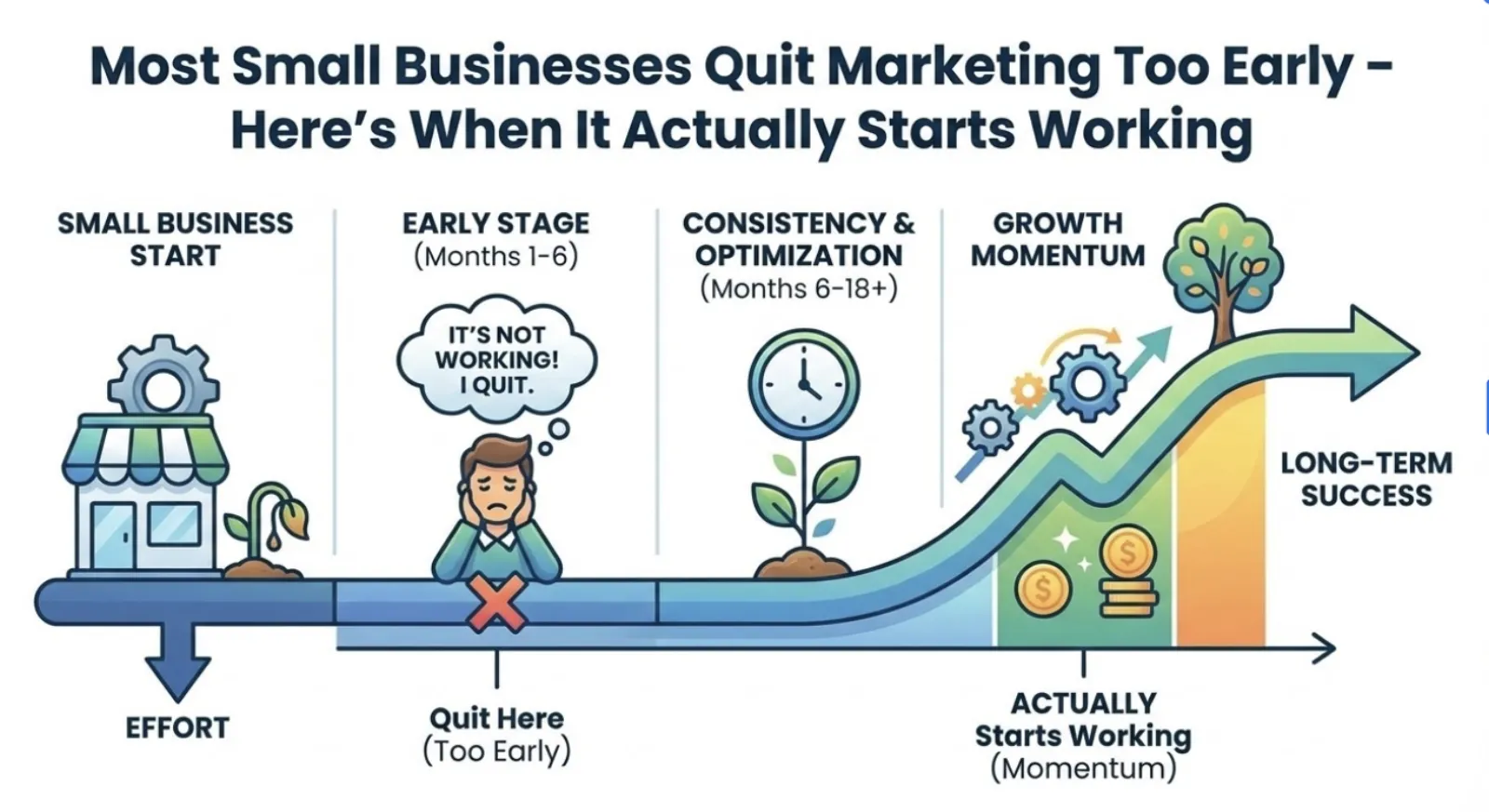
Imagine planting a seed. You water it, give it sunlight, but you do not see a sprout on day one. Do you dig it up and assume it is a dud? Of course not. You understand growth takes time. Small business marketing operates on the exact same principle. Many entrepreneurs pour their heart and resources into initial campaigns, only to pull back when immediate results are not visible. This crucial mistake leaves countless businesses stuck, wondering why their message is not resonating. What if the solution is simply understanding the true timeline for marketing success?
Understanding the Marketing Marathon, Not a Sprint
For many small business owners, marketing feels like an urgent sprint. They invest in a few ads or post consistently for a month, expecting an immediate flood of new customers. When that instant gratification doesn’t materialize, frustration sets in, often followed by a complete halt in marketing efforts. This cycle is incredibly detrimental to sustainable business growth, as effective small business marketing is a marathon, not a quick dash.
The Invisible Metrics: Why Early Efforts Feel Like They Are Failing
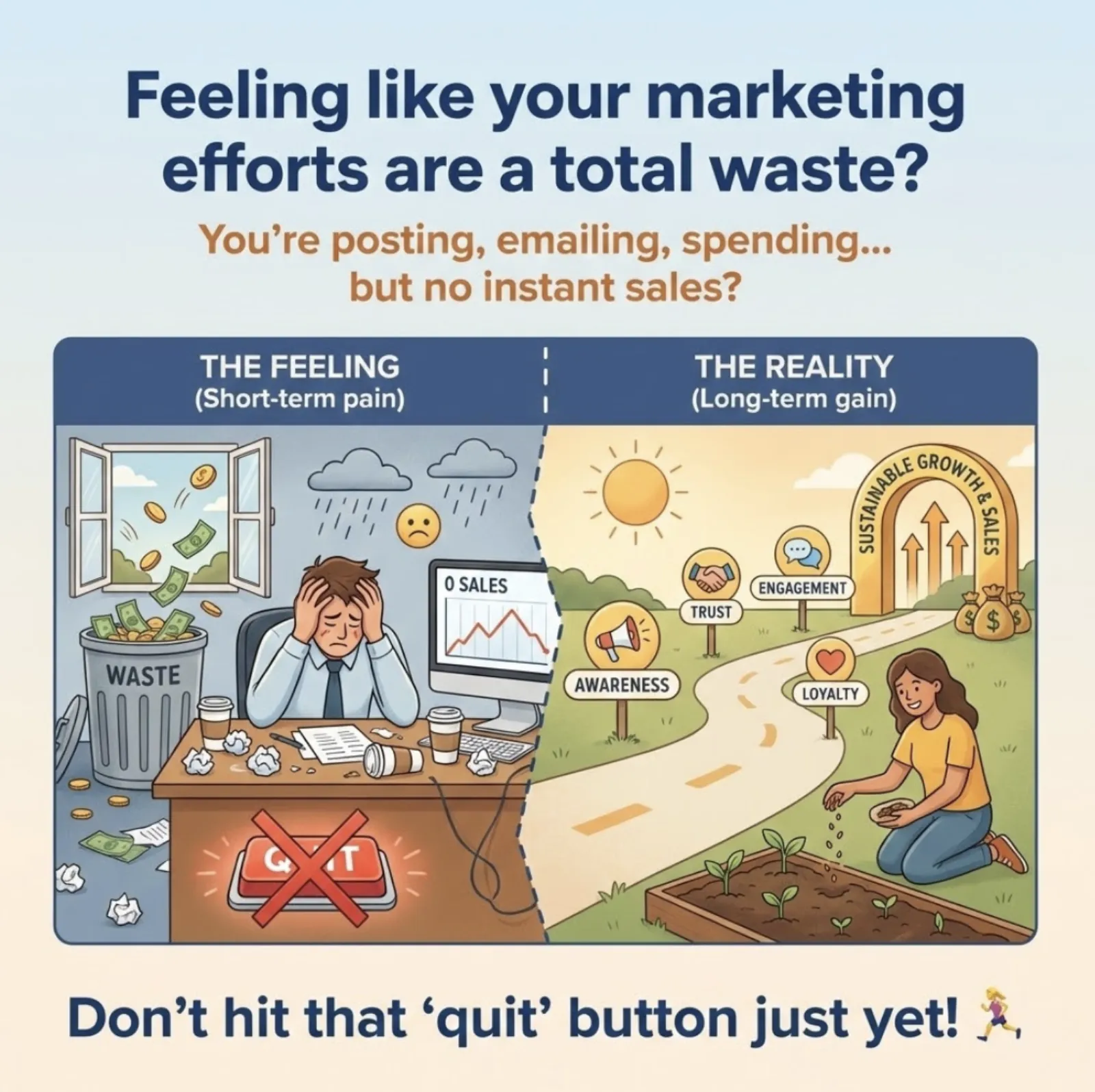
One of the most disheartening aspects of early marketing is the perception of failure, often because you are looking at the wrong metrics. Many crucial early indicators are “invisible” if you are solely focused on immediate conversions. These pre-conversion metrics, such as growing brand awareness and increased engagement, signal your marketing is indeed working by laying essential groundwork for future sales, even if direct transactions haven’t occurred yet.
Get your free Marketing Action PlanNot sure where to start? Answer a few questions and get your plan in about a minute. No email needed.
Get my plan →The Power of Consistent Brand Presence and Repetition
In today’s crowded marketplace, consistency is king for any marketing strategy. A consistent brand presence, delivering a reliable message and identity across all touchpoints, builds familiarity and, in turn, breeds trust. This repeated exposure, often captured by the “Rule of Seven,” is vital for your message to break through the noise and resonate with potential customers, making your business memorable and credible over time.
Actionable Steps: Building Your Marketing Momentum
To ensure your marketing investment yields results and you avoid quitting too early, adopt these strategic steps:
- Develop a Simple Content Calendar: Map out 30-90 days of content, focusing on 2-3 types you can consistently produce, like weekly blog posts or daily social media updates. This structure provides clarity and helps maintain regular communication.
- Leverage Your Existing Customer Base: Your current customers are invaluable. Implement referral programs, send exclusive offers, or simply ask for testimonials to generate new business and strengthen loyalty. Happy customers are powerful advocates.
- Prioritize Email Marketing Consistency: Build an email list from day one and commit to sending regular, valuable content, not just sales pitches. This keeps your brand top-of-mind and nurtures leads over time, converting interest into loyal patronage.
- Embrace a “Test and Learn” Mindset: Not every effort will be a home run. Start small, test different messages or platforms, analyze simple metrics like engagement rates, and refine your approach. This iterative process prevents wasted resources and ensures efficiency.
When the Magic Happens: Recognizing the Tipping Point
The “magic” in marketing isn’t a sudden event, but a series of accumulating signals indicating a marketing tipping point. You’ll notice an increase in direct inquiries and sales not linked to specific recent ads, signaling familiarity built over time. Repeat business and referrals signify earned trust, while a rise in organic searches for your brand name or services means your SEO for small business efforts are positioning you as an authority. These are the tangible results of sustained marketing longevity.
Overcoming the Common Pitfalls of Premature Marketing Abandonment
Several common challenges often lead small businesses to abandon their marketing strategy too soon.
- Budget Constraints: Feeling every dollar is a high-stakes gamble, businesses often cut marketing first. Overcome this by starting small with cost-effective strategies like content marketing and organic social media, viewing it as an investment, not an expense.
- Lack of Expertise: Owners wearing multiple hats can feel overwhelmed by marketing complexity. Combat this through education, selective delegation, or collaborations to ensure consistent, effective efforts.
- Impatience and Unrealistic Expectations: The desire for quick wins often leads to disappointment. Set realistic goals, celebrate small victories like increased website visitors, and understand that marketing success is a gradual build-up.
Inconsistent Effort: Marketing isn’t a one-time project. Combat dwindling efforts by structuring dedicated time blocks for marketing activities and using automation tools to maintain momentum and ensure your message reaches its required threshold.
Your Marketing Ramp-Up Plan: A 30-Day Blueprint for Sustained Growth
To build consistent momentum and ensure your digital marketing tips translate into real progress, here’s a structured 30-day plan focusing on foundation, consistency, and refinement:
Days 1-7: Laying the Foundation
- Define your primary goal and ideal customer to guide all marketing investment.
- Audit and optimize 2-3 core marketing channels (e.g., social media, Google Business Profile, email).
- Brainstorm 3-5 content pillars and set up basic tracking with Google Analytics and native platform insights.
Days 8-15: Building Consistency
- Consistently publish quality content (e.g., 3-5 social media posts/week, 1 email or blog post/week) focusing on value and keywords for SEO for small business.
- Actively engage with your audience by responding to comments and messages to foster customer acquisition.
- Implement a simple email opt-in form on your website and start sending valuable communications to grow your list.
Days 16-22: Review and Refine
- Review weekly metrics to identify high-performing content and trends.
- Integrate audience feedback to refine your content ideas and messaging for better resonance.
- Adjust your content strategy based on data, focusing on what performs best.
Days 23-30: Scaling and Planning Ahead
- Plan your next 30-day content calendar, incorporating learned insights and potential promotions.
- Cautiously explore one new marketing channel or tactic if your current ones are thriving.
- Reallocate small portions of your budget based on early results, strategically supporting what works for ongoing business growth.

Key Takeaways for Sustained Marketing Success
To ensure your small business marketing efforts are a marathon and not a sprint, remember these core principles:
- Patience is Paramount: Real marketing results take time to compound. Embrace marketing longevity.
- Focus on Value: Always aim to provide value, building trust and positioning your brand as a helpful resource.
- Consistency Over Intensity: Regular, moderate effort consistently outperforms sporadic, intense bursts of activity.
- Embrace Data: Use even basic analytics to refine your approach and make smarter decisions about your marketing investment.
Frequently Asked Questions About Small Business Marketing Longevity
1. How long does it typically take for small business marketing to show results?
Generally, you should expect noticeable, consistent results within 3 to 6 months of sustained effort. While initial signs like increased website traffic may appear sooner, significant impact on sales requires time for brand awareness and trust to build.
2. How can I market my small business on a very limited budget?
Focus on cost-effective, organic strategies. Utilize free tools like Google Business Profile, create valuable content for SEO for small business, engage actively on social media, build an email list, and leverage customer referrals and testimonials.
3. How do I know if my marketing efforts are actually working if I’m not seeing immediate sales?
Look for “invisible metrics” or leading indicators, such as increased website traffic, higher social media engagement, growth in your email list, direct brand searches, and positive mentions. These signal growing customer interest and awareness, crucial for future business growth.
Final Thoughts: Your Commitment is Your Competitive Edge
In the dynamic world of small business, the temptation to quit marketing when immediate returns aren’t apparent is strong. However, it’s precisely at this point of perceived stagnation that many businesses are on the cusp of a breakthrough. Your unwavering commitment to your marketing strategy, even when results aren’t dramatic, is your ultimate competitive edge. Embrace the marathon, focus on the process, and trust that your sustained efforts will compound into the tangible business growth you envision.

Written by Uzair Kharawala
Partner at SF Digital Studios, a Google Premier Partner agency. Uzair has been helping businesses grow with Google Ads since 2002 and teaches it every week on YouTube.
Get our best Google Ads tips by email
New articles and videos, straight to your inbox. Unsubscribe any time.