
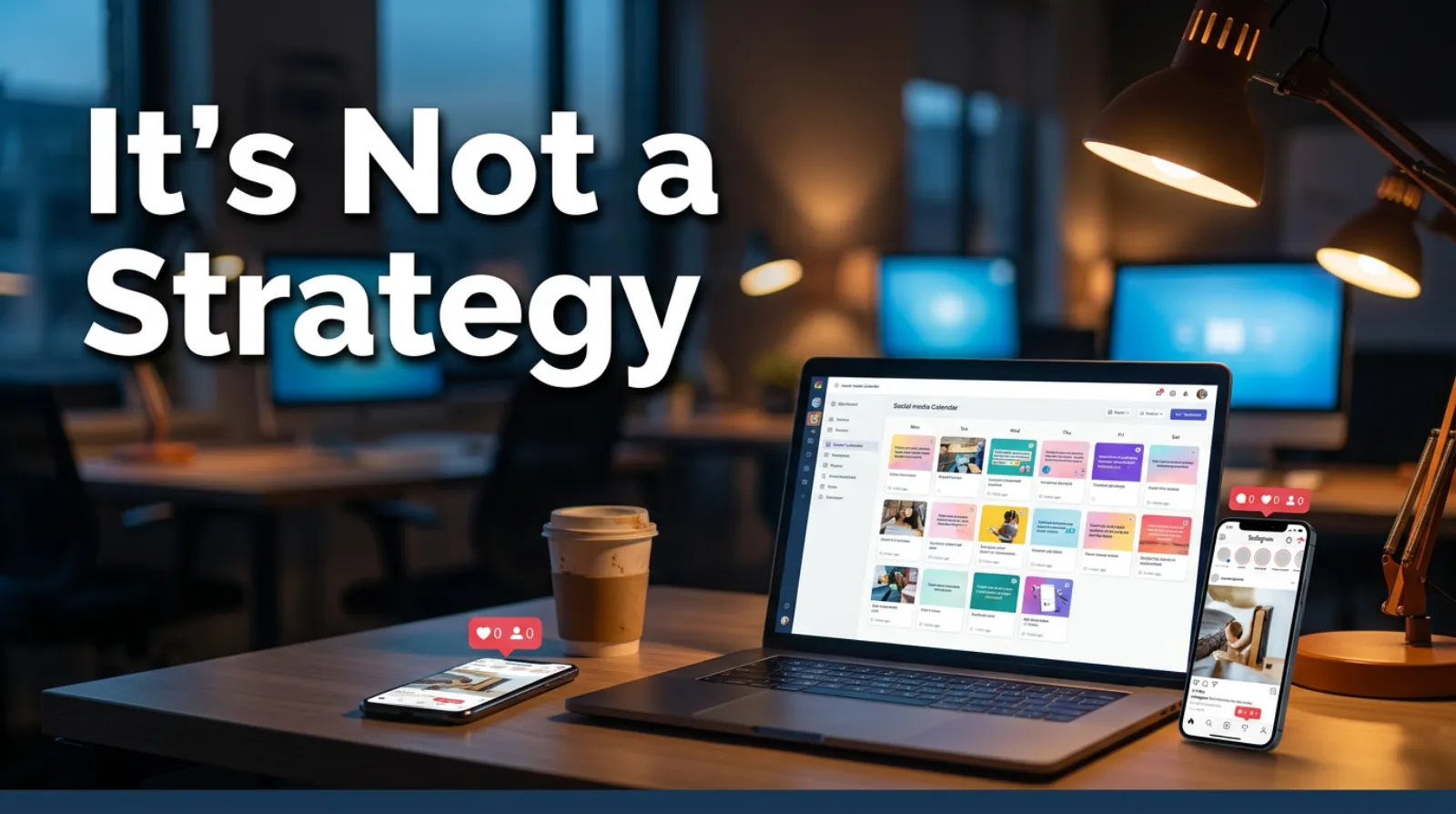
Are you diligently posting on social media every single day? You might be seeing minimal engagement and even less impact on your business growth. Many small business owners and marketers mistakenly believe that a consistent posting schedule equates to a robust social media strategy. The truth is, without a clear purpose, defined audience, and measurable goals, your efforts are likely just noise in a crowded digital world. It is time to transform your routine social media posting into a powerful engine for real results.
Understanding the Posting Schedule Trap: Why Your Efforts Feel Futile
The Illusion of Activity Versus Impact
It is easy to confuse activity with progress. You post daily, feeling productive, but do these actions genuinely move your business forward? Often, they do not. A social media posting schedule merely dictates what and when to share. It lacks the crucial ‘why’ and ‘for whom’. This leads to generic content, inconsistent messaging, and poor connections with your target audience. You are active, but not truly strategic.

Get Found, Get Chosen, Get Your Time Back
A free one-day marketing seminar in Milton Keynes · 10 November 2026
The Missing Foundation: Goals and Audience
Every effective social media strategy needs clear, measurable goals. Are you aiming for brand awareness, lead generation, or sales? Without a defined objective, success remains unmeasurable.
Get your free Marketing Action PlanNot sure where to start? Answer a few questions and get your plan in about a minute. No email needed.
Get my plan →Crucially, who are you trying to reach? Understand their interests, pain points, and online behaviours. Posting without this understanding is like shouting into a void; your message will not resonate. Many businesses skip these foundational steps, jumping straight to content creation. This oversight turns their “strategy” into a chore, not a growth driver.
Building a Real Social Media Strategy: More Than Just Posts
Define Your Purpose and Crystal-Clear Objectives
A genuine social media strategy demands clarity. Before posting, ask: what is our overarching purpose? Is it thought leadership, website traffic, or community building?
Then, set SMART goals: Specific, Measurable, Achievable, Relevant, Time-bound. For example, “Increase qualified leads from Instagram by 15% in Q3″ provides a clear roadmap. Align your social media objectives with broader business goals. If increasing product sales is key, your social media efforts must directly support that outcome.
Know Your Audience Inside and Out
Understanding your ideal customer is foundational. Create detailed buyer personas: outline their challenges, content preferences, and platform usage. Your message must be precisely tailored.
For instance, a coffee brand might focus on sustainability and local sourcing. Their content should reflect these values, showcasing ethical practices, not just coffee cups. Use analytics to refine these personas and tailor content, fostering genuine audience engagement. This data-driven approach ensures effective message delivery.
Strategic Platform Selection and Content Pillars
Do not attempt to be everywhere. Select platforms where your target audience is most active and where your content naturally thrives. LinkedIn is ideal for B2B, whilst Instagram or TikTok suit fashion brands.
Develop content pillars aligned with your brand, audience, and goals. These themes provide structure and variety, such as “Educational Tips,” “Behind the Scenes,” or “Customer Spotlights.” Every post should fit into a category. A content calendar then strategically maps how these pillars are distributed across chosen platforms. This ensures a balanced mix, addressing different customer journey stages and transforming mere posting into thoughtful planning.
Transforming Your Social Media Approach: Actionable Frameworks
The SOSTAC Framework for Robust Social Media Planning
Apply SOSTAC: Situation, Objectives, Strategy, Tactics, Action, Control, for a structured social media plan. This comprehensive approach guides your entire process.
- Situation Analysis: Assess your current performance, competitors, and industry trends using a SWOT analysis.
- Objectives: Set clear, SMART goals directly linked to business outcomes, for example, “Increase website traffic from social media by 20% in Q3.”
- Strategy: Define your unique value proposition and core content themes.
- Tactics: Detail specific content types, frequencies, platforms, and engagement methods. This refines your content calendar.
- Action: Assign clear roles and responsibilities for effective plan implementation.
- Control: Monitor key performance indicators (KPIs), review progress, and adjust based on data. This continuous feedback is vital for digital marketing success.
Content Mapping for the Customer Journey
Map your content to your audience’s journey, from awareness to conversion. Each post should strategically guide them through these stages.
- Awareness Stage: Introduce your brand and solve broad problems using infographics or short videos. Focus on providing value.
- Consideration Stage: Educate about solutions with case studies, demos, or comparison guides. Highlight your unique selling points.
- Decision Stage: Encourage conversion through testimonials, special offers, or free trials. Make the next step simple.
- Advocacy Stage: Nurture existing customers and encourage brand ambassadors using exclusive content or appreciation posts. Build lasting loyalty.
Mapping content ensures every post serves a strategic purpose, guiding your audience rather than merely broadcasting randomly. This significantly boosts lead generation and overall business growth.
Real-World Impact: Case Studies and Insights
The Local Bakery’s Sweet Success Story
“The Daily Crumb” bakery struggled with inconsistent foot traffic despite selling beautiful cakes. Their daily Instagram photos generated likes but few actual sales.
 LIVE
Live every Tuesday at 2pm UK. Bring your marketing questions.
Get your Google, local SEO and AI questions answered live.
They shifted to a targeted social media strategy, aiming to increase weekend sales by 20% to local families. Content pillars focused on “Weekend Brunch Specials,” “Behind the Baking,” and “Community Events.” They posted baking videos, shared ingredient stories, promoted brunch items with clear calls to action, and ran hashtag contests. The result was a 25% increase in weekend sales, a strong online presence, and active audience engagement. Focused content truly drove tangible results.
From Likes to Leads: A B2B Software Company’s Journey
“Innovate Solutions,” a B2B software firm, garnered LinkedIn attention but few qualified leads from simply sharing industry news.
Their goal was to generate 10 high-quality leads monthly from LinkedIn, specifically targeting IT managers and CTOs. Their strategy pivoted to thought leadership, offering educational content that addressed their audience’s pain points. They published articles on common IT challenges, hosted expert Q&As, and shared client case studies. LinkedIn targeting ensured content reached specific job titles. The result was consistent lead generation and improved lead quality, transforming their page into a valuable resource. A targeted content strategy effectively drove significant business growth.
Beyond the Basics: Expert Insights and Key Comparisons
The Strategic Shift: From Broadcast to Conversation
Effective social media marketing shifts from a one-way broadcast to a two-way conversation and community building. A posting schedule implies passive reception; a strategy prioritises active interaction. Actively listen, respond, participate in discussions, and encourage user-generated content. Instead of just posting, ask questions or run polls. This builds relationships, fosters loyalty, and provides valuable insights, boosting audience engagement and brand awareness.
Quality Over Quantity: The Algorithm’s Preference
Posting constantly to “beat the algorithm” often yields mediocre content, ultimately harming your reach. Algorithms favour high-quality, relevant content that genuinely resonates with users. A strategic approach prioritises quality over quantity. Create a few exceptionally well-crafted posts weekly, such as in-depth articles or professional videos, specifically designed to educate or entertain. These generate genuine engagement, which platforms reward. This thoughtful content strategy saves time and delivers superior results for your online presence.
Measuring What Truly Matters: Beyond Vanity Metrics
A posting schedule often fixates on vanity metrics like follower count, which look impressive but rarely translate to business outcomes. A strategic approach tracks actionable metrics directly aligned with your business goals.
Consider measuring:
- Lead Generation: Focus on qualified leads and cost per lead.
- Website Traffic: Track click-through rates and bounce rate.
- Sales Conversion: Analyse sales attributable to social media and return on ad spend (ROAS).
- Brand Awareness: Monitor mentions, shares, and reach, linked to customer surveys.
Tracking these provides clear return on investment (ROI), allowing informed optimisation of your social media marketing for true business growth.
Frequently Asked Questions About Social Media Strategy
How often should I post on social media if I have a strategy?
Frequency depends on your strategy, audience, and platform. Focus on consistent, valuable content rather than arbitrary numbers. Monitor your analytics to see what genuinely resonates and achieves your social media goals.
What is the difference between a content calendar and a social media strategy?
A content calendar organises planned posts, detailing what, when, and where. A social media strategy is the overarching plan that dictates the ‘why’: your goals, audience, brand voice, content pillars, and measurement. The calendar serves the strategy.
How can a small business with limited resources create an effective strategy?
Start small: choose one to two key platforms. Prioritise quality content over volume. Leverage free tools and repurpose existing content. Define clear, achievable goals, and track progress to maximise your limited time and budget for business growth.
What are “vanity metrics” and why should I avoid focusing on them?
Vanity metrics, such as follower count or likes, appear impressive but rarely show actual business ROI. They can distract you from crucial metrics like leads, sales, or customer engagement that truly drive business growth. Always focus on actionable data.
How long does it take to see results from a new social media strategy?
Social media success is not instantaneous. Expect noticeable improvements in three to six months, with significant impact in six to twelve months of consistent, data-driven effort. Continuous monitoring and adaptation are crucial for long-term success.
Final Thoughts: From Posting to a Powerful Social Media Presence
The journey from a mere social media posting schedule to a powerful, results-driven social media strategy is transformative. It shifts your efforts from reactive activity to proactive, goal-oriented action. By investing time in defining your purpose, understanding your audience, and building a structured content plan, you move beyond just being present online to making a tangible impact on your business growth. Remember, social media is not a magic bullet, but a powerful tool when wielded strategically. It demands thoughtful planning, consistent execution, and a commitment to data-driven optimisation.
Take Action Now: Elevate Your Social Media Game!
Do not let another day pass with an uninspired social media presence. Take the first step today: revisit your current social media activities and ask yourself if they align with clear business goals. Begin by defining your audience, refining your objectives, and then building a content strategy that truly serves your purpose. If you are ready to unlock the full potential of your social media marketing and achieve sustainable audience engagement and lead generation, download our free Social Media Strategy Template today to get started!

Written by Uzair Kharawala
Partner at SF Digital Studios, a Google Premier Partner agency. Uzair has been helping businesses grow with Google Ads since 2002 and teaches it every week on YouTube.
Get our best Google Ads tips by email
New articles and videos, straight to your inbox. Unsubscribe any time.