
In the fast-paced world of Google Ads, staying on top of new campaign types can feel like chasing a moving target. Just when you think you’ve figured things out, something new pops up. Two of Google’s latest campaign types, Performance Max and Demand Gen, are now making waves in the digital advertising space. But which one should you be using?
If you’re already running Google Ads or considering stepping into the paid advertising world, it’s essential to understand what each campaign does, who it’s for, and how they’re different. This blog breaks it all down in a simple way, without the jargon, so you can make a smart choice for your business.

Get Found, Get Chosen, Get Your Time Back
A free one-day marketing seminar in Milton Keynes · 10 November 2026
First Things First: Start With the Basics
Before you even think about launching Performance Max or Demand Gen campaigns, it’s crucial to have a strong foundation.
Get your free Marketing Action PlanNot sure where to start? Answer a few questions and get your plan in about a minute. No email needed.
Get my plan →If you’re new to Google Ads, Search campaigns (and Shopping campaigns if you run an e-commerce store) should always come first. These are reliable, proven methods for targeting high-intent users, people who are actively searching for what you offer.
Only after you’ve gathered some decent conversion data and understand your audience should you look at more automated options like Performance Max and Demand Gen.
What Is Performance Max?
Launched in November 2021, Performance Max (PMax) is Google’s all-in-one campaign type. Instead of managing separate campaigns for YouTube, Display, Search, Discover, Gmail, and Maps, Performance Max runs across all these channels using a single campaign.
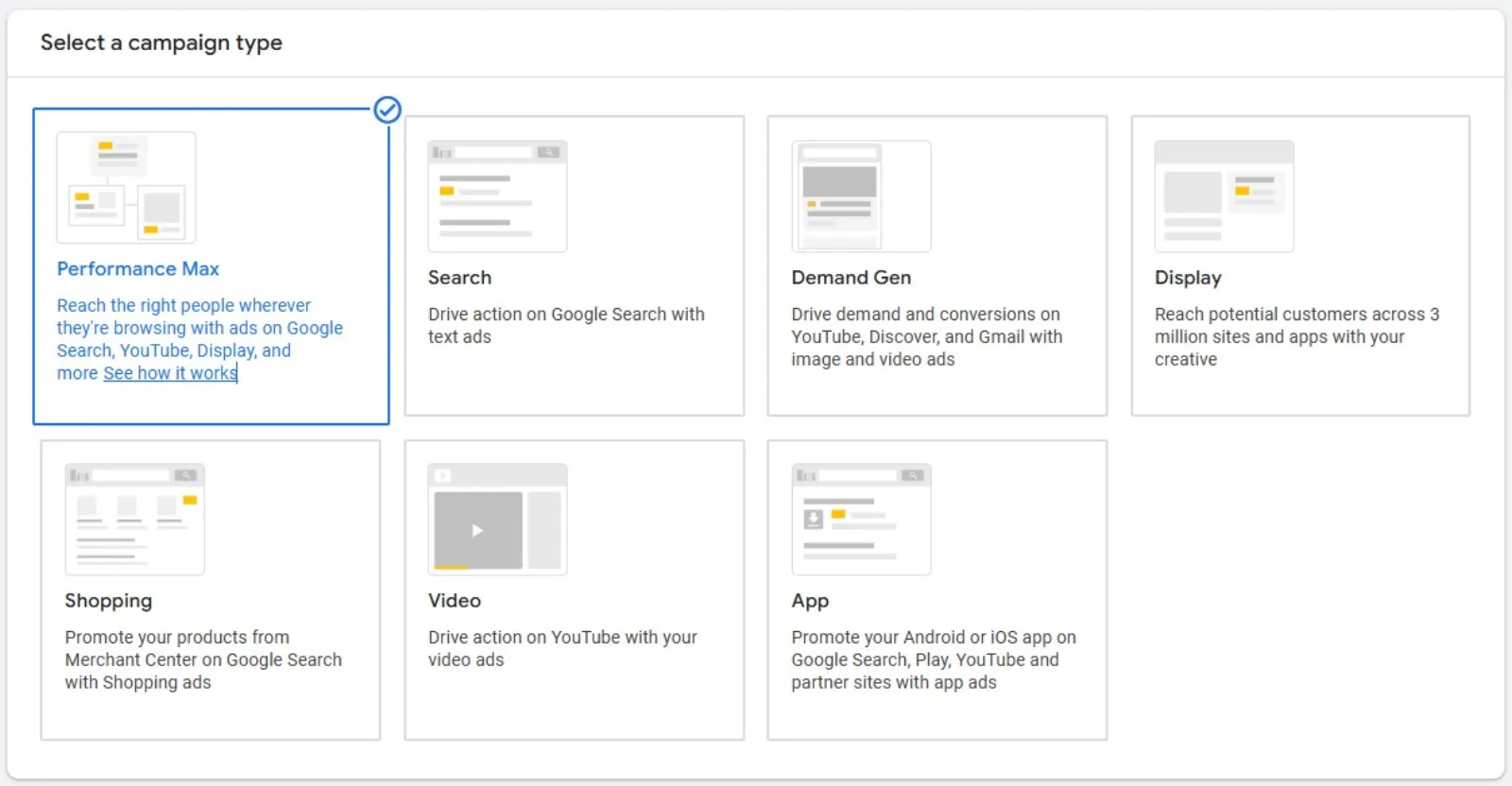
It uses Google’s AI to automatically serve your ads to people most likely to convert, based on the data you’ve already collected from your account.
When Performance Max Works Best
- You already have conversions coming in: The more data Google has, the better it performs.
- You want to scale: If you’re already doing well and want to expand your reach, PMax can help.
- You’re ready to let go of control: This is a more automated campaign. You can’t micromanage placements or keywords like with Search.
- You want to reach users across multiple platforms: From YouTube to Gmail, PMax casts a wide net.
What to Watch Out For
- It needs good data: If you’re just starting, PMax can waste time and budget trying to “learn.”
- Less transparency: You won’t always know where your ads are showing or why they’re being served to a certain audience.
- Smart bidding is required: You must use automated bidding strategies like Maximise Conversions or Maximise Conversion Value.
- Not beginner-friendly: For brand-new accounts, this campaign type can feel like shooting in the dark.
What Is Demand Gen?
Demand Gen, introduced in June 2023, is the newer kid on the block. It’s designed for visual storytelling and heavily leans on video content, especially on YouTube and YouTube Shorts.
 LIVE
Live every Tuesday at 2pm UK. Bring your marketing questions.
Get your Google, local SEO and AI questions answered live.
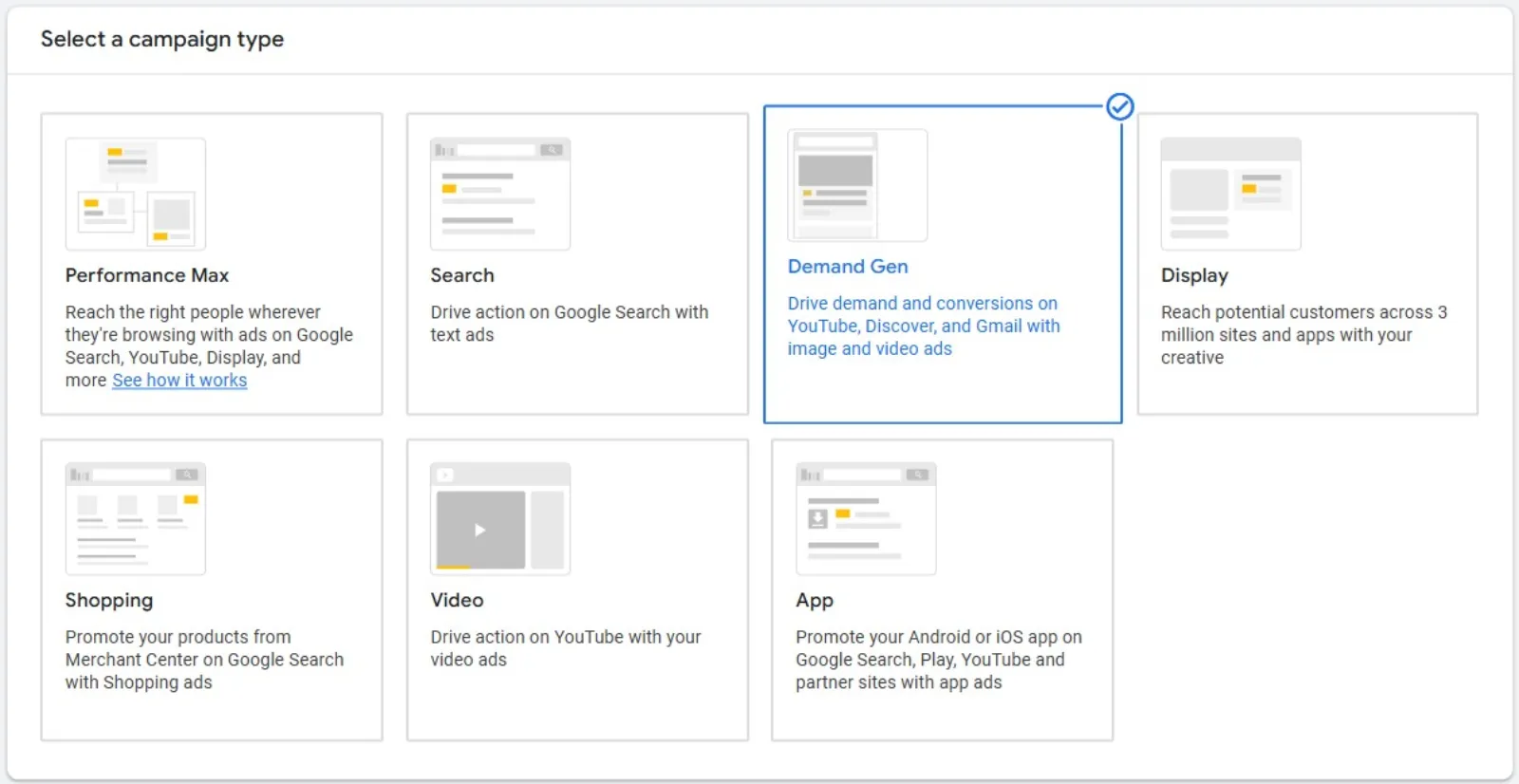
Unlike PMax, which focuses on a blend of platforms, Demand Gen is more about grabbing attention and sparking interest using creative, engaging videos and images.
When Demand Gen Works Best
- You have video content ready to go: If you have already invested in video production, this is where that effort pays off.
- You want to build awareness: Great for brands looking to grow their presence before pushing for conversions.
- You’re audience-savvy: Demand Gen relies on seed audiences. If you know your customers well and have existing data, Google can find lookalike users.
- You’re running full-funnel campaigns: It fits nicely into strategies aimed at brand awareness, consideration, and eventually, conversion.
What to Watch Out For
- You’ll need to provide audience signals: It’s less effective if you don’t already know who your target market is.
- Lower intent: Since you’re showing ads to people not actively searching for your product, conversion rates may not be as high.
- Video-heavy: If you don’t have video assets or aren’t planning to create any, this campaign may not be for you.
- Still a secondary option: Like Performance Max, it’s not where you start, it’s where you scale or expand.
How Are They Similar?
Despite their differences, Performance Max and Demand Gen share some key traits:
- Both rely on AI: You’re handing over a lot of control to Google’s algorithms.
- They need data to work well: The better your conversion history and audience insights, the better these campaigns will perform.
- They’re not beginner campaigns: Use them to complement your existing strategy, not to build one from scratch.
- They’re great for acquiring new customers: If your foundation is in place, both can help broaden your reach.
So, Which Campaign Should You Choose?
Here’s a simple way to figure it out:
| Your Goal | Best Option |
| You want conversions from multiple Google channels using past data | Performance Max |
| You want to promote your brand visually and build awareness | Demand Gen |
| You have strong video assets and know your audience well | Demand Gen |
| You have a solid conversion rate and want to scale efficiently | Performance Max |
Still can’t decide? Here’s a rule of thumb:
- Choose Performance Max if you’re looking to drive more conversions and have strong performance data to back it up.
- Choose Demand Gen if your focus is more on engagement, storytelling, and brand building, and you’re equipped with great visual content.
Real Talk: Don’t Skip the Foundation
Both campaigns are exciting. They offer scale, automation, and access to new audiences. But they’re not magic buttons.
You need a few things in place first:
- A website that converts.
Proven Search or Shopping campaigns. - At least some audience data and daily conversions.
Without these, Performance Max and Demand Gen can burn through your budget with little to show for it. It’s kind of like asking someone to drive a race car before they’ve passed their driving test.
Final Thoughts
Performance Max and Demand Gen are powerful tools, but only when used at the right time and for the right reasons. Think of them as support players, not lead actors. They shine when they’re part of a broader strategy that includes core campaigns like Search.
So, take stock of where you are. What kind of data do you have? Are you ready to scale or still building your base? Once you answer those questions, picking between PMax and Demand Gen becomes a lot easier.If you’re unsure which path to take or want a second opinion on your current setup, don’t hesitate to reach out. Whether you’re scaling, testing, or just learning, we can help you get the most out of your Google Ads strategy.

Written by Uzair Kharawala
Partner at SF Digital Studios, a Google Premier Partner agency. Uzair has been helping businesses grow with Google Ads since 2002 and teaches it every week on YouTube.
Get our best Google Ads tips by email
New articles and videos, straight to your inbox. Unsubscribe any time.