
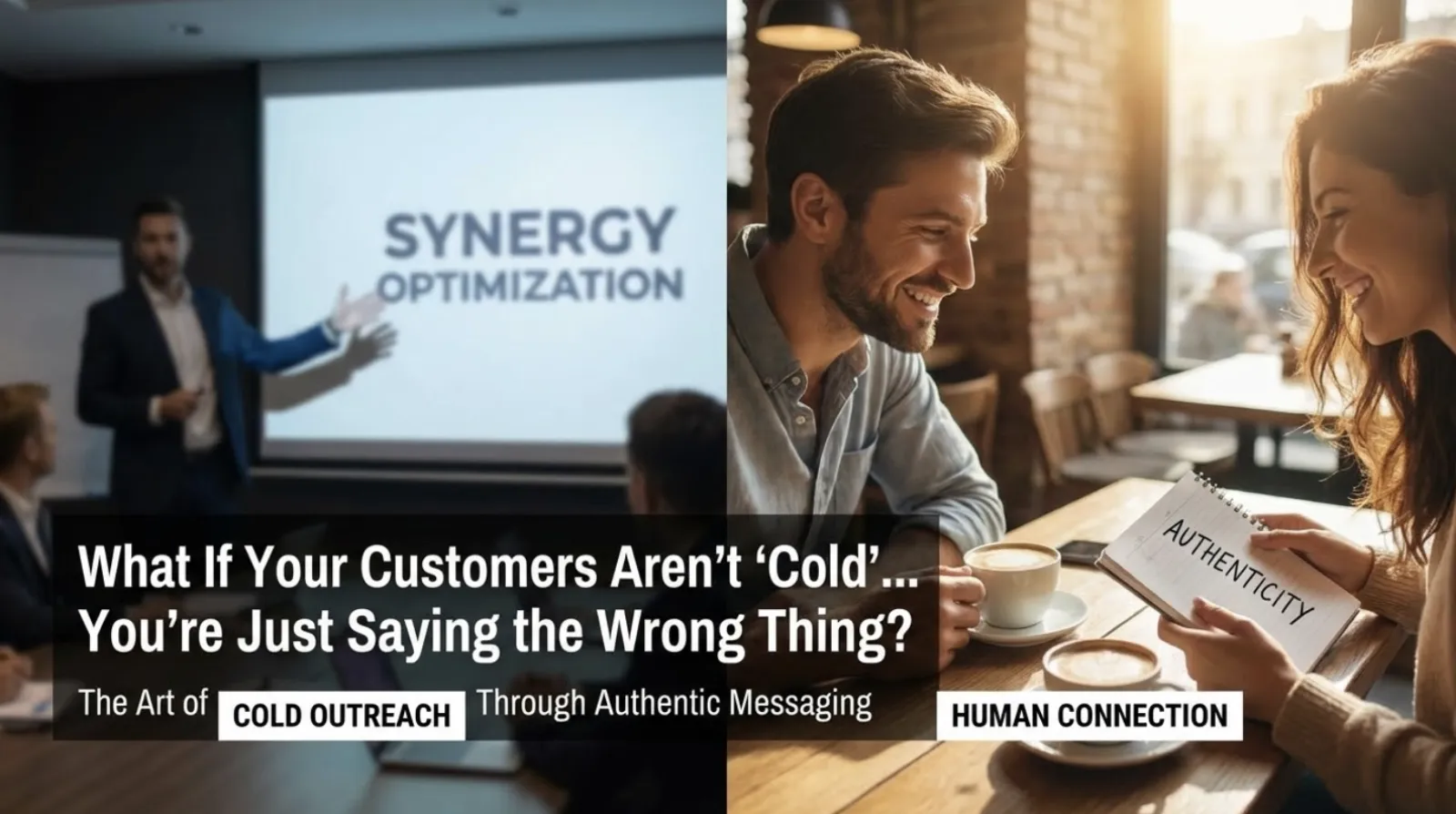
Imagine pouring your heart into a sales pitch, crafting the perfect email, or spending hours on a marketing campaign, only to be met with silence. Does it feel like your potential customers are simply “cold” or uninterested? What if their indifference isn’t a reflection of their buying intent, but rather a symptom of miscommunication? What if the problem isn’t them, but the way you’re speaking to them? This isn’t about blaming your efforts, but empowering them with a new perspective on customer engagement and effective communication.
Understanding the Myth of the ‘Cold’ Customer
The term “cold customer” is often a misnomer, a convenient label for when outreach isn’t yielding results. It implies a lack of interest, but often, this perceived coldness isn’t deep-seated rejection; it’s a superficial reaction to messaging that doesn’t resonate. For small business owners and non-technical readers, understanding this distinction transforms their entire approach to sales and marketing communication.

Get Found, Get Chosen, Get Your Time Back
A free one-day marketing seminar in Milton Keynes · 10 November 2026
The Perception Problem: Why We Label Customers as ‘Cold’
We often interpret a lack of response as a “cold” prospect, which can lead to frustration. However, a silent inbox or ignored call often speaks less about inherent disinterest and more about a misalignment of your message with immediate needs. It’s a common pitfall in customer engagement to assume rejection when it’s merely irrelevance.
Get your free Marketing Action PlanNot sure where to start? Answer a few questions and get your plan in about a minute. No email needed.
Get my plan →The issue isn’t that customers are actively trying to avoid you; it’s that your communication might not be cutting through the noise. They are bombarded daily, and if yours doesn’t immediately signal value or relevance, it will be overlooked. This isn’t personal; it’s practical, and requires a shift from what you want to say, to what they need to hear for better customer perception.
The Real Issue: A Mismatch in Value Communication
Customers are rarely inherently cold; they are, however, acutely indifferent to irrelevant messages. If your sales messaging or marketing communication doesn’t directly address a palpable pain point, solve a pressing problem, or fulfill a clear aspiration, it’s effectively noise. Many businesses err by focusing heavily on product features rather than the profound benefits and transformations those features deliver.
A customer doesn’t wake up wanting CRM software; they wake up wanting to streamline customer interactions, save hours weekly, and ultimately grow their business. Your communication needs to bridge that gap. When your message clearly articulates how your offering alleviates specific struggles, that perceived “coldness” melts away. This is the essence of effective sales strategy: speak to their world, not just your product’s.
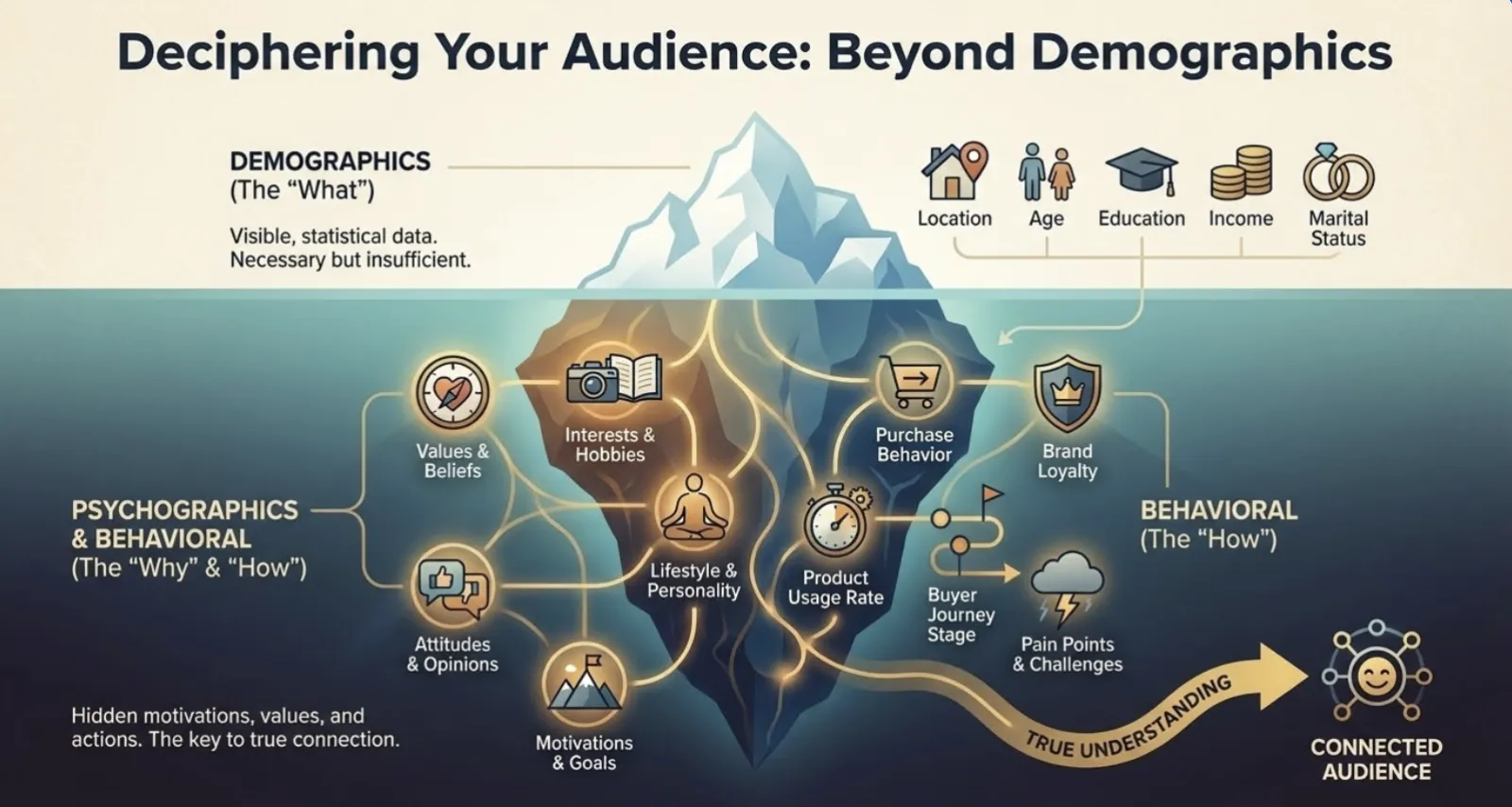
Deciphering Your Audience: Beyond Demographics
To move beyond generic outreach and truly connect, you must delve deeper than surface-level demographics. While knowing age, location, or industry is a start, it’s merely the foundation. True buyer psychology and effective customer perception hinge on understanding the nuances of their daily lives, their professional pressures, and their personal aspirations. This holistic view empowers you to craft messages that feel personal, relevant, and utterly compelling.
Empathy as Your Secret Weapon: Stepping into Their Shoes
Imagine being a small business owner, overwhelmed by tasks, struggling to find new customers, and worried about cash flow. Now, read your current outreach from that perspective. Does it resonate? Empathy is a powerful strategic tool in marketing communication, helping you actively understand your customer’s daily grind, biggest fears, and most cherished hopes.
Consider Sarah, a local bakery owner, exhausted. A message about a “state-of-the-art SaaS” system won’t resonate. She cares about getting home earlier, reducing food waste, and preventing stockouts. Instead, “Bakeries like yours lose £X,000 annually. Our simple system tracks ingredients, saving time and money.” That’s the power of empathy-driven messaging.
Uncovering Hidden Needs and Unspoken Desires
Customers aren’t always aware of their deepest needs or the underlying causes of their frustrations. Your job, as an effective communicator, is to help them articulate these. This requires moving beyond surface-level questions to active listening and keen observation of recurrent complaints, failed solutions, and aspirations—these are goldmines for your sales messaging.
To uncover these, engage in qualitative research: talk to existing customers, conduct surveys, monitor social media. Look for patterns in their language, challenges, and dreams. A desire for “cheaper accounting software” might truly be for “peace of mind that taxes are filed correctly, without weekend paperwork.” Your message should deliver that peace of mind, creating highly targeted value propositions.
Crafting Messages That Resonate: The Art of Relevant Communication
Once you understand your audience, translate that understanding into communication that truly resonates. This isn’t about being clever; it’s about being clear, relevant, and customer-centric. Every word should speak directly to their needs and demonstrate tangible value. Your marketing communication moves from merely informative to truly persuasive, fostering robust customer engagement.
From Features to Benefits: Speaking Their Language
This is a fundamental shift: customers don’t buy products; they buy better versions of themselves, solutions to their problems, and pathways to their aspirations. Articulate that transformation explicitly. Instead of “Our platform has advanced AI capabilities,” try “Our platform uses AI to automate X hours of manual work per week, freeing your team for high-impact tasks and saving Y budget.”
Consider: “This drill has a 20-volt lithium-ion battery” (feature) versus “This drill empowers you to effortlessly hang shelves throughout your home on a single charge” (benefit). The latter speaks to the outcome. For a small business owner, highlight how accounting software will “reduce tax season stress and give you clear insights into your profitability.” Always ask: “So what?” The answer is the benefit.
Personalization at Scale: More Than Just a Name
Simply inserting a prospect’s first name isn’t true personalization. Genuine personalization addresses their specific context, industry challenges, or stated interests, showing you’ve done your homework. This tailored communication transforms a generic message into an engaging conversation, proving you’re actively trying to connect, not just broadcasting.
Leverage information: reference a downloaded white paper, acknowledge a company initiative, or address a role-specific challenge. Instead of a general marketing software pitch, try: “Hi [Name], I noticed your company recently expanded into X market, bringing Y challenges. Our platform helps teams overcome [problem] by [specific benefit].” This elevates your cold outreach to a targeted discussion.

The Power of Problem-Solution Framing
Humans are inherently problem-solvers. Framing your message around a recognizable problem, then positioning your offering as the solution, taps into a powerful psychological trigger. This framework, “Problem -> Agitate -> Solution” (PAS), is highly effective in sales strategy, acknowledging their reality and offering a path to a better future.
Here’s how it works:
- Problem: “Are you constantly drowning in manual data entry?”
- Agitate: “This eats into valuable time, introduces errors, and causes overwhelm.”
- Solution: “Our automated tool eliminates manual data entry, boosts accuracy, freeing your team for growth.”
This approach, starting with customer pain points, establishes immediate relevance and understanding.
 LIVE
Live every Tuesday at 2pm UK. Bring your marketing questions.
Get your Google, local SEO and AI questions answered live.
Actionable Strategies to Reframe Your Outreach
Theoretical understanding is vital, but without concrete actions, it remains just that—theory. Here are actionable steps and frameworks to redefine your sales strategy, improve your marketing communication, and foster genuine customer engagement. These strategies are practical for small business owners seeking immediate impact on outreach effectiveness.
Revisit Your Buyer Personas with a Fresh Perspective
Many businesses have buyer personas, but are they truly interrogated? It’s not enough to have a document; you need to breathe life into it. Audit your personas: are they accurate, reflecting the current market landscape and evolving challenges? Delve into psychographics: their fears, aspirations, daily routines, influences, and information sources.
Go beyond assumptions. Interview ideal customers. Ask open-ended questions about their frustrations, successes, value definitions, and purchasing motivations. These conversations reveal nuances no desk research can provide, refining personas and making your sales messaging more resonant. Personas are living documents that should evolve.
Test, Analyze, and Optimize Your Messaging
Even the most perfectly crafted message can always be improved. Continuous testing and analysis ensure your marketing communication is performing optimally. This isn’t just for large corporations; it’s a vital practice for any small business owner maximizing outreach. A/B testing allows comparing two versions of a message, removing guesswork and providing data-driven insights.
Start simple: A/B test different email subject lines for open rates, then different opening paragraphs or calls to action. Track metrics like open rates, click-through rates, reply rates, and conversion rates. Even small tweaks yield significant improvements in customer engagement. Test one variable at a time to isolate what works, fostering continuous improvement in effective communication.
Focus on Value-First Engagement, Not Sales-First Push
In a world saturated with sales pitches, stand out by adopting a value-first engagement approach. Your initial outreach should focus on providing genuine help, insights, or a valuable resource without any immediate sales expectation. This builds rapport and establishes you as a helpful expert, not just another vendor.
A B2B software company improved cold outreach by offering free industry reports or checklists first. Only after providing value and seeing engagement did they follow up with a soft offer for a discovery call. This dramatically increased open rates and qualified lead generation, proving a generous approach is far more effective than an aggressive sales push, building trust and positioning them as a partner.

Building Bridges, Not Just Closing Deals
Effective business communication should extend beyond immediate transactions. The most successful businesses build lasting relationships, seeing each interaction as an opportunity to strengthen connections. This fosters loyalty, encourages repeat business, and turns customers into advocates. This strategic focus on long-term customer engagement is a hallmark of impactful sales strategy and sustainable business growth strategies for any small business owner.
Establishing Trust and Credibility Before the Ask
In any relationship, trust is paramount. Customers are far more likely to buy from someone they trust and perceive as credible. This isn’t demanded; it’s earned through consistent, valuable interactions. Before a significant “ask,” demonstrate expertise, reliability, and genuine desire to help by sharing useful content, offering free resources, and providing unbiased insights.
Think of building friendship versus asking a huge favor immediately. Similarly, in business, effective communication means providing value upfront: a free webinar, insightful blog posts, testimonials, or a no-obligation consultation. These actions establish authority and benevolence, paving the way for a receptive audience and a stronger value proposition.
The Long Game: Nurturing Relationships for Lasting Impact
Not every interaction needs an immediate sale; expecting it can be detrimental to your long-term success. Fruitful relationships are cultivated over time through consistent, relevant communication that keeps you top-of-mind without being intrusive. This is the essence of customer nurturing in your sales strategy, acknowledging varied buying cycles and ensuring you’re the first choice when they’re ready to act.
Implement a nurturing sequence providing ongoing value: monthly newsletters, success stories, event invitations, or helpful tips. The goal is to maintain a positive, valuable presence without constantly pushing a product. This builds customer loyalty and reinforces your brand’s commitment. When you play the long game, perceived “cold” customers often warm up, becoming loyal advocates, boosting sales and fostering a resilient business through effective communication.
Frequently Asked Questions About Customer Engagement and Messaging
Q1: How can I tell if my customers are genuinely “cold” or if my messaging is off?
A: Low reply rates, few meetings, or minimal content interaction signal messaging issues, not necessarily “cold” customers. Analyze engagement metrics like click-throughs and lead quality. Consistently low scores suggest refining your marketing communication and improving customer perception for better engagement, as relevance is key.
Q2: What’s the quickest way to improve my sales outreach messages?
A: Focus immediately on the customer’s biggest problem. Rephrase your opening to address it directly and empathetically, e.g., “Are you struggling with [pain point]?”. Then, concisely offer how your solution alleviates that problem, leading with the benefit. This problem-solution framing immediately grabs attention by speaking to their world, dramatically increasing relevance and engagement.
Q3: Is personalization really necessary for every customer interaction?
A: While deep one-to-one personalization isn’t always scalable, showing you understand their segment’s challenges and goals is crucial. Reference their industry, common role challenges, or recent news. This contextual relevance proves you’re not sending a mass email, but a thoughtful message, fostering better customer perception and effective communication.
Q4: How do I find out what my customers truly care about?
A: Go directly to the source. Conduct customer interviews, listen to sales/support calls, read reviews, analyze support tickets, and engage in online communities. Look for recurring themes in frustrations, aspirations, and preferred language. These insights are goldmines for crafting authentic, resonant value propositions and improving customer engagement strategies.
Q5: What if I have a great product, but still struggle with getting customers interested?
A: A great product needs great communication. If interest is low, you’re likely not effectively articulating its value and transformation from the customer’s perspective. Shift from “what it is” to “what it does for them,” emphasizing tangible improvements. A superior value proposition, clearly articulated, outperforms unclear messaging.
Final Thoughts: Transforming Indifference into Engagement
The journey from perceiving customers as “cold” to truly connecting with them is one of empathy, relevance, and a steadfast focus on value. Indifference is rarely personal; it’s almost always a signal that your message hasn’t yet found its mark. By stepping into your customers’ shoes, diligently uncovering their true pain points, and then crafting sales messaging and marketing communication that speaks directly to their world, you unlock a powerful new way of doing business.
Remember, customers aren’t waiting to be sold to; they’re waiting for solutions to their problems and pathways to their aspirations. They’re waiting for someone to understand them and to offer a clear, compelling reason to engage. When you shift your perspective from pushing a product to providing genuine value, you don’t just overcome perceived “coldness”—you build lasting relationships, foster unwavering loyalty, and transform your business into a trusted partner. This is the essence of true customer engagement and the foundation of sustainable business growth strategies for any small business owner striving for effective communication.
Call to Action
Ready to revolutionize your customer engagement and ensure your message always lands right? Take a critical look at your current outreach. Are you speaking your customers’ language? Are you leading with value? Apply these strategies, test your new approach, and watch as indifference transforms into genuine interest and deeper connections. Share your experiences and what resonated most with you in the comments below!

Written by Uzair Kharawala
Partner at SF Digital Studios, a Google Premier Partner agency. Uzair has been helping businesses grow with Google Ads since 2002 and teaches it every week on YouTube.
Get our best Google Ads tips by email
New articles and videos, straight to your inbox. Unsubscribe any time.