
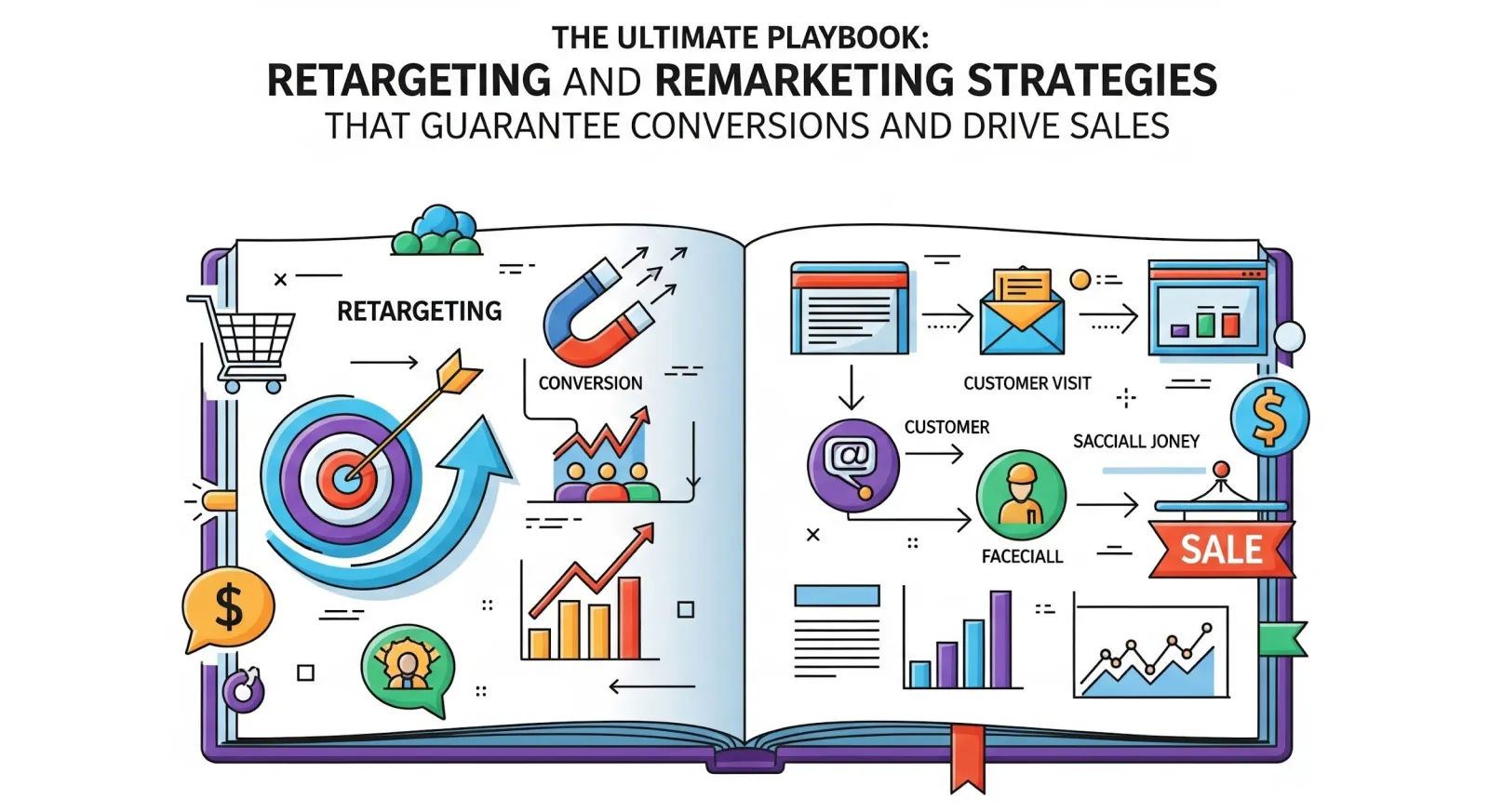
Are you pouring money into advertising, only to see potential customers slip away without making a purchase? A staggering 97% of website visitors leave without converting on their first visit. Imagine having a second chance, a proven method to re-engage those almost-customers. This comprehensive guide equips beginner marketers and small business owners with powerful, actionable strategies. Turn browsers into loyal buyers and significantly boost your bottom line.
Understanding the Power of a Second Chance: What is Retargeting and Remarketing?
Unpacking the Core Concepts: Retargeting vs. Remarketing Explained Simply
Often used interchangeably, retargeting and remarketing both focus on re-engaging users who have previously interacted with your business. While the goal is similar – to bring people back and convert them – they typically employ different channels.
Retargeting primarily refers to paid advertising that targets users based on their online behavior, specifically website or app visits. It places a “cookie” on their browser, allowing you to display specific ads as they browse other sites or social media.
Get your free Marketing Action PlanNot sure where to start? Answer a few questions and get your plan in about a minute. No email needed.
Get my plan →Remarketing, conversely, leverages customer contact information like email addresses. This includes email campaigns, direct mail, or phone calls to individuals who abandoned a cart or signed up for a newsletter. It builds relationships through direct communication.
For small business owners, understanding both is crucial. A combined approach creates a powerful, multi-channel digital marketing strategy. You capture attention with ads and nurture with personalized emails.
Why Bother with Re-Engagement? The Undeniable Benefits of a Thoughtful Strategy
Investing in strategies that bring back hesitant customers offers a multitude of benefits, enhancing your overall online sales.
Increased Conversion Rates: People who have already shown interest are significantly more likely to convert than cold leads. Retargeting strategies serve as gentle nudges, reminding them of your value proposition and overcoming initial hesitations.
Enhanced Brand Recall and Awareness: Consistent exposure to your brand keeps your business top-of-mind. This continuous visibility builds familiarity and trust, making your brand the go-to choice when customers are ready to buy.
Higher Return on Investment (ROI): Retargeting campaigns focus on a highly qualified audience. This precision leads to more efficient ad spend, resulting in lower customer acquisition costs and a stronger return on your marketing investment.
Deeper Customer Insights: Analyzing retargeted audiences provides invaluable insights into customer preferences. This data empowers you to refine messaging and product offerings for better future results, improving conversion optimization.
Reduced Cart Abandonment: A common e-commerce challenge is abandoned shopping carts. Remarketing emails and retargeting ads for cart abandoners can recover a significant percentage of lost sales, often by offering incentives.

Core Strategies That Just Work: Practical Approaches for Small Businesses
Website Visitor Retargeting: Bringing Them Back to Your Digital Doorstep
This is arguably the most common and effective form of retargeting. When someone visits your website but doesn’t complete a desired action, you can display targeted ads as they browse other sites.
How it works: A small piece of code (pixel) on your website drops an anonymous cookie on a user’s browser. You then create audience segments based on pages visited, showing them relevant ads across platforms like Google Display Network and social media.
Actionable Tip: Segment your website visitors. Show ads for specific products to those who visited relevant product pages, perhaps with a small discount. Blog readers might see an ad for a related lead magnet.
Email Remarketing Campaigns: Nurturing Leads with Personalized Messages
Email remarketing leverages your existing email list to re-engage prospects. This allows for more in-depth communication and strengthens your lead generation efforts.
How it works: Use email addresses from newsletter sign-ups or abandoned carts. These lists are used to send targeted email sequences, such as a three-part series for abandoned carts, reminding them of items or offering incentives.
Case Study Example: Sarah, owner of an artisanal coffee shop, recovered 15% of abandoned carts with an automated email sequence. A friendly reminder after 24 hours, followed by a 10% discount after 48 hours, significantly boosted her revenue.
Expert Insight: Personalization is key. Address the recipient by name, reference their specific interaction, and tailor content to their journey. Generic emails often fall flat, impacting your remarketing strategies.
Social Media Retargeting: Engaging Where Your Audience Spends Time
Platforms like Facebook, Instagram, and LinkedIn offer robust social media retargeting capabilities, allowing you to connect with past visitors in their social feeds.
How it works: A pixel (e.g., Facebook Pixel) tracks website visitors. You then create custom audiences based on website activity, video views, or engagement with your social media posts. These audiences are targeted with specific ads.
Comparison Insight: Social media retargeting excels at driving impulse purchases, promoting new products, or building community. Its visual nature allows for compelling creative that grabs attention in a busy feed.
Relatable Example: A local bakery retargets Instagram users who watched 75% of their video ad. The follow-up ad offers a “buy one, get one free” coupon for croissants, driving foot traffic to the store.

The Recipe for Success: Essential Ingredients for Effective Campaigns
Audience Segmentation: The Art of Speaking to the Right Person
Effective retargeting and remarketing strategies depend heavily on understanding your audience and their interests.
Why it matters: Showing an ad for an advanced software feature to someone who only reads a basic blog post is irrelevant. Segment your audience based on their engagement and interests for optimal results.
Key Segments to Consider:
- All Website Visitors: Broad targeting for initial brand recall.
- Product Page Viewers: Highly interested in specific items; show ads for those products.
- Cart Abandoners: People who almost bought; offer incentives or reminders.
- Past Purchasers: Cross-sell or upsell related products, or solicit reviews.
Expert Insight: The more granular your segmentation, the more relevant your messaging, leading to higher engagement and conversion rates. Use lookalike audiences for prospecting once core segments perform well.
Compelling Creative & Messaging: Standing Out in a Noisy Digital World
Your ads and emails are your chance to grab attention. They need to be clear, concise, and persuasive for successful digital marketing.
Headlines That Hook: Focus on the benefit or outcome for the customer. Try “Solve [Pain Point] with Our Product” instead of “Our Product Features.”
Visuals That Pop: Use high-quality images or videos relevant to your offer. Ensure visuals are clean, have good contrast, and are optimized for different ad placements.
Clear Call to Action (CTA): Tell people exactly what to do. “Shop Now,” “Learn More,” “Get Your Discount.” Make your CTA button prominent and unambiguous.
Storytelling Element: Even in short ad copy, evoke emotion or paint a picture of how your product solves a problem. “Don’t miss out on [product benefit]!” can be effective for abandoned carts.
Landing Page Optimization: Sealing the Deal Once They Click
An amazing ad means nothing if your landing page doesn’t deliver. The landing page is where the conversion happens, and it must be optimized for a seamless user experience, crucial for conversion optimization.
Message Match: Your landing page headline and content must directly align with the ad. If the ad promised a “Free Ebook,” the landing page should immediately confirm that and offer the download.
Clear Value Proposition: What problem does your product or service solve? Why choose you? This needs to be immediately apparent above the fold.
Single, Prominent CTA: Don’t confuse visitors with too many options. Guide them towards one primary action. Make the CTA button visually stand out.
Mobile Responsiveness: A huge percentage of traffic comes from mobile devices. Your landing page must look and function perfectly on smartphones and tablets.

Frequency Capping: The Fine Line Between Reminder and Annoyance
Seeing your ad too many times can lead to “ad fatigue” and negative brand perception. Conversely, not seeing it enough means missed opportunities in your retargeting campaigns.
What it is: Frequency capping limits how many times an individual sees your ad within a period (e.g., 3 impressions per day). Most ad platforms offer this setting.
Actionable Tip: Start with a moderate frequency (e.g., 5-7 impressions per week) and monitor performance. Reduce frequency if click-through rates decline. Different audiences tolerate different frequencies.
A/B Testing: Constantly Improving Your Conversion Machine
The digital marketing landscape is always changing. Continuous testing is essential for long-term success and improving your remarketing strategies.
What to Test:
- Ad Headlines: Try different value propositions or urgency drivers.
- Ad Images/Videos: Experiment with different visuals or focal points.
- Call to Actions: “Shop Now” vs. “Get My Discount.”
- Email Subject Lines: Personalization vs. urgency vs. curiosity.
Expert Insight: Test one element at a time to accurately attribute performance changes. Give tests enough time and traffic to gather statistically significant data before declaring a winner.
A Strategic Roadmap: Your 7-Day Retargeting & Remarketing Rollout Plan
Ready to put these retargeting strategies into action? Here’s a simple, actionable 7-day plan for small business owners to launch effective campaigns.
Day 1: Foundation and Tracking Setup
Goal: Ensure flawless tracking and define primary conversion goals for your digital marketing. Action: Install Facebook Pixel, Google Ads remarketing tag, and Google Analytics (GA4) on your website. Verify all events are firing correctly (e.g., page views, add to cart, purchase). Define key conversion events and set a modest initial budget.
Day 2: Audience Building and Segmentation
Goal: Create core audiences based on website behavior for your remarketing campaigns.
Action: In Facebook Ads Manager and Google Ads, create custom audiences for: All website visitors (last 30-60 days), specific product/service page viewers, cart abandoners, and lead form initiators. Upload any existing email lists for remarketing.
Day 3: Crafting Compelling Creative
Goal: Design ads and email templates that resonate with your segments.
Action: For each core audience, create 2-3 variations of ad copy and visuals. Focus on a clear headline, benefit-driven body, and strong CTA. Draft a 2-3 part email sequence for cart abandoners. Ensure creative aligns with your brand.
Day 4: Launching Your First Campaigns
Goal: Get your initial retargeting campaigns live, focusing on warm audiences.
Action: Launch campaigns targeting cart abandoners (ads offering reminders/incentives) and product page viewers (ads showcasing viewed items with offers). Activate your abandoned cart email sequence. Set a moderate frequency cap (e.g., 5-7 impressions/week).
Day 5: Landing Page Review and Optimization
Goal: Ensure your landing pages are converting effectively for improved online sales.
Action: Thoroughly review landing pages linked from your ads. Check for message match, clear CTA, mobile responsiveness, and fast load times. Make necessary adjustments to improve user experience and clarity.
Day 6: Monitoring and Initial Analysis
Goal: Check early performance and identify any immediate issues in your conversion optimization efforts.
Action: Log into ad platforms and Google Analytics. Examine impressions, clicks, CTR, CPC, and conversions. Are ads generating clicks leading to conversions? Check display ad placements and exclude low-quality sites.
Day 7: Plan Your Next Test and Iterate
Goal: Based on initial data, decide on your next optimization step.
Action: If an ad creative performs well, pause underperformers. If an audience segment converts exceptionally, explore “lookalike” audiences. If conversion rates are low, refine landing pages or ad offers. Document all changes and track impact.
Overcoming Obstacles: Common Pitfalls and Smart Fixes
Even with the best retargeting strategies, challenges can arise. Knowing how to troubleshoot common issues will save time and budget.
“My Ads Are Getting Clicks, But No Conversions!”
The Problem: High ad engagement but low conversion rates on your landing page.
The Fix: This usually points to a landing page issue. Check for message mismatch, an unclear value proposition, slow load times, too many distractions, or a complex form. Your landing page must seamlessly resolve the ad’s promise.
“My Budget is Burning Too Fast Without Results!”
The Problem: Ad spend is high, but conversions are lagging, leading to a poor ROI.
The Fix: Review audience segmentation. Are you targeting too broadly? Refine audiences to warmer leads. Check frequency capping and reduce it if impressions are too high. Evaluate your bidding strategy; consider automated bidding optimized for conversions.
“My Audiences Are Too Small!”
The Problem: Not enough website traffic to build robust retargeting audiences.
The Fix: Focus on driving more initial traffic through organic SEO, content marketing, or broader top-of-funnel ad campaigns. Expand your retargeting window (e.g., 30 to 90 days) or create custom audiences from email lists.
“My Ads Are Causing Ad Fatigue and Annoyance!”
The Problem: Your target audience is seeing your ads too frequently or getting tired of the same message.
The Fix: Implement stricter frequency caps. Rotate ad creatives regularly for fresh content. Segment audiences more precisely and tailor different messages to each, for example, educational content for blog readers and product ads for cart abandoners.
“I’m Not Sure What’s Working and What Isn’t!”
The Problem: Lack of clear data and insights into remarketing campaign performance.
The Fix: Ensure all tracking pixels and analytics tools are correctly installed. Set up clear, measurable KPIs beyond just clicks (e.g., Cost Per Lead, Return on Ad Spend). Maintain a change log to track the impact of every significant campaign adjustment.
Frequently Asked Questions About Retargeting and Remarketing
What is the ideal duration for a retargeting campaign?
The ideal duration varies based on your sales cycle. For impulse buys, 7-14 days might be effective; for higher-consideration products, 30-90 days. Test different durations to observe performance.
How many ads should I show a person per day?
A good starting point is 3-5 impressions per user per day. Monitor your click-through rates and feedback; reduce frequency if they decline, or experiment with higher caps if conversions are strong.
Can I retarget people who interacted with my Instagram or Facebook page but didn’t visit my website?
Yes, absolutely! Platforms like Facebook and Instagram allow you to create custom audiences based on engagement with your posts, videos, or business profile, a powerful way to engage a warm social audience.
Is retargeting only for e-commerce businesses?
Not at all! While popular in e-commerce, retargeting is highly effective for B2B lead generation, service-based businesses, local businesses, and content creators to nurture leads and encourage inquiries.
What’s the most common mistake small businesses make with retargeting?
The most common mistake is not segmenting audiences or using generic ads. Tailoring your message to different segments dramatically increases relevance and conversion potential, avoiding wasted opportunities.
Final Thoughts: Transform Browsers into Buyers with Smart Strategies
Retargeting strategies and remarketing campaigns are essential for any small business marketing. They maximize ad spend and convert more customers. By giving yourself a second, third, or even fourth chance to engage with interested prospects, you unlock significant growth potential and boost online sales.
Remember, success lies in understanding your audience, delivering relevant messages, and constantly optimizing your campaigns. Start with clean tracking, clear audience segmentation, compelling creative, and optimized landing pages. Implement the 7-day rollout plan, make one smart change at a time, and diligently monitor your results.
With these powerful, conversion-focused strategies, you’ll strategically bring leads back to your brand. Turn fleeting interest into lasting customer relationships and tangible sales. Embrace the power of the second chance, and watch your business thrive with enhanced conversion optimization.

Written by Uzair Kharawala
Partner at SF Digital Studios, a Google Premier Partner agency. Uzair has been helping businesses grow with Google Ads since 2002 and teaches it every week on YouTube.
Get our best Google Ads tips by email
New articles and videos, straight to your inbox. Unsubscribe any time.