
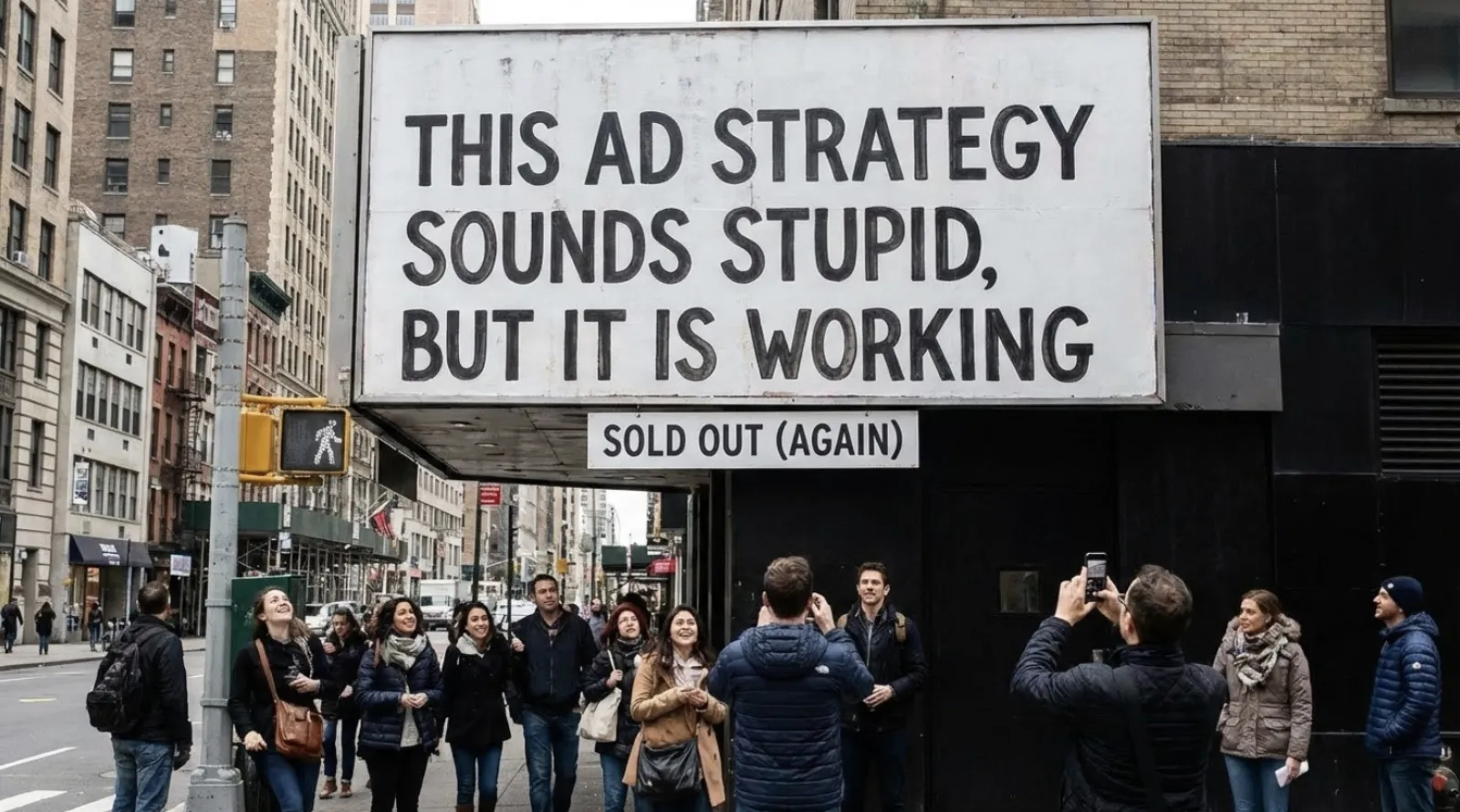
Have you ever questioned if everything you thought you knew about online advertising was wrong? What if the most effective ad campaigns today aren’t about flashy calls-to-action or immediate clicks? Imagine paying to show deliberately “terrible” videos to complete strangers, videos they can’t even click on, and yet, it generates an abundance of highly qualified leads. This isn’t just a hypothetical scenario; it’s a revolutionary ad strategy, inspired by the legendary Frank Kern, that sounds utterly ridiculous on paper but is delivering extraordinary results right now.
The Counterintuitive Core: Why “Terrible” Unclickable Ads Win
At the heart of this unconventional ad strategy lies a radical departure from the norm: paying to display deliberately low-production, even “terrible,” videos. These aren’t polished, high-budget commercials designed to dazzle. Instead, they are raw, authentic pieces of content focused on specific topics like AI copywriting and AI marketing. The brilliance isn’t in their cinematic quality, but in their purpose: to act as the ultimate audience filter.

Get Found, Get Chosen, Get Your Time Back
A free one-day marketing seminar in Milton Keynes · 10 November 2026
Traditional advertising often pushes for immediate clicks and conversions, leading to premature engagement from an unqualified audience. This strategy flips that on its head. By presenting content that isn’t immediately “clickable,” we force the audience to make a conscious decision to watch and consume the information. This act of sustained attention becomes a powerful indicator of genuine interest, a far more reliable metric than a casual click. The goal here is not broad reach for vanity metrics, but precise engagement for future conversions.
Get your free Marketing Action PlanNot sure where to start? Answer a few questions and get your plan in about a minute. No email needed.
Get my plan →The core insight is simple yet profound: if someone willingly watches a two-and-a-half-minute video on a niche subject like AI marketing, even if it looks unpolished, they are demonstrating a strong, inherent interest. This initial, passive consumption of value is the first step in a carefully orchestrated customer journey, building a foundation of trust and pre-qualification long before any sales pitch enters the picture. It’s a testament to the power of a value-first approach, where the content itself does the heavy lifting of lead qualification.
Phase 1: Attracting Your Ideal Audience with Deliberately Imperfect Videos
The journey begins by targeting complete strangers with these intentionally unrefined videos. A slick, professional ad might grab attention, but it doesn’t necessarily qualify interest. A slightly imperfect, yet highly informative video about a specific topic like “advanced prompts for AI copywriting” or “leveraging AI for marketing automation” does exactly that. The imperfections make it feel more authentic, less like an advertisement, and more like a genuine share of knowledge.
Consider a small business owner curious about AI marketing but overwhelmed by technical jargon. A short, unclickable video that breaks down a complex concept into simple terms, perhaps showing a quick, unfiltered demo, resonates far more than a glossy ad promising instant riches. This approach effectively bypasses initial skepticism associated with digital advertising. It’s about being real, helpful, and letting the content speak for itself, acting as a magnet for genuinely curious individuals.
The key here is topic specificity. If your video is broadly about “marketing tips,” it might attract anyone. But if it’s explicitly about “how to use ChatGPT for content creation” or “AI tools to automate social media,” you’re segmenting your audience from the outset. Those who watch demonstrate clear intent and a pressing need in that particular area. This initial investment in providing free, valuable content positions you as an authority and a problem-solver, not just another advertiser vying for a click. This strategy excels in lead generation by starting with genuine connection.
The Genius Behind No Clicks: Maximizing Value Consumption
This is where the “stupid” part truly reveals its genius: the ads are designed to be unclickable. In a world obsessed with click-through rates (CTRs), this feels utterly counterintuitive. However, the logic is powerful. If viewers could click away immediately, many would—out of curiosity, or get distracted, never finishing your valuable content. This often leads to a “premature click” where the user hasn’t fully absorbed your message or understood your value proposition.
By preventing clicks, you ensure that anyone who starts watching is compelled to stay and receive the full value of the video. They are forced to engage with the information, to truly listen, and to absorb the insights being shared. This uninterrupted consumption is crucial for building rapport and establishing authority. Think of it as a mini-webinar or a valuable lesson that requires full attention. This approach maximizes “view-through rate” and “completion rate” which, in this context, are far more meaningful metrics than a simple click.This principle of maximizing value consumption before asking for a commitment is a cornerstone of effective content marketing. It’s about earning attention and trust, rather than demanding it. By removing the immediate escape route of a click, you’re curating a highly engaged audience who are self-selecting based on their intrinsic motivation to learn. This deep engagement ensures that by the time they are exposed to your next touchpoint, they are already significantly warmed up and receptive to your broader message. This forms a robust foundation for your overall digital advertising efforts.
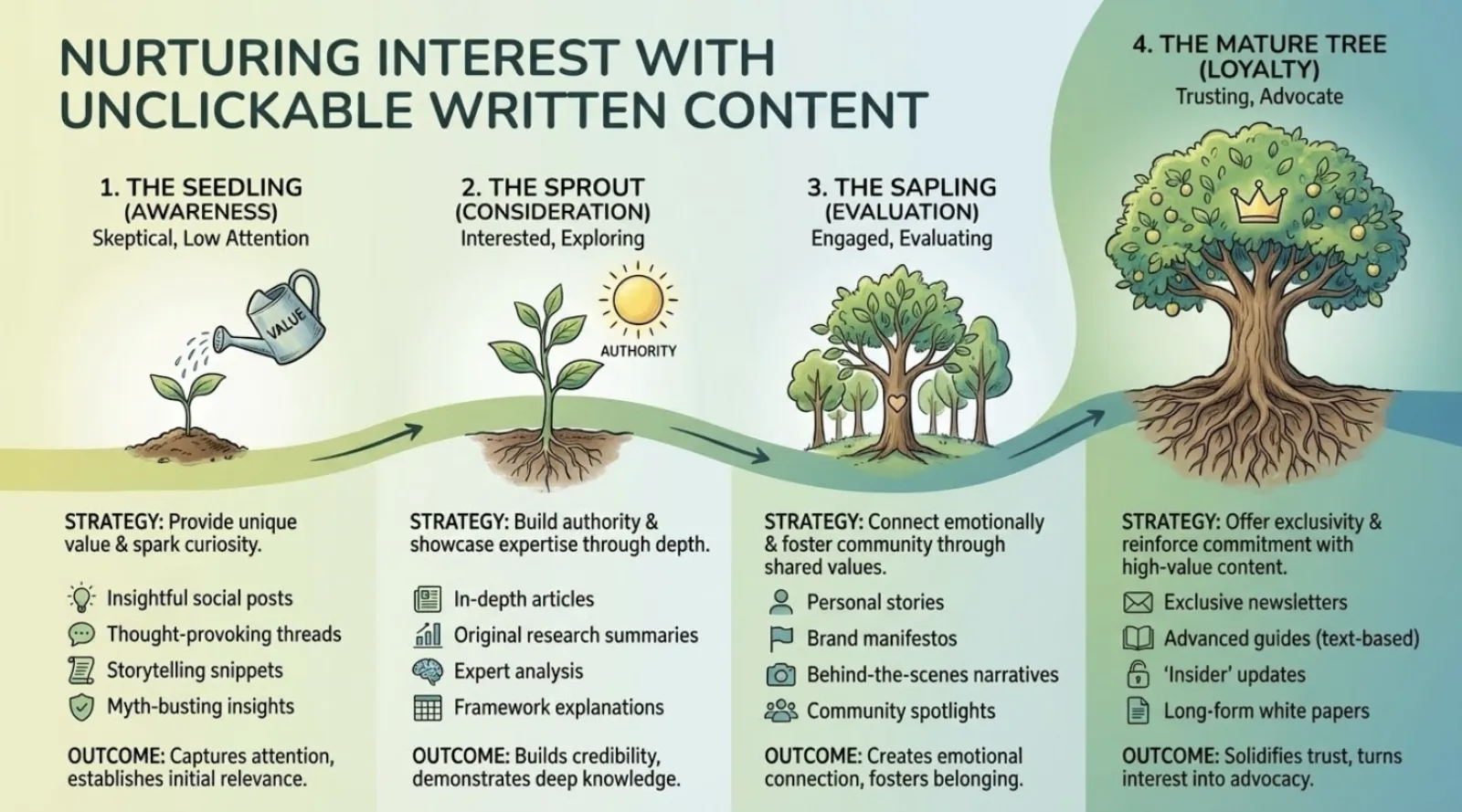
Phase 2: Nurturing Interest with Unclickable Written Content
Once someone has watched one of these qualifying videos, they enter the retargeting phase. But again, it’s not with a hard-sell ad. Instead, the strategy deploys more unclickable, value-driven content, often in written form. These could be short blog posts, valuable tips, or insights related to AI copywriting or AI marketing. The aim is to continue providing free, helpful information without asking for a direct conversion.
Consider a user who watched your video on “AI for social media content.” Your retargeting ad might be a text snippet or a short article about “5 prompts for engaging social media posts using AI.” Again, it’s unclickable. The user reads it directly in their feed. This reinforces your expertise and continues to deliver value, deepening their engagement with your brand without interruption. This gradual nurturing process is critical for building long-term customer relationships and reducing sales friction down the line.
The power of this continuous, unclickable value delivery lies in its subtlety. It doesn’t feel like a sales funnel; it feels like helpful guidance from an expert. This constant presence, offering free insights and solutions, builds immense goodwill and positions you as a trusted resource in the AI marketing space. When the time comes for a direct offer, the audience is already primed, educated, and significantly more likely to convert because they’ve already received so much value upfront. This phased approach to customer journey management is incredibly effective.
The Power of Premature Clicks: What This Strategy Averts
The concept of “premature clicks” is a critical insight this strategy addresses. In conventional advertising, every click is celebrated as a win. However, if a user clicks an ad prematurely—before they fully understand the offer, before they’ve absorbed the value, or simply out of fleeting curiosity—they often land on a website ill-prepared to convert. This leads to high bounce rates, wasted ad spend, and ultimately, frustrated potential customers.

Imagine a small business owner clicking an ad for a complex AI marketing software. If they haven’t been adequately educated or warmed up, they might be overwhelmed by the landing page, the pricing, or the features. They click away, and that potential lead is lost. This strategy, by contrast, ensures that by the time a user is even allowed to click on something (e.g., a call to action on your website after a series of unclickable ads), they are already highly informed and genuinely interested.
This pre-qualification process significantly improves the quality of traffic that eventually reaches your website. It transforms casual browsers into educated prospects. By averting premature clicks, you are essentially filtering out those who aren’t ready to engage meaningfully, allowing your sales and marketing teams to focus their efforts on individuals who have demonstrated a clear, sustained interest through their passive consumption of your valuable content. This is a game-changer for lead qualification and ultimately, conversion optimization.
Implementing This “Stupid” Strategy: Actionable Steps for Your Business
Ready to try this unconventional yet effective ad strategy for your own business? Here are some actionable steps to get started:
1. Identify Your Core Value Proposition: What specific problem do you solve? For example, it’s about AI copywriting and AI marketing. Focus on a niche where you can provide deep, specific value.
2. Create “Deliberately Terrible” Videos: Don’t aim for Hollywood production. Use your phone, keep it authentic, and focus entirely on delivering a single, valuable insight or teaching a specific micro-skill related to your niche. Keep them between 1-3 minutes.
3. Set Up Your Initial Ad Campaign: Target a broad audience interested in your niche. Run these videos as unclickable “engagement” ads (e.g., video views campaigns on platforms that support them without direct click-throughs). The goal is purely to get views from the right people.
4. Segment Your Viewers: Create custom audiences of people who have watched a significant portion (e.g., 75% or 100%) of your initial videos. These are your pre-qualified leads.
5. Develop Unclickable Retargeting Content: For your retargeting audience, create more valuable content, this time perhaps in text or image format. Again, focus on insights, tips, or problem-solving. These too should be unclickable, appearing directly in their feed.
6. Introduce a Low-Friction Offer (Eventually): After several touchpoints of unclickable value, you can introduce a low-friction, high-value offer that is clickable. This could be a free guide, a template, a mini-course, or a free trial. The key is that the audience is now well-primed.This framework allows you to build a powerful brand building engine by consistently delivering value.

Measuring Success Beyond the Click: New Metrics for a New Paradigm
In an ad strategy that de-emphasizes clicks, how do you measure success? You shift your focus from vanity metrics to true engagement and qualification indicators.
Instead of solely tracking click-through rates (CTR), prioritize metrics like:
1. Video View Completion Rate: What percentage of viewers watch your videos to 75% or 100% completion? This is a strong indicator of interest in your AI copywriting or AI marketing content.
2. Audience Growth & Quality: Monitor the size and engagement levels of your retargeting audiences. Are you building a substantial pool of highly qualified individuals who are consistently consuming your content?
3. Engagement with Retargeting Content: Although unclickable, platforms often provide data on impressions, saves, or shares of your written content. Higher engagement here indicates continued interest.
 LIVE
Live every Tuesday at 2pm UK. Bring your marketing questions.
Get your Google, local SEO and AI questions answered live.
4. Cost Per Qualified Lead (CPQL): Once you introduce a clickable offer, track the cost to acquire a lead from this pre-qualified audience. Compare this to traditional methods. You’ll likely find a significantly lower CPQL for truly qualified prospects.
5. Conversion Rates on Later Offers: The ultimate measure is how well your later, clickable offers convert within this nurtured audience. Expect higher conversion rates and higher-quality leads who are ready to buy.
This strategy encourages a more holistic view of your online marketing funnel, recognizing that true value is built over time, not in a single click. By focusing on these deeper engagement metrics, small business owners can gain a clearer picture of their campaign effectiveness.
Case Study: How This Approach Transforms AI Marketing Leads
Let’s consider a practical example for a small software company offering an advanced AI copywriting tool. Traditionally, they might run ads pushing for a demo sign-up. Results would be mixed: many clicks, but high bounce rates and low demo completion rates from unqualified leads.
Applying the “stupid but working” strategy, they shift gears.
First, they create a series of short, unpolished videos: “How AI Writes 10x Faster,” “3 Prompts for Killer Sales Copy with AI,” and “Beyond ChatGPT: Lesser-Known AI Writing Hacks.” These videos are run as unclickable campaigns targeting digital marketers and content creators. They don’t ask for a click, just for attention.
People watch. Those who watch 75% or more are segmented. This audience now consists of individuals with a proven, sustained interest in AI copywriting.
Next, they retarget this highly engaged audience with unclickable written content: “The Future of Content Creation: An AI Perspective,” “Overcoming Writer’s Block with Advanced AI Tools,” or “Case Study: 200% ROI Using AI for Blog Posts.” These appear in feeds, delivering more value.
After weeks of consistent, unclickable value delivery, the company finally introduces a clickable ad: “Get Your Free AI Copywriting Template Pack.” The conversion rates on this offer are significantly higher than their previous direct demo sign-up ads because the audience is pre-sold on the value and expertise of the company. The leads acquired through this method are also far more qualified, converting into paying customers at a much higher rate. This demonstrates the power of a patient, value-driven ad strategy.
Common Misconceptions and Why This Strategy Defies Them
This strategy directly challenges several ingrained beliefs in digital advertising:
1. Misconception: Ads must always have a Call-to-Action (CTA).
Defiance: Our initial ads deliberately lack a clickable CTA. The “action” we seek is consumption of value, not an immediate transaction. This redefines engagement.
2. Misconception: High production value is essential for video ads.
Defiance: “Terrible” or low-production videos often perform better for qualification because they feel more authentic and less like a commercial. The focus is on content, not gloss.
3. Misconception: Every ad dollar must lead to an immediate, trackable click.
Defiance: This strategy focuses on building long-term equity and pre-qualifying leads through passive consumption. The ROI manifests in later, higher-converting offers, not in the initial clicks.
4. Misconception: Shorter is always better for online content.
Defiance: While initial videos are concise, the willingness to watch a 2.5-minute video on a specific topic indicates a deeper level of interest than a fleeting glance at a 15-second clip. Quality of attention trumps brevity.
5. Misconception: You need a large audience to start an ad campaign.
Defiance: This strategy is incredibly efficient at building a highly qualified audience from scratch, even from a broad initial target. It’s about precision and depth, not just scale.
By breaking these conventional rules, this unconventional ads approach proves that sometimes, the most effective path is the one less traveled, especially in the dynamic world of digital advertising.
Frequently Asked Questions About This Unconventional Ad Strategy
Understanding a strategy this different often brings up many questions. Here are some common inquiries about this “stupid but working” ad strategy:
1. What about click-through rates if ads are unclickable?
This strategy intentionally de-emphasizes traditional click-through rates (CTR) for initial ads. Instead, the focus is on metrics like video view completion rates (e.g., 75% or 100% views) and engagement with unclickable content. A high view-through rate indicates strong interest and pre-qualification, which is far more valuable than a low-quality click. Your CTR will only become a focus on later, qualified offers.
2. How do I measure success if there are no clicks?
Success is measured by the growth and quality of your retargeting audiences, the completion rates of your videos, and ultimately, the significantly higher conversion rates and lower cost per qualified lead when you eventually present a clickable offer. You’re building an educated, engaged audience that’s much more likely to convert when prompted, making the later stages of your funnel highly efficient.
3. Isn’t showing “terrible” videos bad for my brand image?
Not at all. “Terrible” here refers to low-production quality, not low-value content. In fact, raw, authentic videos often build more trust and rapport than overly polished ones. The key is that the content itself is highly valuable and solves a problem. This authenticity can significantly enhance your brand’s approachability and expertise, especially in niches like AI marketing where genuine insights are valued.
4. Can this strategy work for any industry or product?
This ad strategy is most effective for businesses selling complex products, services, or high-ticket items that require education and trust-building. B2B, consulting, coaching, software, and high-value e-commerce products are excellent fits. It might be less suitable for impulse-buy, low-cost consumer goods where immediate clicks are the primary driver. The effectiveness hinges on your ability to provide consistent, valuable content that educates your audience.
5. How long does it take to see results with this approach?
This is not an instant gratification strategy. It’s a long-term investment in brand building and lead generation. You’ll start seeing qualified audiences build within a few weeks, and the full impact on conversions and sales will typically manifest over several months. Patience and consistent delivery of value are key to unlocking its full potential, leading to more stable and predictable customer acquisition.
Final Thoughts: Unlocking a New Era of Digital Advertising
The ad strategy inspired by Frank Kern, which might initially sound “stupid,” is a powerful testament to the evolving landscape of digital advertising. By prioritizing deep value delivery and meticulous audience qualification over immediate clicks, it redefines how we approach lead generation and customer journey optimization. This isn’t about ignoring clicks entirely, but rather earning them at the right moment, from the right people, after a foundation of trust and education has been firmly established. For small business owners, especially those navigating the complexities of AI copywriting and AI marketing, this approach offers a sustainable and highly effective path to acquiring genuinely interested customers. Embrace the “stupid,” and watch your conversion rates soar.

Written by Uzair Kharawala
Partner at SF Digital Studios, a Google Premier Partner agency. Uzair has been helping businesses grow with Google Ads since 2002 and teaches it every week on YouTube.
Get our best Google Ads tips by email
New articles and videos, straight to your inbox. Unsubscribe any time.