
Ever felt like Google Ads is a hack club with a bouncer named “Algorithm” and you’re stuck outside, peering through the velvet rope? You’re not alone. Many businesses, big and small, grapple with the complexities of Google Ads, often feeling like they’re pouring money into a black hole. The “pros” – those agencies and consultants who manage huge budgets – often talk a good game, but some of their “hacks” aren’t hacks at all, just common-sense practices they’ve refined.
But what if I told you there are some things the pros might not explicitly tell you, not because they’re malicious, but because it challenges the mystique they’ve built around their expertise? These aren’t shady tricks, mind you, but rather fundamental insights that can shift your perspective and empower you to take back control of your ad spend.

Get Found, Get Chosen, Get Your Time Back
A free one-day marketing seminar in Milton Keynes · 10 November 2026
Let’s pull back the curtain a bit.
Get your free Marketing Action PlanNot sure where to start? Answer a few questions and get your plan in about a minute. No email needed.
Get my plan →Hack #1: Your “Quality Score” Isn’t Just About Your Keywords
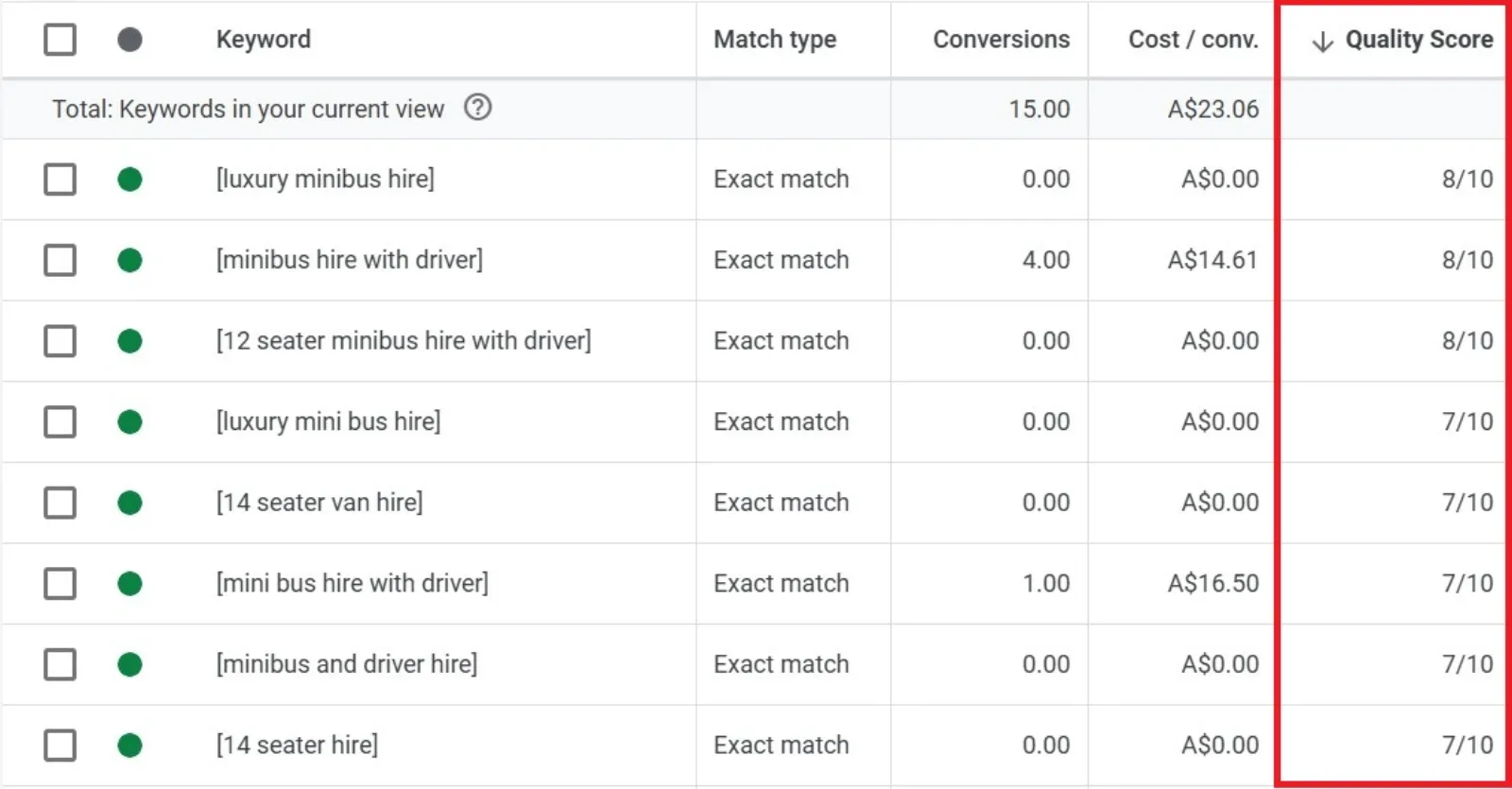
You’ve probably heard about Quality Score. Google tells you it’s super important, and it is. A higher Quality Score means lower costs and better ad positioning. The common advice is to make sure your keywords are relevant to your ad copy and landing page. And that’s true, to an extent.
But here’s the nuance: Quality Score is also heavily influenced by user experience after the click. Think about it – if someone clicks your ad, lands on your page, and immediately bounces back to Google, what does that tell Google? It tells them your page probably wasn’t what the user was looking for, or it was difficult to navigate. This negative signal can drag down your Quality Score, even if your keywords and ad copy were perfectly aligned.
What the Pros Don’t Emphasise Enough
Your landing page is your ad. It’s the final frontier of the user’s journey, and if it’s not optimised for conversion and user experience, your Google Ads efforts will always be an uphill battle. This means fast loading times, clear calls to action, mobile-friendliness, and content that directly addresses the user’s search intent. The pros often focus on the ad setup, assuming you’ve got a killer landing page. But if you don’t, you’re building a house on sand.
Hack #2: “Broad Match” Isn’t Always the Enemy (But Use it Wisely)
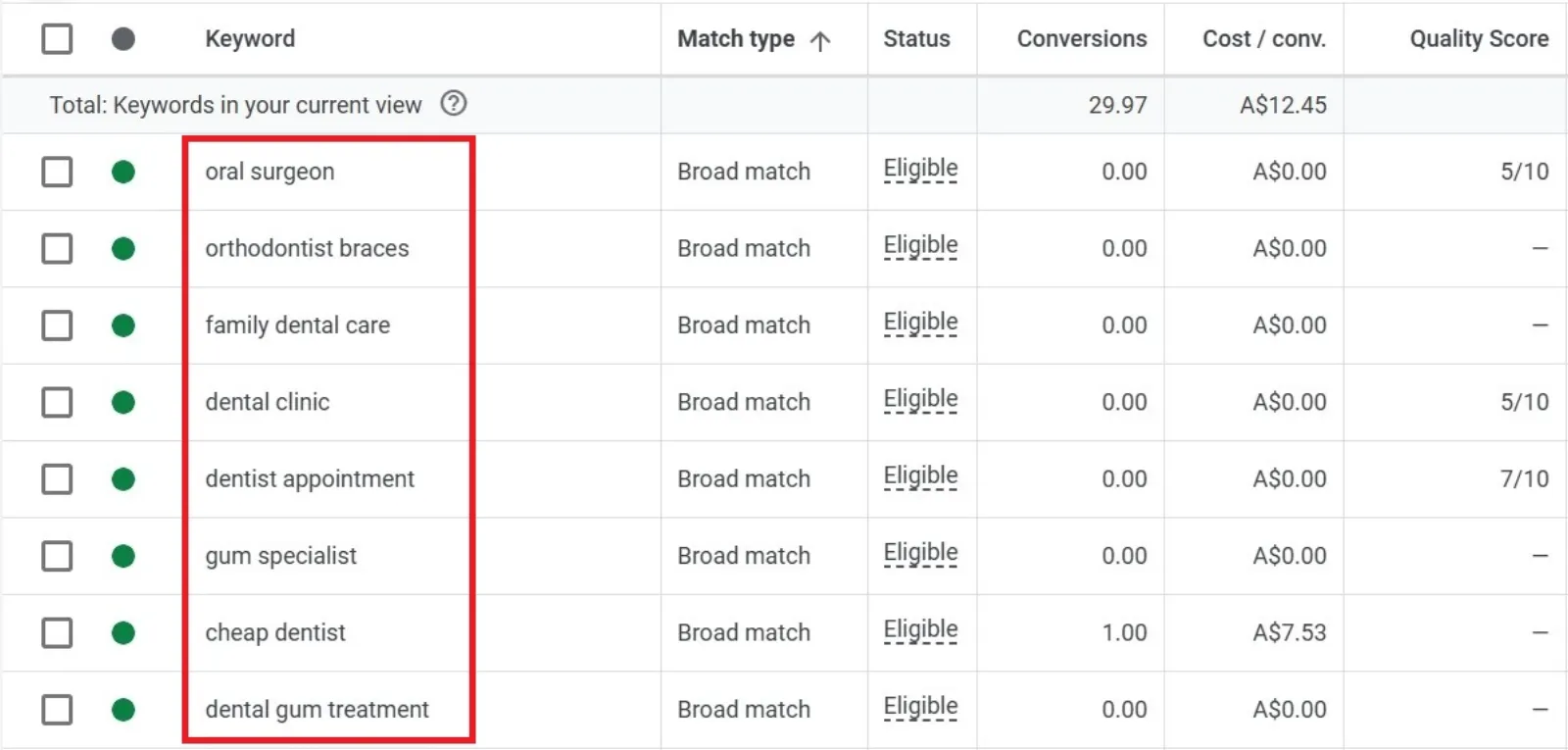
For years, the Google Ads gospel has preached the dangers of broad match keywords. “Too many irrelevant clicks!” “Wasted budget!” And yes, if used indiscriminately, broad match can be a money pit. It allows your ads to show for variations, synonyms, and related searches that Google deems relevant, which can be a double-edged sword.
What the Pros Don’t Explicitly Say
Broad match can be a powerful discovery tool, especially for new campaigns or when you’re trying to uncover new keyword opportunities. The “pros” often have established campaigns with massive negative keyword lists, painstakingly built over the years. For a beginner, trying to replicate that can be overwhelming.
Instead of avoiding broad match entirely, consider using it strategically. Start with a smaller budget, closely monitor your search terms report, and aggressively add irrelevant terms to your negative keyword list. This allows you to discover new, high-converting long-tail keywords you might not have thought of otherwise. It’s a bit like fishing with a wider net to find where the best fish are, then switching to a more precise method once you know the spot. The pros already know where the fish are; you’re still exploring.
Hack #3: Automation is a Tool, Not a Replacement for Brains
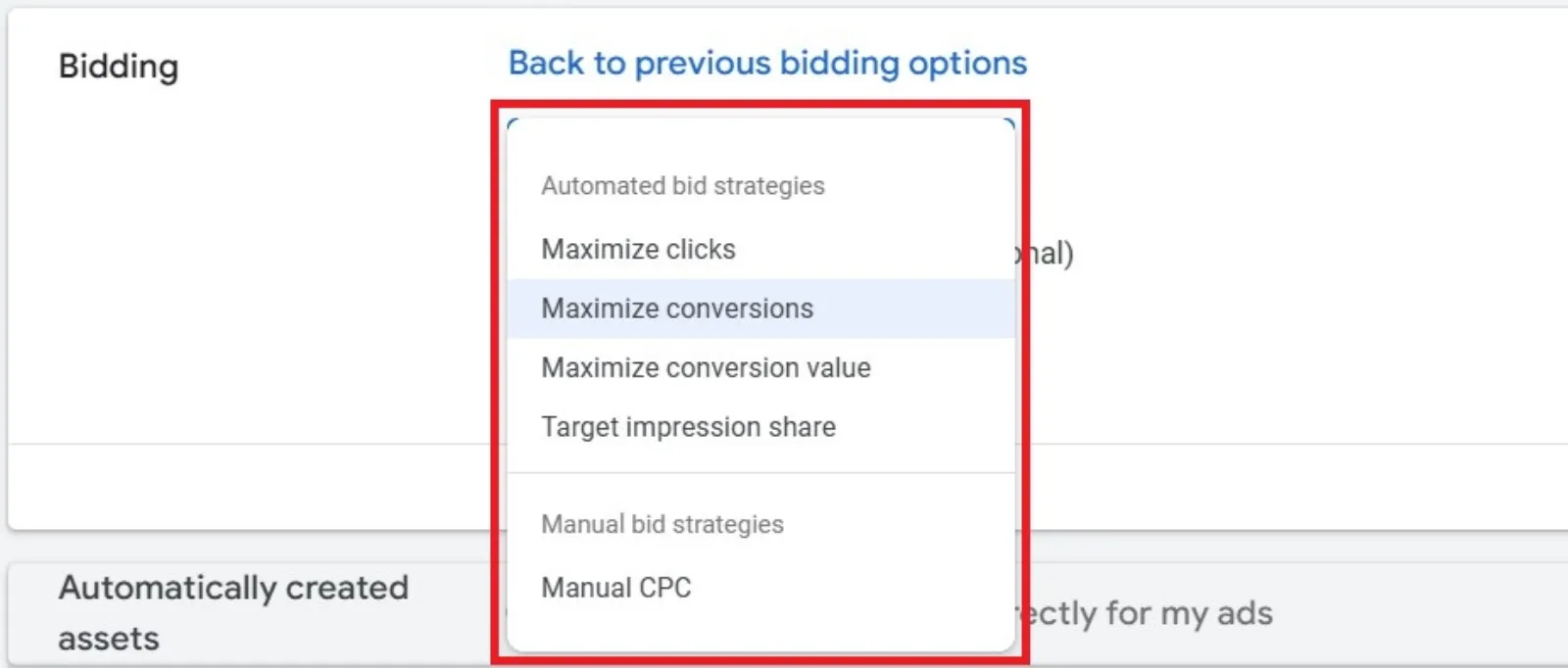
Google is constantly pushing its automation features: Smart Bidding, Dynamic Search Ads, and Performance Max. These tools are incredibly powerful and can save a lot of time. Many agencies lean heavily on them, and for good reason – they can deliver impressive results for certain types of campaigns.
What the Pros Might Not Tell You Directly
While automation is fantastic, it’s not a set-it-and-forget-it solution, especially when you’re starting or have very specific goals. Automation thrives on data, and if your account doesn’t have a lot of conversion data or if your conversion tracking isn’t spot-on, Google’s algorithms might struggle to optimise effectively.
Furthermore, automation can sometimes obscure why something is working or not working. It’s like having a self-driving car – it gets you to your destination, but you might not understand the intricate decisions it made along the way. For an independent business owner, understanding these nuances is crucial for long-term success.
Don’t blindly trust automation. Use it, but actively monitor its performance. Compare it to manual bidding strategies if you have the time. Understand what it’s optimising for. If you’re using Target CPA bidding, are you happy with the cost per conversion? If not, can you provide more specific signals or adjustments? The “pros” have the experience to troubleshoot and fine-tune automated campaigns; you need to develop that understanding for your own business.
Hack #4: The “Perfect” Account Structure is a Myth
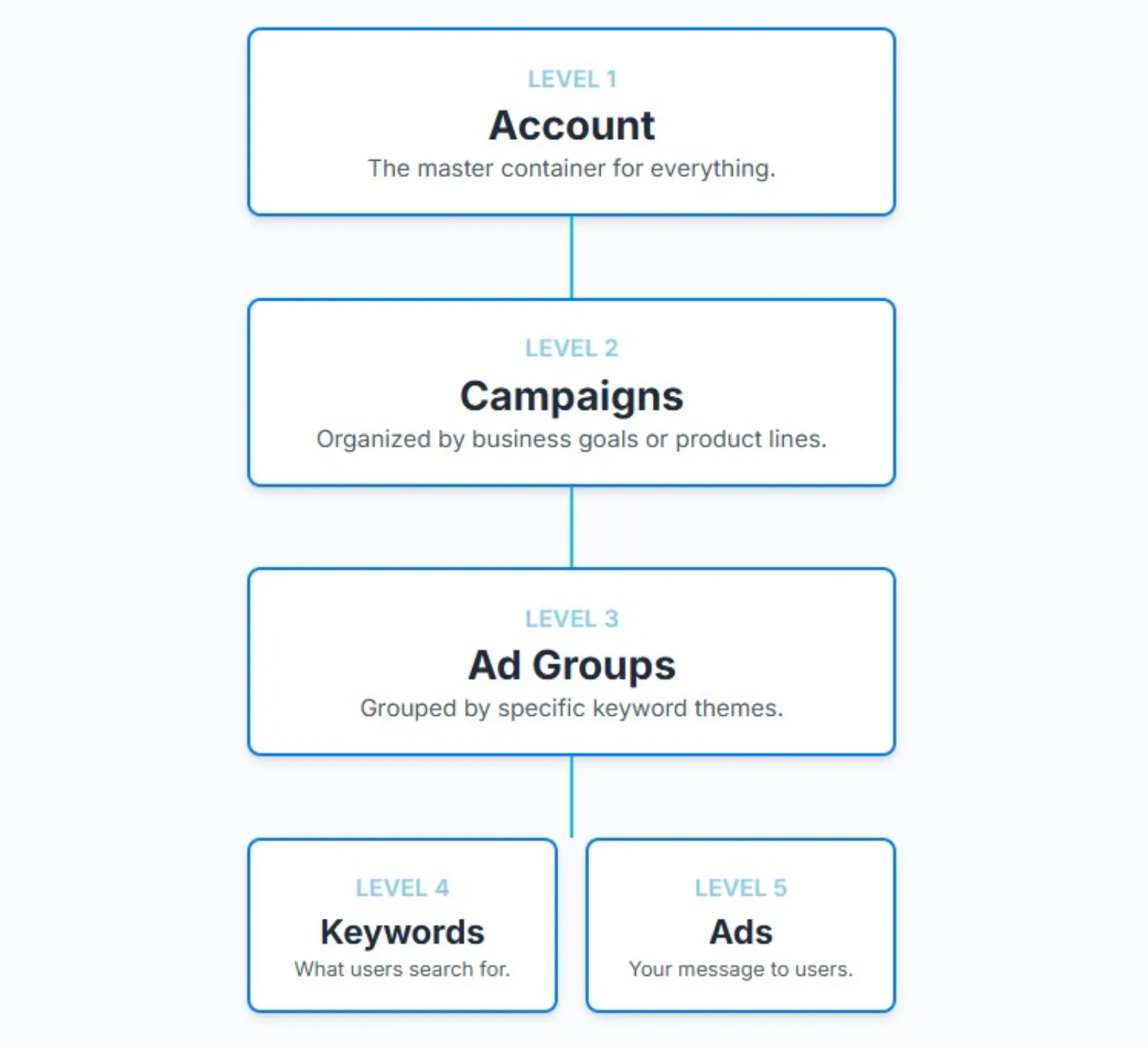
You’ll see countless articles and videos about the “perfect” Google Ads account structure: SKAGs (Single Keyword Ad Groups), themed ad groups, campaign types galore. While structured accounts are important for organisation and control, obsessing over a rigid, complex structure can be counterproductive, especially for smaller businesses.
 LIVE
Live every Tuesday at 2pm UK. Bring your marketing questions.
Get your Google, local SEO and AI questions answered live.
What the Pros Have Learned (But Won’t Always Lead With)
Simplicity often wins, especially in the beginning. A highly complex account structure can be incredibly difficult to manage and optimise if you don’t have the time or resources of a large agency. You can spend more time structuring than actually optimising your ads.
Start with a simpler, logical structure. Group closely related keywords into ad groups. Create campaigns that align with your business goals (e.g., brand awareness, lead generation, e-commerce sales). As you gather data and gain more experience, you can always refine and expand your structure. Don’t let the pursuit of “perfection” paralyse you. The pros have the luxury of dedicating entire teams to maintaining intricate structures; you might be a one-person show. Focus on what’s manageable and effective for your resources.
Hack #5: Negative Keywords are Your Best Friends (And Never Stop Adding Them)
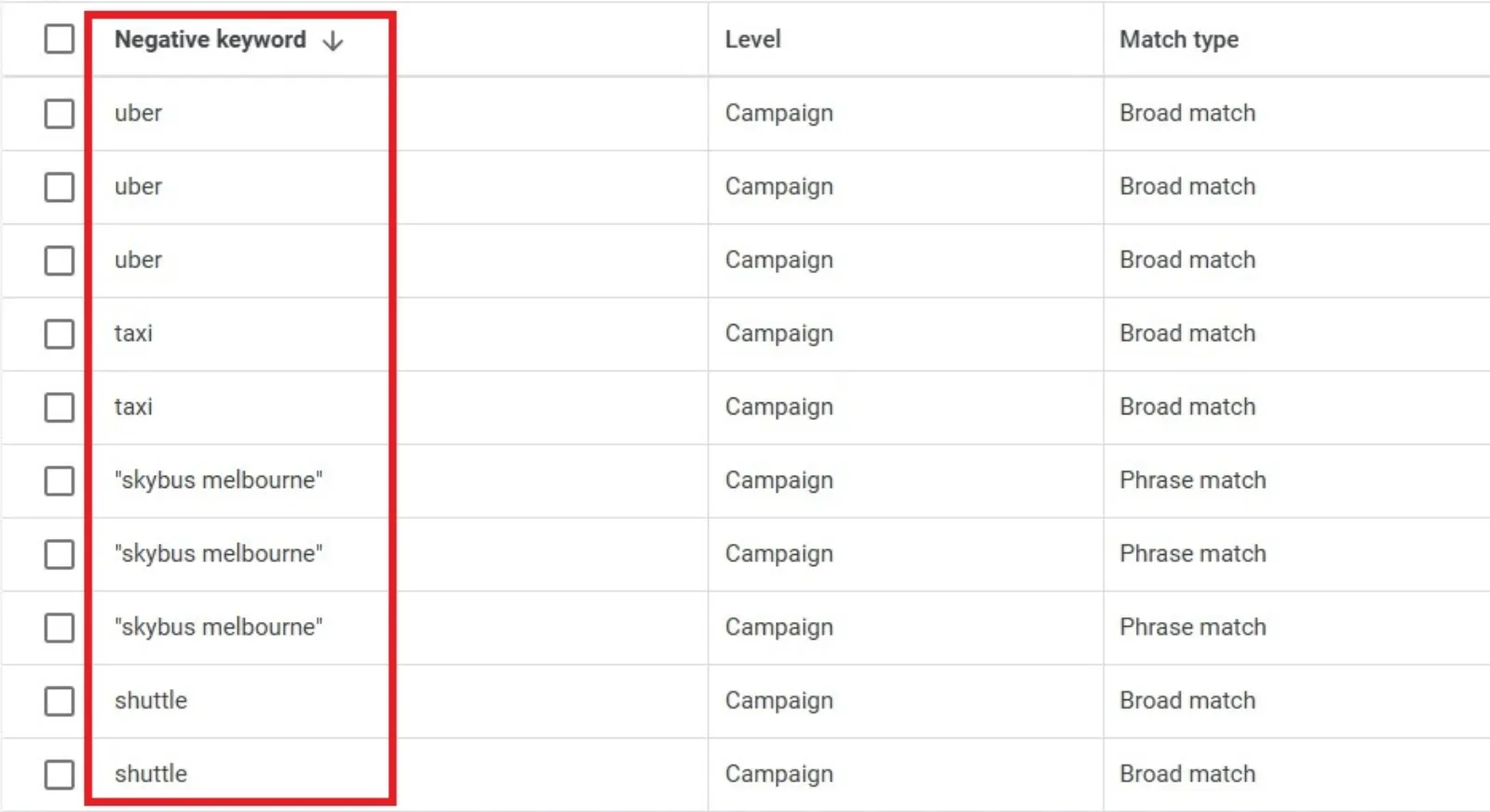
This might seem obvious, but its importance is often understated. You’ve heard about adding negative keywords to prevent your ads from showing for irrelevant searches. But it’s not a one-time task; it’s an ongoing process.
What the Pros Do Religiously (And You Should Too)
They dedicate significant time to regularly reviewing the search terms report and adding new negative keywords. This isn’t just about blocking obvious irrelevant terms like “free” or “jobs” if you’re selling a product. It’s about finding subtle nuances.
For example, if you sell “designer handbags,” you might initially think “fake designer handbags” is a good negative. But what about “how to clean designer handbags” or “designer handbag reviews”? While these aren’t entirely irrelevant, they might indicate research intent rather than purchase intent, leading to wasted clicks if your goal is immediate sales. The pros are constantly refining their negative keyword lists to ensure every click has the highest possible chance of converting. This ongoing diligence is a true “hack” to efficiency.
Hack #6: Your Competitors Are Your Best Teachers
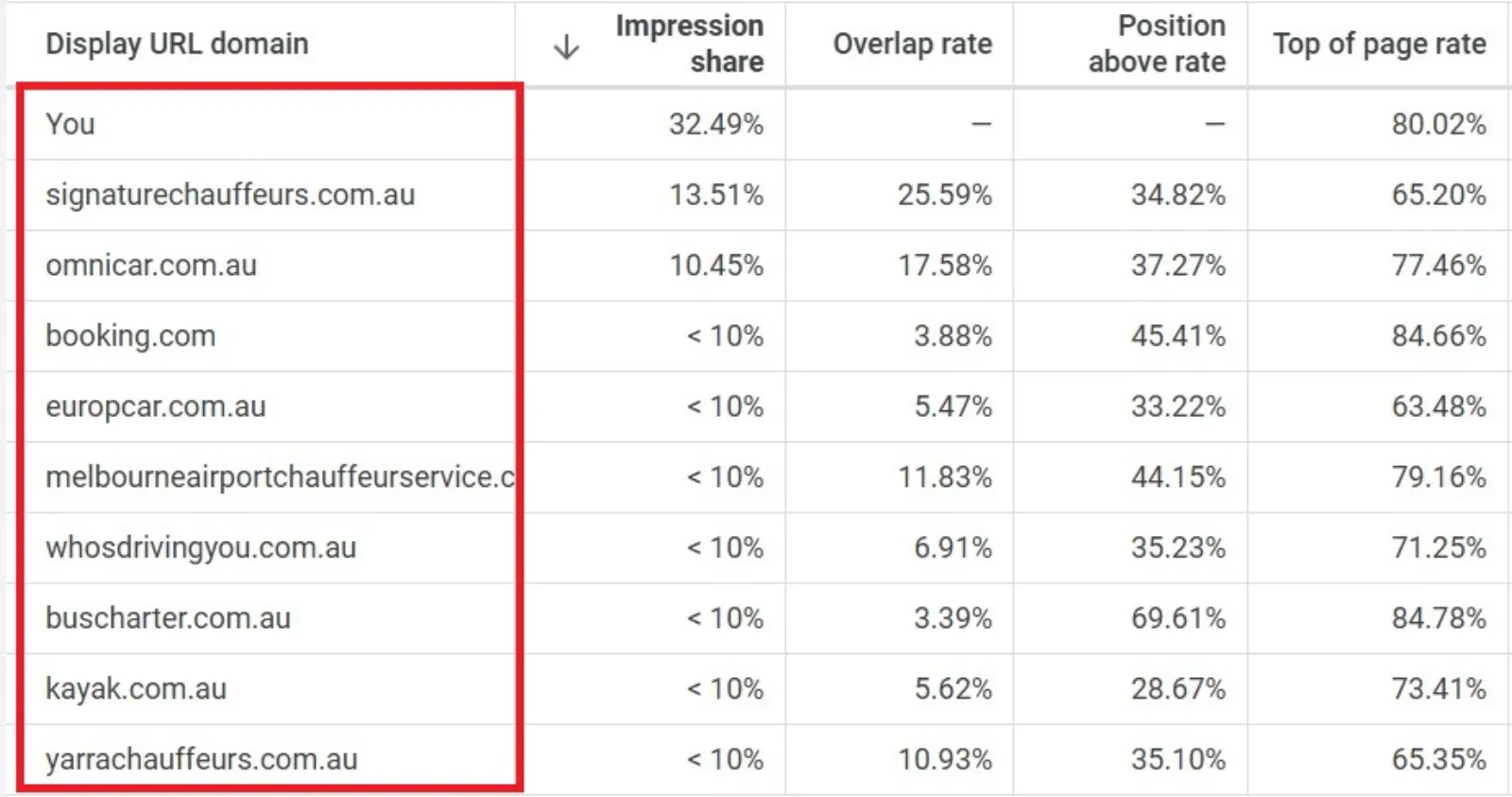
You’re probably looking at what your competitors are doing on Google Ads, right? Checking out their ad copy, their landing pages. That’s good. But there’s a deeper level of insight you can gain.
What the Pros Analyse Beyond the Surface
They don’t just see what ads are running; they try to understand the strategy behind them. Are competitors bidding on very specific, long-tail keywords? Are they dominating brand terms? Are they running remarketing campaigns?
Tools exist (some free, some paid) that can give you insights into your competitors’ keyword strategies, estimated ad spend, and even their most profitable ad copy. While you shouldn’t blindly copy, analysing what’s working for others in your niche can reveal untapped opportunities or highlight areas where you need to improve. The “pros” are always looking for an edge, and competitor analysis is a key part of that. They’re not just looking at the surface; they’re trying to reverse-engineer success.
Hack #7: Testing, Testing, Testing is Non-Negotiable
Every Google Ads guide will tell you to A/B test your ad copy. And you should. But the “pros” take it further.
What the Pros Test Relentlessly
They don’t just test headlines and descriptions. They test different calls to action, different landing page layouts, different image variations (if using display ads), different bidding strategies, different audience segments, and even different times of day for ad delivery.
The “hack” here isn’t the act of testing, but the mindset of continuous improvement. They understand that what worked last month might not work today, and what works for one product might not work for another. They’re constantly iterating, learning from data, and refining their approach. For a smaller business, this means cultivating a habit of curiosity and experimentation. Don’t just set up your ads and forget them; regularly review your performance, identify areas for improvement, and run controlled tests to see what truly moves the needle.
Taking Back Control
The “hacks” I’ve shared aren’t about magic buttons or hidden loopholes. They’re about understanding the deeper mechanics of Google Ads and adopting the mindset of a seasoned marketer. The pros aren’t necessarily smarter; they’re more disciplined, more analytical, and more committed to continuous learning and optimisation.
You don’t need a massive budget or a team of experts to apply these principles. Start small, focus on one “hack” at a time, and consistently apply what you learn. Google Ads can be incredibly powerful for your business, and by understanding these often-understated truths, you can demystify the process, reduce wasted spend, and truly unlock its growth potential.
Stop feeling like you’re outside the velvet rope. It’s time to step inside and take control of your Google Ads.

Written by Uzair Kharawala
Partner at SF Digital Studios, a Google Premier Partner agency. Uzair has been helping businesses grow with Google Ads since 2002 and teaches it every week on YouTube.
Get our best Google Ads tips by email
New articles and videos, straight to your inbox. Unsubscribe any time.